
By Ben (Senior Bag Manufacturing Consultant, Bagsrain) Published on August 17, 2026
In the premium leather goods sector, independent designers face a silent but devastating vulnerability: the gap between artistic vision and manufacturing reality.
You spend months refining a distinctive silhouette on paper, selecting the perfect hardware, and mapping out the brand identity. But when you hand those sketches over to a standard mass-production factory, the tragic compromise begins. The curved seams start to buckle. The exotic embossed textures flatten at the corners. The hardware feels lightweight, and within six months on the retail shelf, the gold plate begins to tarnish.
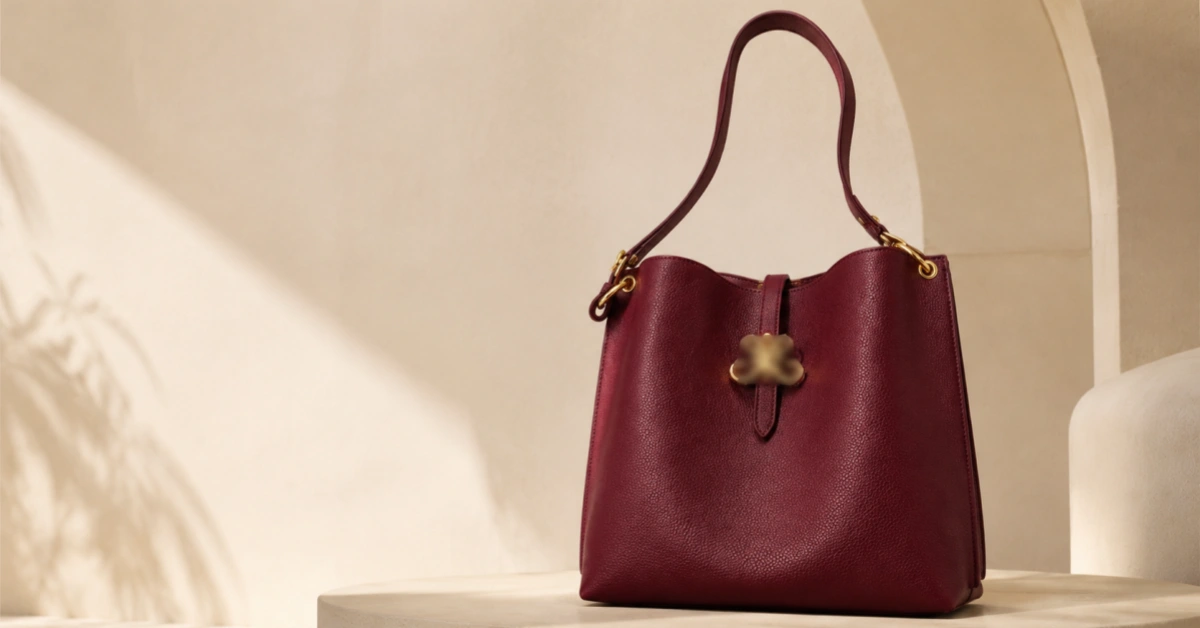
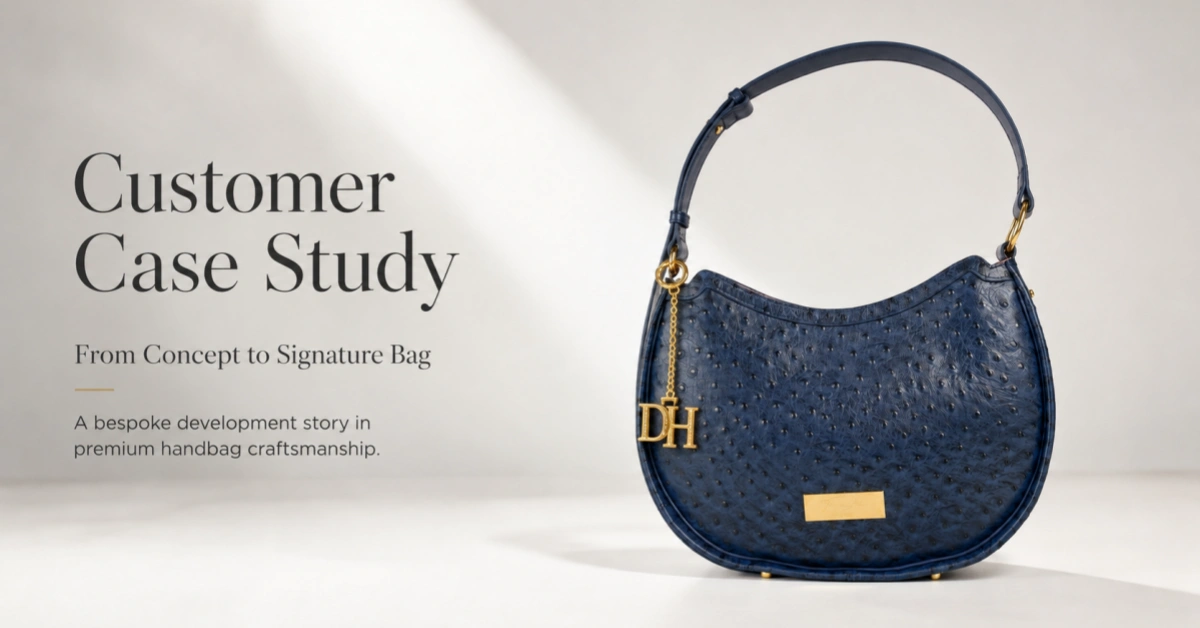
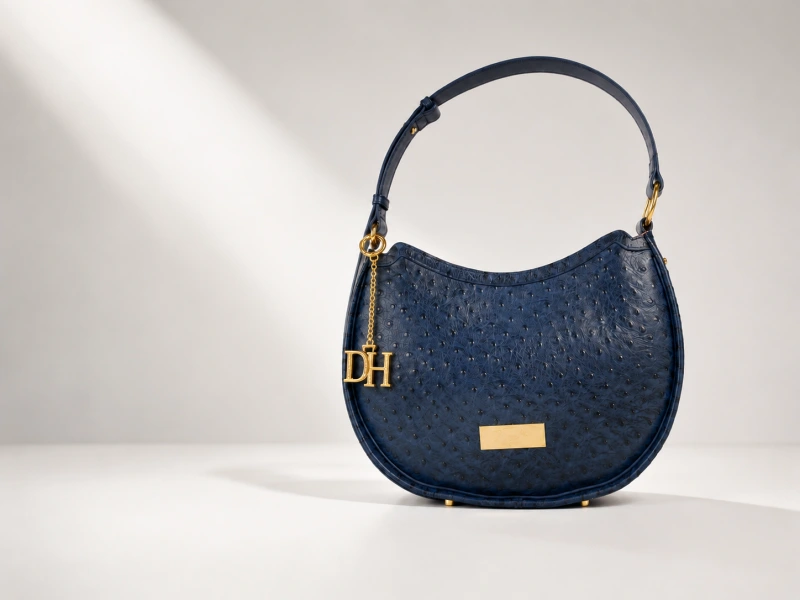
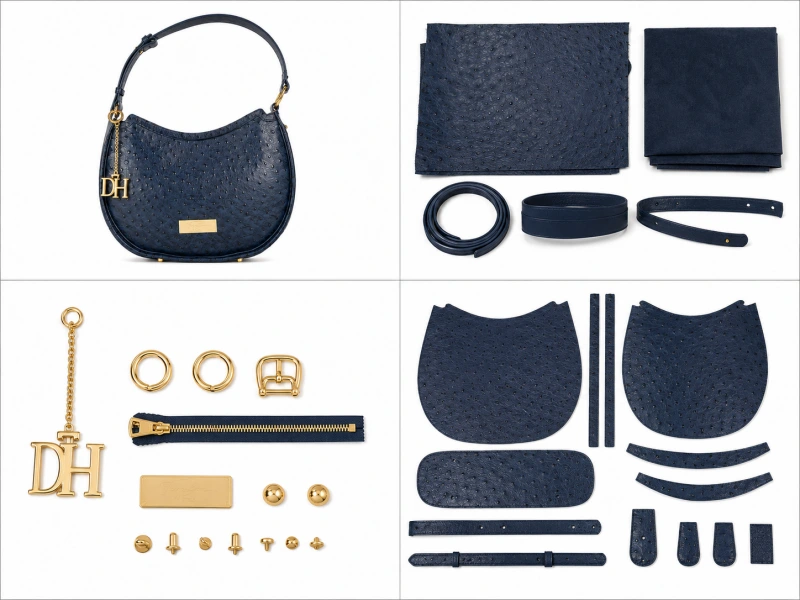
When Los Angeles-based designer label Tennyson Dixon sought to launch their signature Ostrich-Embossed Crescent Hobo Bag, they had already experienced these manufacturing pain points with two prior suppliers. They didn’t need another "sampling room"—they needed a technical infrastructure partner.
They chose Bagsrain (the specialized high-end leather goods division of XINZIRAIN, Est. 2001) to act as their backend engineering laboratory. This is the technical breakdown of how we transformed their creative sketch into a flawless, retail-ready luxury asset.
Part 1: The Designer’s Nightmare—The "Hobo Slouch" Problem
The crescent hobo bag is notoriously difficult to engineer. True hobo bags are designed to curve naturally under the weight of a carry. However, Tennyson Dixon's design demanded a hybrid structured hobo—a bag that retains a sharp, sculptural, crescent-like profile when placed empty on a boutique counter, yet molds comfortably against the body when worn.
Most standard factories solve this by lining the interior with rigid, thick cardboard (paperboard). While this keeps the bag standing temporarily, the cardboard collapses, creases, and warps permanently after a few weeks of exposure to humidity or daily handling.
The Bagsrain Solution: Stress-Engineered Resilient Internal Architecture
At Bagsrain, our technical director, Ben, approached this from an architectural perspective. Instead of paperboard, we engineered a composite internal framework:
- The Foundation: We utilized a high-density, flexible microfiber board with structural memory, coupled with localized thermal-adhesive reinforcements. This allows the bag's curved walls to flex under tension and bounce back to their exact geometric crescent shape instantly.
- The Comfort Layer: We laminated a 1.2mm ultra-soft micro-foam layer between the exterior embossed cowhide and the internal lining. This resolved the "slouch crease" while providing a luxurious, cushioned feel that elevates the bag’s perceived retail value.
Part 2: Calibrating Ostrich-Embossed Leather Density
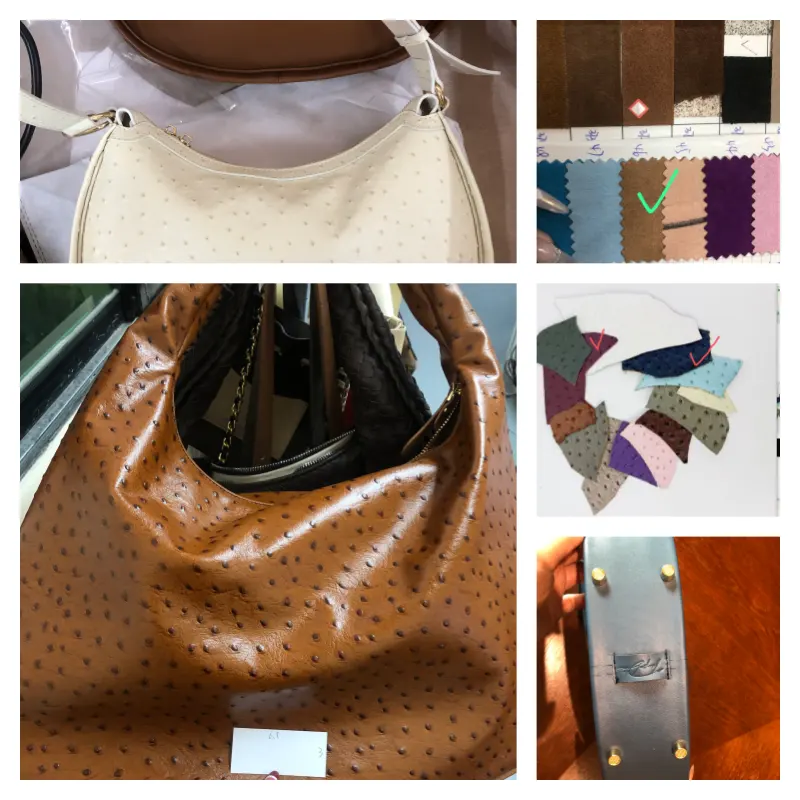
Exotic embossed leather presents a major structural risk. During the embossing process at the tannery, heavy hydraulic plates stamp the ostrich "quill" pattern onto a cowhide base at high heat. This process alters the tensile strength and elasticity of the leather across different sections of the hide.
When standard factories wrap this embossed hide around curved seams, the quills on the high-tension curves stretch, flatten out, and look artificial.
The Bagsrain Solution: Pattern-Map Splicing & Custom Embossing
To prevent texture distortion, the Bagsrain Development Lab coordinated directly with our partner tanneries:
- Dye and Stamp Customization: We formulated a custom-tempered full-grain cowhide base that retains its structural density during high-heat stamping.
- Pattern-Map Cutting: Our master cutters did not use automated gang-runs. Instead, they hand-placed the cutting dies to ensure the raised ostrich quill patterns were aligned symmetrically across the front, back, and gussets of both the Cobalt Blue and Burgundy Red colorways.
- Stress Relief at Seams: At the high-tension curved bottom seams, our technicians manually skived (shaved) the leather backing down to exactly 0.6mm, allowing the thick embossed leather to turn seamlessly without cracking or wrinkling.
Part 3: Custom Molded Hardware That Resists the Test of Time
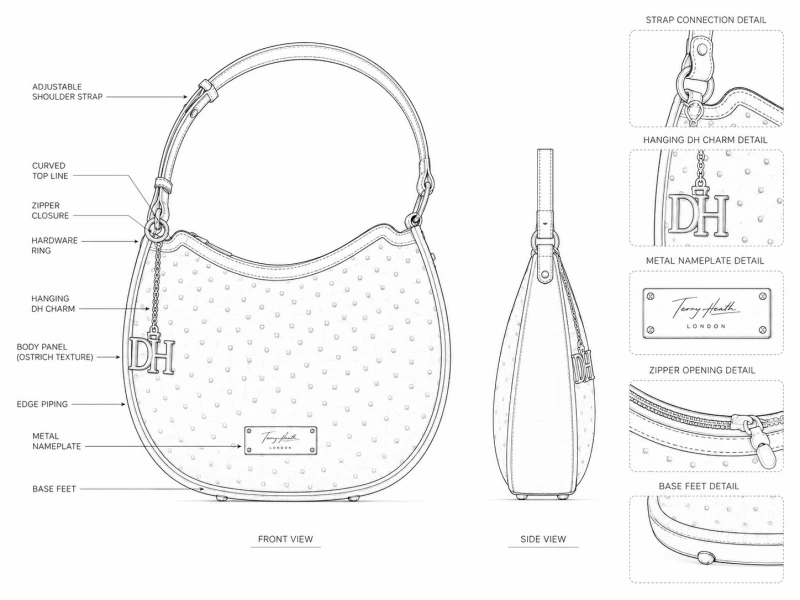
High-end independent labels live and die by their hardware. Lightweight, zinc-alloy stock hardware with cheap plating cheapens the entire brand. Tennyson Dixon required heavy, jewelry-grade components, including:
- A thick, rectangular brass brand plate deeply engraved with
Tennyson Dixon / LOS ANGELES 0110. - A custom letter-link dangling charm
DHhanging from a highly polished gold chain.
The Bagsrain Solution: 24K Custom Brass Casting & Lacquer Sinking
Instead of standard zinc-alloy stock molds, Bagsrain engineered bespoke brass molds for the entire hardware suite:
- The Plating Standard: We implemented a 24k gold-hanging electroplating protocol. Unlike cheap barrel plating, each piece of brass was individually suspended in a gold bath to ensure uniform thickness and a deep, luxurious gold luster.
- Anti-Oxidant Sinking: After electroplating, the metal components were submerged in a professional anti-tarnish protective lacquer. This chemical audit ensures that the gold hardware is resistant to fingerprints, sweat, and air salinity, preventing the metal from oxidizing or showing dark spots during global shipping and boutique display.
Part 4: The Art of the Five-Layer Hand-Painted Edge
Nothing ruins a designer bag faster than peeling edge paint. On ostrich-embossed leather, the unevenness of the quill texture makes edge painting a nightmare. If the factory uses machine-rollers, the paint spills over onto the face of the embossed leather, ruining the batch.
The Bagsrain Solution: Artisanal Edge Searing & Painting
At Bagsrain, edge painting is treated as a high-precision art. For Tennyson Dixon’s hobo bags, we executed a meticulous manual process:
- Searing & Sanding: The raw edges of the cowhide, microfiber reinforcement, and lining were seared with a hot iron to fuse the layers, then hand-sanded to a flat plane.
- The Paint Pipeline: Artisans hand-applied five separate layers of premium matte edge-paint. After each coat, the edge was allowed to dry naturally for 4 hours, then manually sanded with fine-grit sandpaper to remove any microscopic quill bumps.
- The Result: A perfectly smooth, slightly rounded edge that seals the bag's internal architecture from environmental moisture, guaranteed never to crack, peel, or run, even under extreme climate transitions.
The Ultimate Proof: 0% Sample-to-Bulk Deviation
Most factories deliver an impressive sample but ship bulk orders with noticeable quality downgrades. At Bagsrain, we eliminate this risk through our "Technical Golden Sample" protocol.
The exact construction metrics of Tennyson Dixon's approved Cobalt Blue and Burgundy prototypes—including stitch density (8.5 SPI), custom dye-lot color numbers, and edge paint viscosity—were locked into our production line management system.
When the bulk shipment arrived at Tennyson Dixon’s Los Angeles distribution center, their quality assurance team recorded zero structural defects and a 0% return rate. The collection launched seamlessly, receiving widespread acclaim from premium West Coast boutiques for its exceptional, heavy-weight luxury feel and architectural execution.
Request Your Technical Feasibility Review
Is your brand struggling to translate complex design sketches into consistent, high-end retail collections? Stop compromising on your brand's vision. Submit your design briefs, sketches, or tech packs to the Bagsrain technical team. Our development lab will provide a complimentary structural and material feasibility assessment within 24 hours. Start Your Technical Feasibility Review with Bagsrain

8 Deep-Dive B2B Manufacturing FAQs
Why does Bagsrain specialize in custom exotic-embossed leathers?
Exotic leathers like ostrich and crocodile offer premium luxury margins but are difficult to source and manufacture ethically. Bagsrain’s custom-molded embossed leathers utilize premium, ethically sourced cowhide bases, providing the exact tactile feel, grain depth, and prestige aesthetics of exotic leather while ensuring full global compliance and cost efficiency.
What is the main advantage of Bagsrain's "Technical Golden Sample" protocol?
It completely eliminates the standard "sample-to-bulk" quality gap. We digitally lock and physical document every metric of your approved prototype. Our factory assembly line uses these exact parameters for real-time QC testing, ensuring your bulk order matches the sample in stitch density, hand-feel, and hardware alignment.
How does Bagsrain manage IP protection for independent designer labels?
Design protection is built into our operational contract. Bagsrain operates under strict mutual NDAs. All digital sketches, CAD 3D models, and tech packs are kept in encrypted secure servers, and custom physical molds (such as the Tennyson Dixon "TD" hardware mold) are isolated in secure tooling vaults accessible only by authorized engineers.
What makes Bagsrain's edge-painting more durable than standard factory edges?
Standard factories use automated roller edge-painters and cheap acrylic paints, which peel when exposed to moisture. Bagsrain uses premium, flexible polymer-based edge paints applied manually in 5 consecutive coats with precise sanding in between. This creates a flexible, weatherproof seal that moves with the leather without cracking.
Can Bagsrain assist with custom-molding brand logos onto metal hardware?
Yes. We provide comprehensive custom metal hardware solutions. We develop customized molds for brass, zinc alloy, and copper. We support laser engraving, deep stamping, embossing, and 3D metal sculpting to seamlessly integrate your signature branding into the bag's hardware.
How does Bagsrain prevent gold-plated hardware from tarnishing during sea freight?
We apply a high-end electroplating process (minimum 0.5-micron thickness) followed by an industrial anti-tarnish clear lacquer coat. This lacquer is baked to cure, creating an invisible, non-greasy barrier that protects the polished gold from salty air during ocean transit and moisture during warehouse storage.
What are the sample development and bulk production timelines at Bagsrain?
- 3D Digital Sample: 72 hours.
- Physical Prototype: 15–25 days (inclusive of custom hardware mold creation and leather color matching).
- Bulk Production: 30–45 days, depending on order size and custom material sourcing.
How does Bagsrain ensure material safety compliance for my target markets?
We conduct strict chemical safety audits on all sourced materials. All our tanneries and component suppliers are verified to meet international environmental regulations, ensuring that your custom bag collections pass export tests for chemical safety and material purity.