
By Ben (Senior Bag Manufacturing Consultant, Bagsrain) Published on August 19, 2026
In the premium leather goods sector, independent designers face a silent but devastating vulnerability: the gap between artistic vision and manufacturing reality.
You spend months refining a distinctive silhouette on paper, selecting the perfect hardware, and mapping out the brand identity. But when you hand those sketches over to a standard mass-production factory, the tragic compromise begins. The curved seams start to buckle. The exotic embossed textures flatten at the corners. The hardware feels lightweight, and within six months on the retail shelf, the gold plate begins to tarnish.
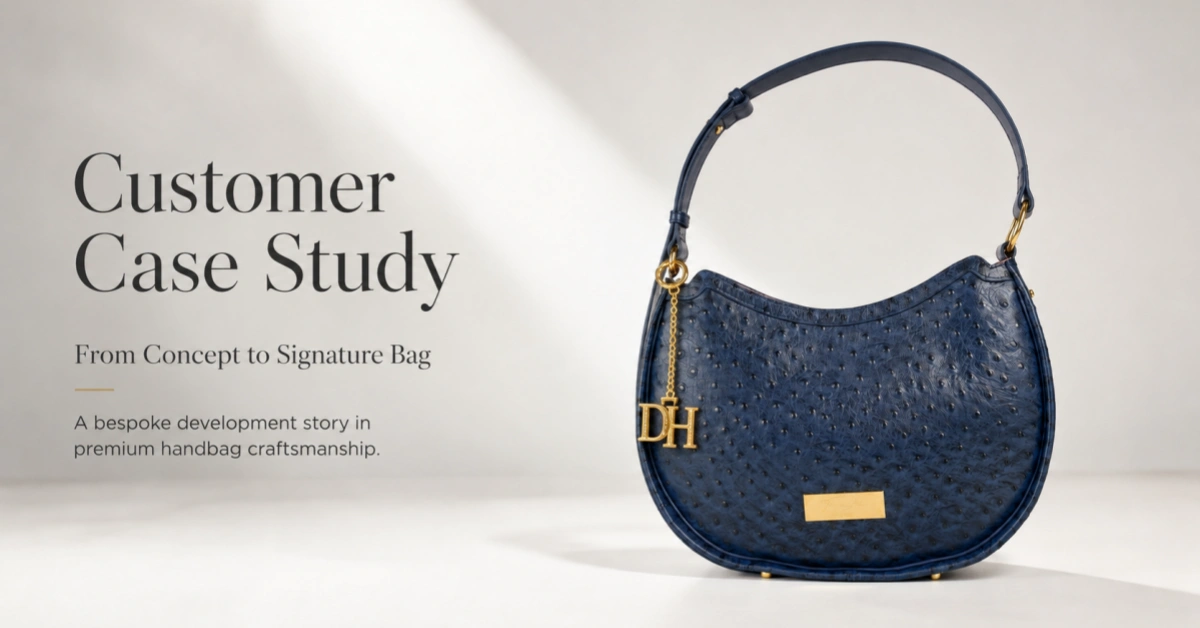
When a luxury contemporary label based in Dubai sought to launch their signature Ostrich-Embossed Crescent Hobo Bag, they had already experienced these manufacturing pain points with two prior suppliers. They didn’t need another "sampling room"—they needed a technical infrastructure partner.
They chose Bagsrain (the specialized high-end leather goods division of XINZIRAIN, Est. 2001) to act as their backend engineering laboratory. This is the technical breakdown of how we transformed their creative sketch into a flawless, retail-ready luxury asset.
Technical Challenge 1: The "Paper Shell" Blueprint Validation (Model 888)
Before wasting thousands of dollars slicing into premium European pebbled cowhide, our master pattern-maker executed our signature 1:1 physical paper shell simulation.
Many factories skip this step, jumping straight from 2D CAD files to leather cutting. In luxury bag manufacturing, this is a recipe for disaster. You cannot feel the volume, the strap drop, or the visual scale of a metal emblem on a computer screen.
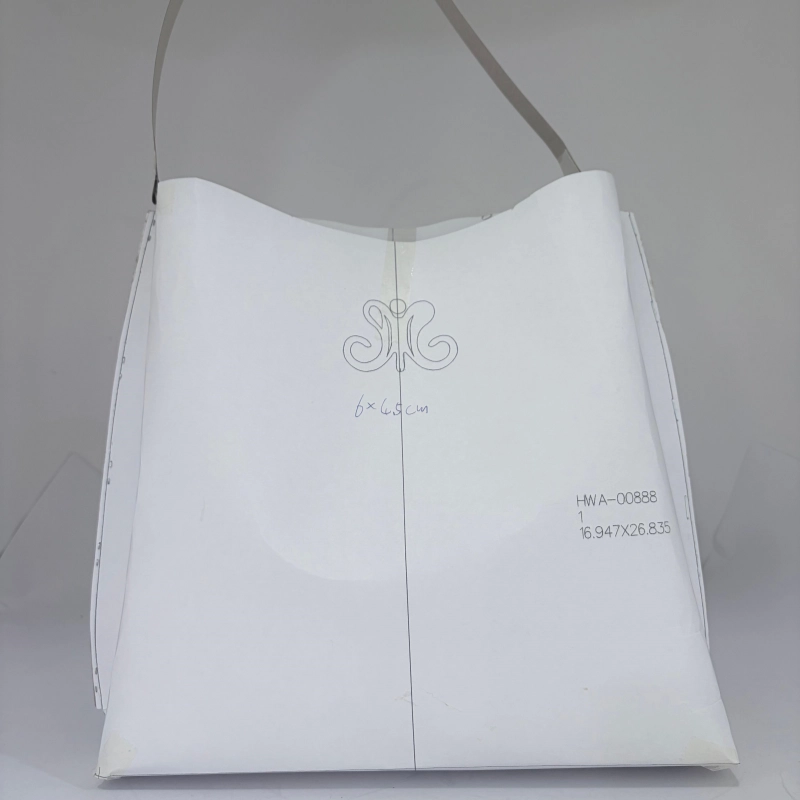
As shown in our workshop check for Model 888, we built an exact physical paper mockup of the bucket bag:
- Dimensional Accuracy: We used a stainless steel precision ruler to verify that the base width sat at exactly 31.5 cm and the height at 26.8 cm. This guaranteed that the bag would comfortably fit modern lifestyle essentials while maintaining a compact, elegant silhouette.
- Visual Balance: We manually sketched the custom geometric monogram outline directly onto the paper model at 6 x 4.5 cm. This allowed us to verify the scale and vertical placement of the metal hardware against the curve of the bag's collar before opening the expensive steel molds.
Technical Challenge 2: 3D CAD Engineering of the Geometric Monogram
The brand’s creative brief required a highly intricate, curved monogram combining classic scrollwork. Standard die-casting in cheap alloy results in soft, rounded edges and a lightweight, plastic feel. To stand out in the luxury Middle Eastern market, the emblem needed sharp, clean profiles, significant physical weight, and a flawless gold-plated luster.
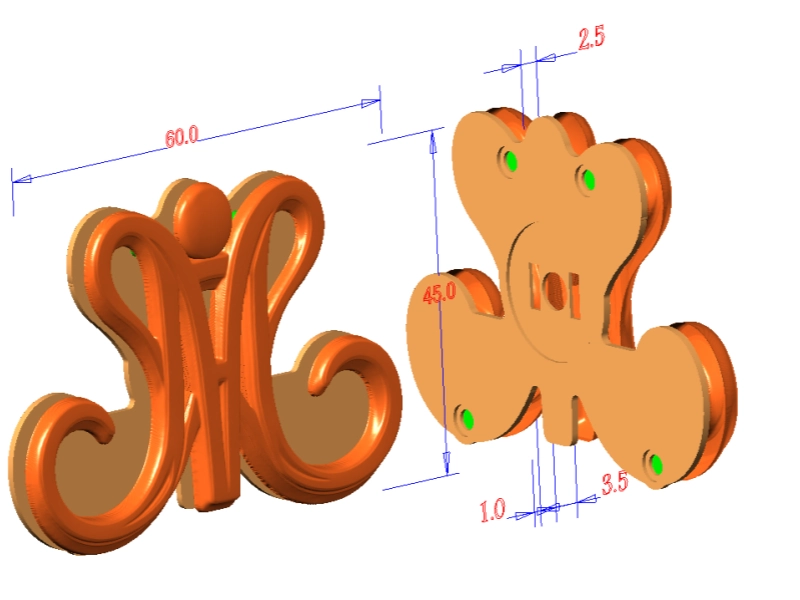
Our custom hardware division developed a precise 3D CAD engineering map for the custom buckle:
- Precision Specs: The CAD blueprint specified the dimensions at exactly 60.0 mm in width, 45.0 mm in height, and 2.5 mm in thickness.
- Structural Backing: Instead of relying on cheap glue or soft prongs that loosen over time, we engineered four integrated threaded screw-posts on the back plate. These posts pierce through the leather and lock into a custom-machined metal backing plate inside the strap, ensuring the monogram is permanently secured flush against the leather strap, never rotating or sagging under tension.
- The Plating Standard: The piece was cast in high-purity brass and underwent 24K gold rack-electroplating with an anti-tarnish clear lacquer coat to prevent tarnishing and salt-corrosion in hot, humid climates.
Technical Challenge 3: Preventing Structural Collapse with a Double-Compartment Bridge
Bucket bags are historically notorious for collapsing into a creased, shapeless heap when empty. If the leather is too stiff, the collar feels rough; if it’s too soft, the walls fold.
To resolve this, Bagsrain’s structural engineers turned the bag’s internal organization into a structural load-bearing beam:
- The Double-Compartment Bridge: Instead of a loose, unlined bucket interior, we split the bag’s cavity into two structured compartments using a thick, centered zippered partition wall. This partition acts as an internal structural divider, anchoring the front and back walls together and preventing the sides from bowing outwards.
- The Lining Materials: We lined the interior with a luxury, wear-resistant beige microfiber suede leather. Unlike cheap polyester linings, microfiber suede provides structural tension, a velvet-soft hand-feel, and makes it incredibly easy for the luxury consumer to organize items.
- The Symmetrical Edge: By hand-painting the raw leather edges of the center divider and collar five separate times, we sealed the seams, ensuring the structural curves of the bag remain crisp and clean from any angle.
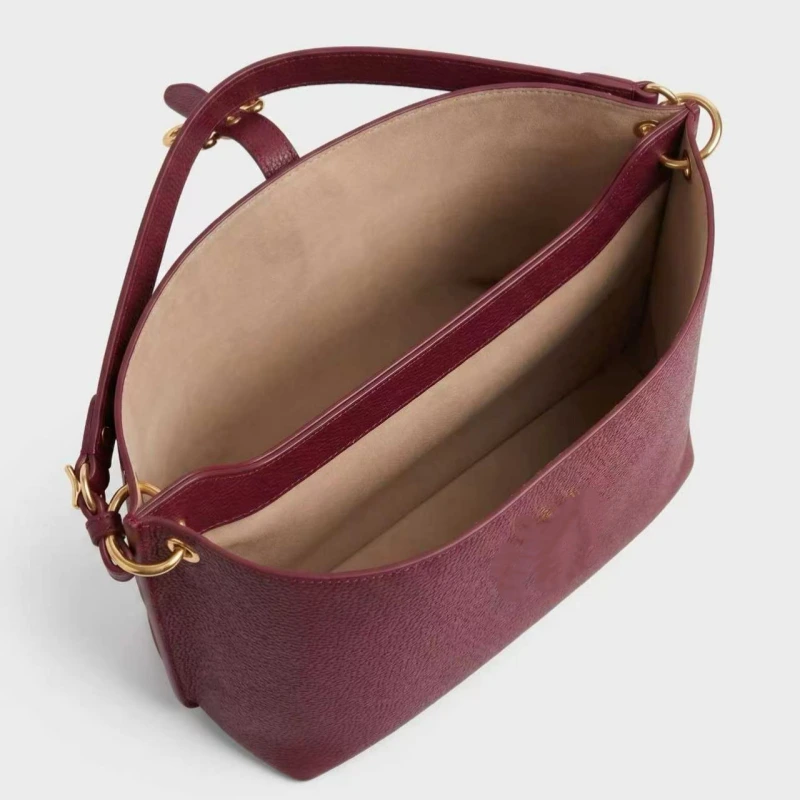
The Result: Flawless Production Consistency
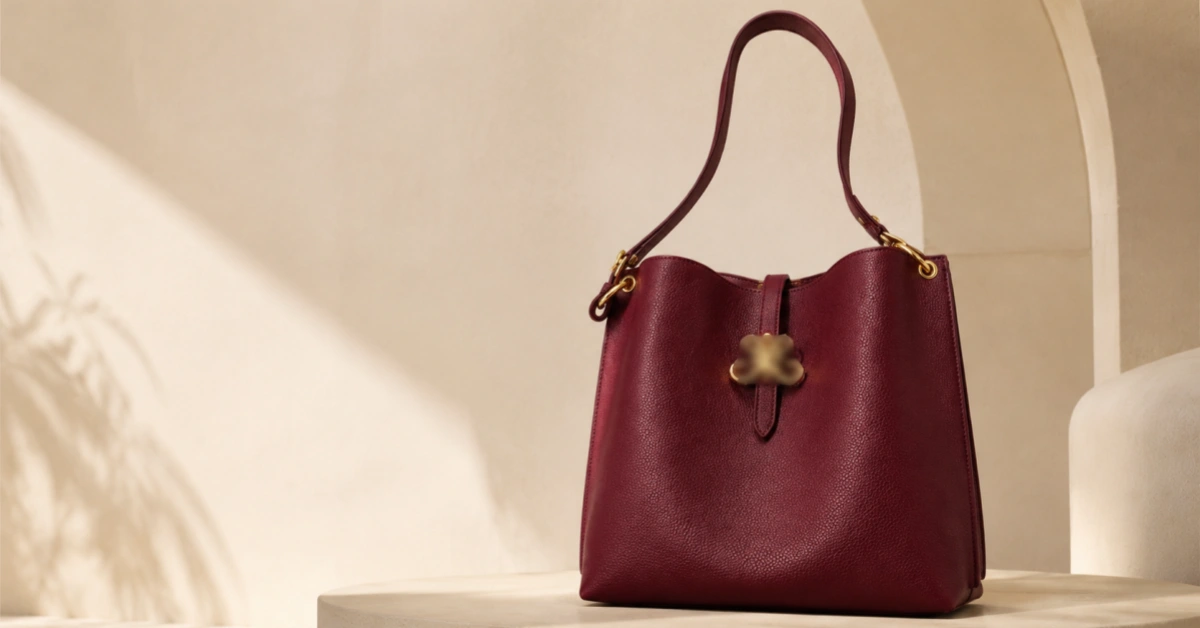
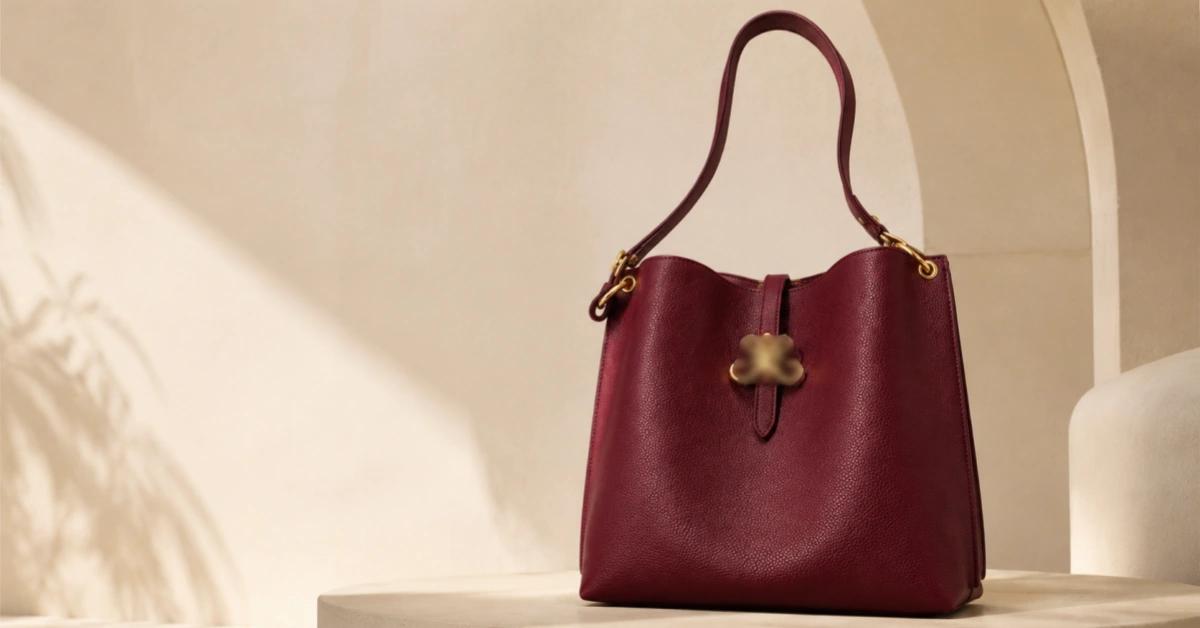
By aligning our 1:1 paper patterning, custom brass hardware casting, and internal divider engineering, the final Burgundy Pebbled Leather Monogram Bucket Bag was delivered with zero deviation from the brand's original creative vision.
The first production run achieved a 0% defect rate and was successfully launched at her brand showcase in Dubai. Her clients immediately noted the substantial weight of the custom gold monogram, the smooth tactile feedback of the five-layer hand-painted edges, and the architectural symmetry of the interior.
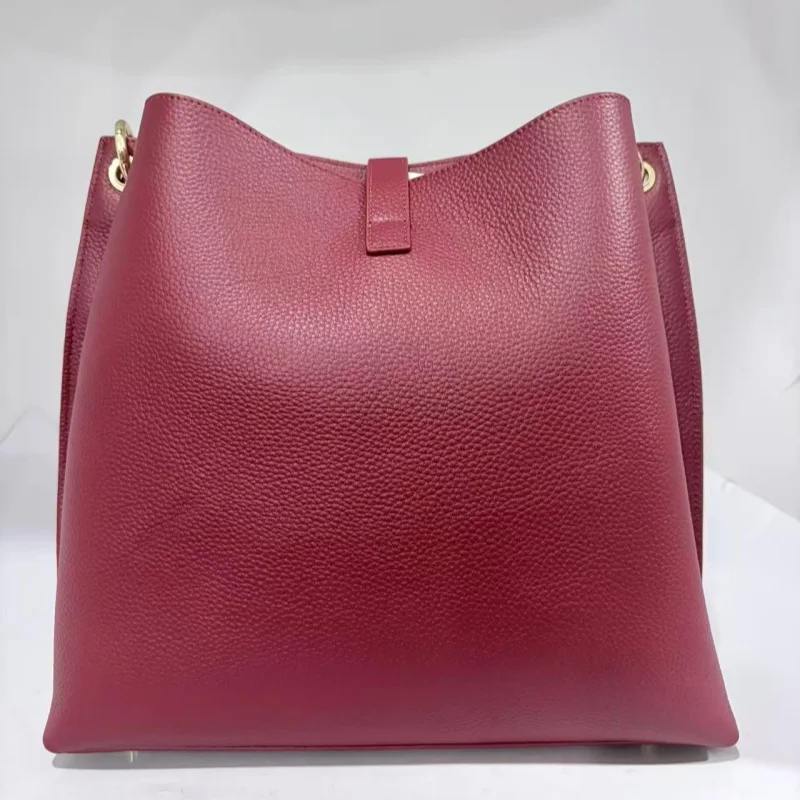
Bagsrain has secured her brand's trust, and we are currently co-developing her Spring/Summer 2027 collection.
Request Your Technical Feasibility Review
Are you an independent designer struggling with structural collapses or cheap stock hardware? Let Bagsrain be your technical partner. Submit your sketches, tech packs, or references. Our development lab will provide a complimentary structural, material, and hardware feasibility assessment within 24 hours. Request Your Technical Review with Bagsrain
10 B2B Handbag Manufacturing FAQs
Q1: Why does Bagsrain build 1:1 paper mockups before physical sampling?
It drastically reduces development time and material waste. A paper mockup allows us to physically verify dimensions, strap drop lengths, and the visual scale of custom logo fittings before we cut into expensive leather, ensuring 100% precision from the start.
Q2: What is the benefit of custom brass hardware casting over zinc-alloy stock molds?
Custom brass casting offers far greater weight, sharper detail lines, and exceptional structural strength. Brass also bonds more effectively during high-end gold electroplating, preventing the gold layer from peeling or showing corrosion spots over time.
Q3: How do you prevent structured bucket bags from sagging?
We design internal structural partitions. By integrating a firm center-zipped divider lined with dense microfiber suede, we create an internal structural bridge that supports the front and back panels, keeping the bag upright even when empty.
Q4: What thickness of leather do you recommend for structured handbags?
We typically recommend premium cowhide with a thickness of 1.4mm to 1.8mm. We then manually skive (shave) the edges down to 0.6mm at the seams so they can turn cleanly without creating bulky, uneven curves.
Q5: Can we develop custom hardware plates with exact mm-level dimensions at Bagsrain?
Yes. Our hardware division builds precise 3D CAD modeling blueprints. We can customize length, width, depth, screw-post threading, and curvature to ensure your logo components fit flush against the leather surfaces.
Q6: What is the plating standard for bags exported to high-end retail markets?
We use premium rack electroplating (typically 24k gold, palladium, or gunmetal) followed by an acid-resistant and salt-spray-tested clear protective lacquer bake. This ensures the hardware survives marine transit and high-humidity climates.
Q7: How many layers of edge paint does Bagsrain apply?
We hand-apply five layers of water-based Italian edge paint. Each layer is sanded smooth and seared with a hot iron before the next coat is applied. This creates a flexible, chip-proof seal that won’t peel under heat.
Q8: Does Bagsrain offer microfiber suede lining options?
Yes. We highly recommend microfiber suede for luxury collections. It has a premium tactile feel, superior durability compared to polyester, and provides the essential structural support needed for semi-structured bag designs.
Q9: What is the standard sample lead time for fully customized designs?
Fully custom designs (requiring custom hardware molds and paper pattern engineering) typically take 15–25 days. Our 3D digital modeling can be completed within 72 hours to speed up initial conceptual approval.
Q10: Do you sign NDAs before we share our design sketches?
Yes, absolutely. We prioritize your design IP and brand technical sovereignty. We encourage signing a mutual Non-Disclosure Agreement (NDA) before you send any design files, tech packs, or brand sketches to our team.