
In premium leather goods manufacturing, the transition from an artistic 2D sketch to a production-ready "golden sample" is where a brand’s profitability is won or lost. Discover why professional handbag pattern engineering and a rigorous leather goods tech pack are the ultimate determinants of structural integrity and bulk-run gross margins.
For independent fashion designers and growing direct-to-consumer (DTC) brands, launching a new handbag collection is an exhilarating milestone. However, many founders encounter a recurring, costly bottleneck during the product development phase. They send a beautifully rendered 2D sketch or reference photo to a factory, only to receive a physical prototype that looks drastically different—either suffering from severe structural collapse ("sagging") or appearing bloated and unbalanced.
The assumption is often that the factory used the wrong leather or did not follow instructions. In reality, the root cause lies in a critical, frequently overlooked discipline: **handbag pattern engineering**. Unlike apparel, where fabric naturally conforms to the human body, a premium handbag is a piece of freestanding architectural engineering. Without rigorous structural design, even the finest French calfskin will fail to support its own weight under retail conditions.
In this guide, we demystify the science of handbag pattern engineering, break down the structural blueprints of a professional leather goods tech pack, and explain how optimizing these technical variables directly secures your brand’s profit margins before a single piece of leather is cut.
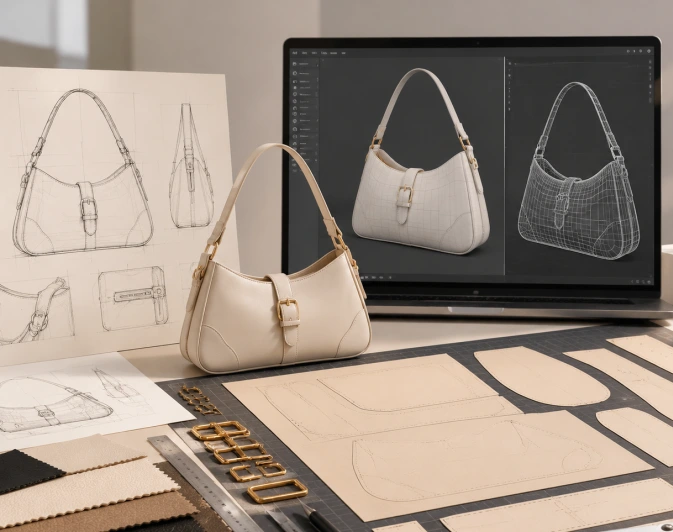
The 2D Illusion: Why Handbag Sketches Often Collapse in Physical Prototyping
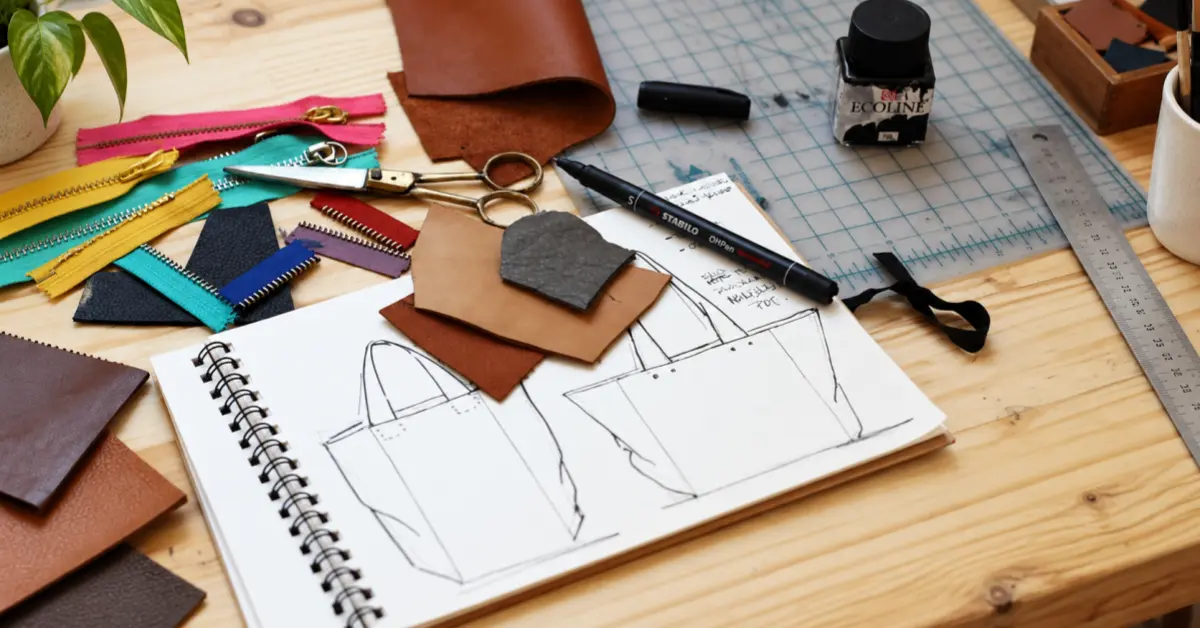
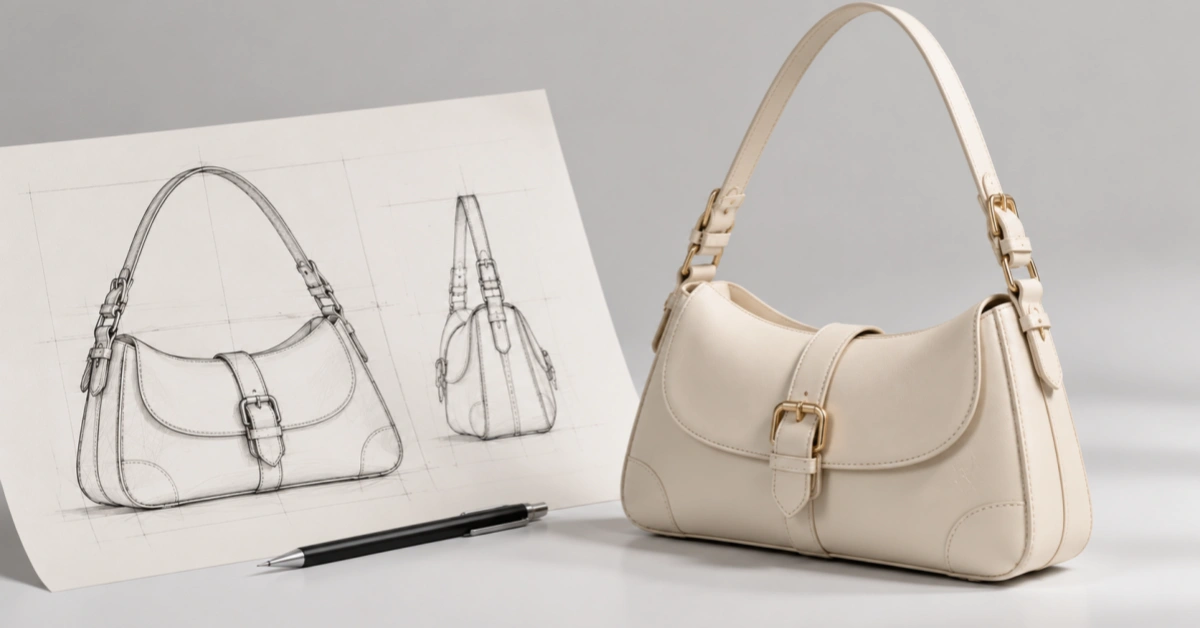
It is a common pitfall in the fashion industry to equate a beautiful design with a buildable product. A creative illustration captures proportion, colorways, and stylistic intent, but it cannot dictate weight distribution, tension points, or crease resistance. When a sketch is passed directly to an ordinary assembly line without technical intervention, the craftsmen are forced to guess the internal structure.
This is where a specialized custom handbag paper pattern developer becomes indispensable. The pattern developer acts as the structural architect of the bag. They translate the 2D aesthetic curves into a precise, multi-layered flat pattern—essentially building the "internal skeleton" of the handbag. If the paper pattern is engineered incorrectly by even a single millimeter, the panels will pull unevenly once stitched, leading to warping or structural collapse over time.
Furthermore, different leathers—such as stiff box calf, supple pebbled leather, or vegan alternatives—behave uniquely under tension. Handbag pattern engineering requires deep, empirical knowledge of leather tensile strength and fiber direction. A master engineer adjusts the pattern to account for leather stretch, ensuring that the finished product retains its crisp, intended silhouette under daily wear and tear.
The Blueprint of Profit: Demystifying the Leather Goods Tech Pack
In high-end manufacturing, "guessing" is the enemy of margin. To eliminate communication errors and ensure repeatable quality, every custom development project must be guided by a comprehensive, industrial-grade leather goods tech pack. If you are wondering how to build a handbag tech pack that prevents sample revision loops, it must contain six indispensable engineering elements:
To ensure your designs move flawlessly from concept to the shipping container, make sure your development team locks down these six core components:
Nested Paper Pattern Dimensions & Cutting Blueprint
This includes the exact CAD vector files of every single cutting panel, including seam allowances (usually ranging from 10mm to 15mm depending on turned-edge vs. raw-edge finishing). It defines the grain direction of the leather to prevent stretching along critical seams.
Handbag Structural Reinforcement Guide (The Internal Skeleton)
This is perhaps the most critical document for maintaining shape. A comprehensive handbag structural reinforcement guide specifies the exact backing materials required for different panels. This includes microfiber boards for structured bases, Texon paper for gusset stiffness, EVA foam for soft-padded handles, and Salpa (bonded leather) for authentic leather heft and crease recovery.
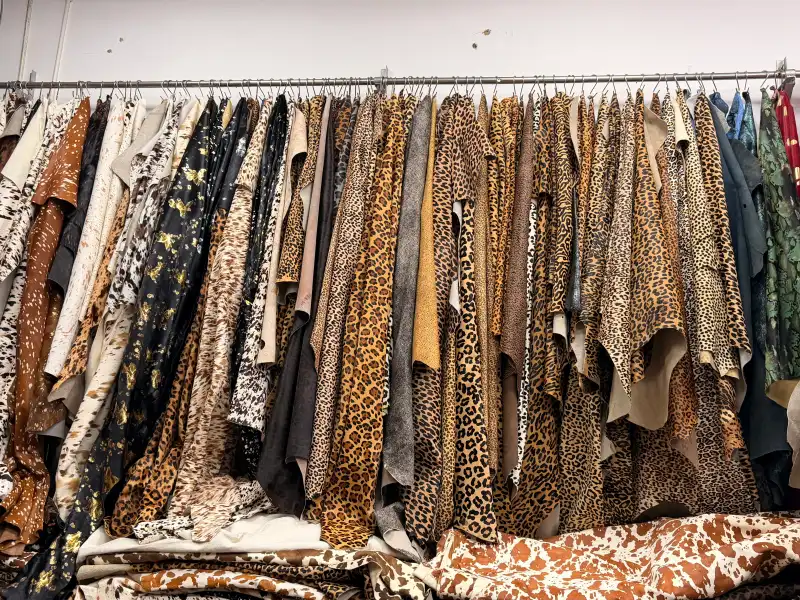
Lining Allowance & Expansion Cavity Calculations
Because lining materials (such as high-density cotton twill, lambskin, or pigsplit) stretch differently than the outer shell, the lining pattern must be engineered slightly smaller than the outer leather shell. Failing to build this "lining allowance" into the tech pack leads to unsightly bunching, pocket sagging, or cavity restriction inside the finished handbag.
Stitch Density, Thread Tension & Pitch Specifications
The tech pack must define the thread weight (e.g., Bonded Nylon size 69 or heavy-duty size 92) and the exact stitch density (e.g., 7 to 8 stitches per inch). Consistent stitch pitch determines not only the bag's structural longevity but also its "quiet luxury" aesthetic appeal.
Hardware Anchor Points & Load-Bearing Support Blueprint
D-rings, handle rivets, and magnetic clasps cannot rely solely on the leather shell for support. The tech pack must detail high-tensile reinforcement backings (such as heavy-duty nylon webbing or steel support plates) behind every hardware anchor point to prevent the metal from tearing through delicate leather under weight.
Edge Paint & Finish Post-Treatment Standards
For raw-edge styles, the tech pack must outline the specific sealant application standards. This includes the brand of high-polymer edge paint, the temperature for hot-creasing tools, and the exact number of paint-and-sand cycles (typically 3 to 4 passes) required to achieve a smooth, crack-resistant border.
How Bagsrain’s Handbag Pattern Engineering Boosts Leather Yield by 15%
While structural integrity is vital for brand reputation, pattern engineering also directly impacts your cost of goods sold (COGS). Leather is a natural material, and its raw hides contain unavoidable blemishes, neck wrinkles, and thin flanks. An un-engineered cutting process often results in massive material waste, driving up your manufacturing cost.
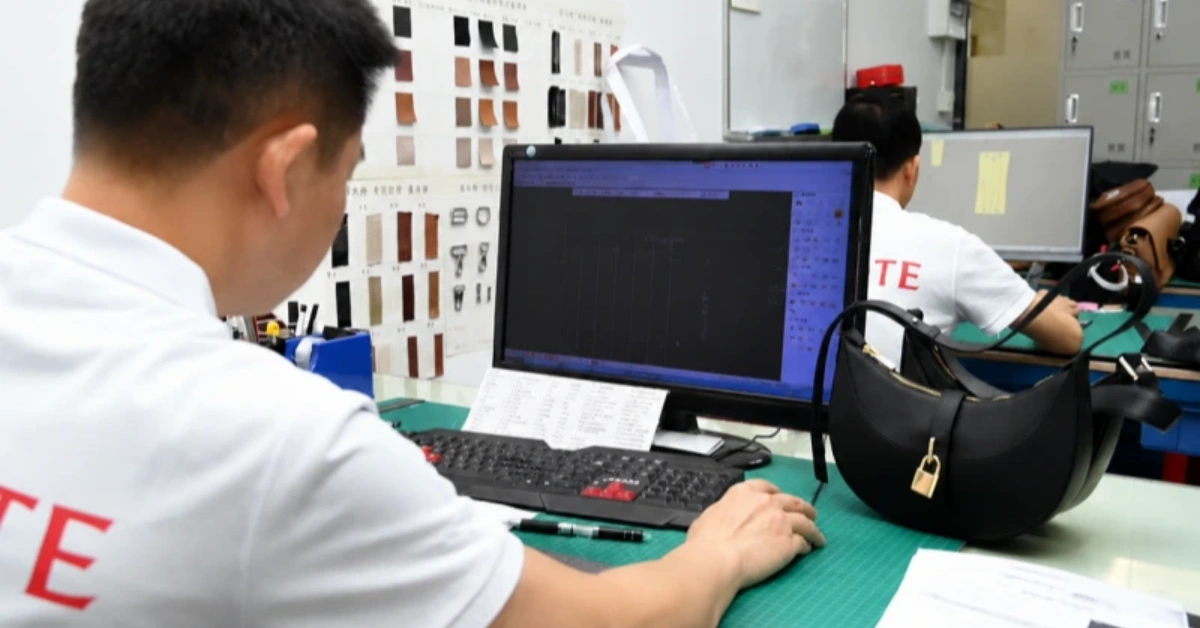
At BAGSRAIN, we utilize advanced, proprietary 3D digital prototyping and nested CAD pattern optimization to maximize leather utilization. By digitizing raw hide maps and utilizing nesting algorithms, our engineering team can strategically arrange the paper patterns to bypass blemishes while reducing scrap margins.
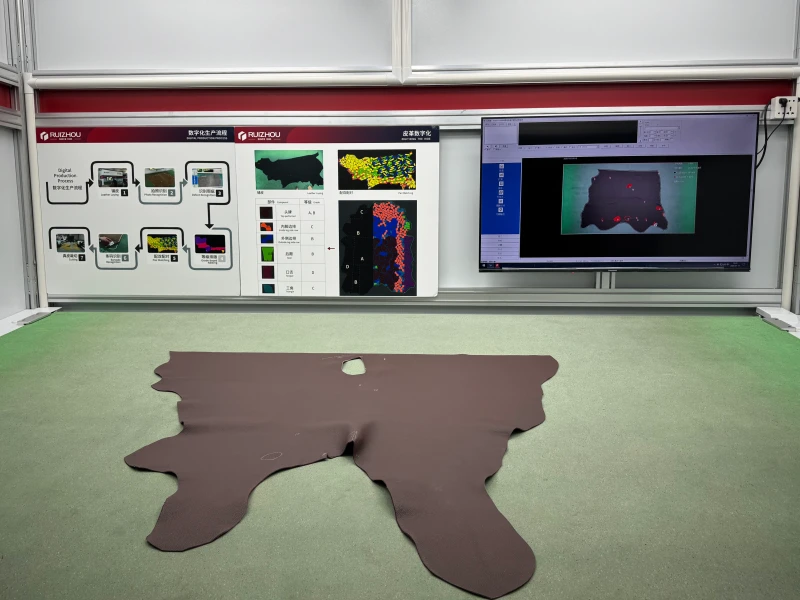
Our approach regularly **increases leather yield by up to 15%** compared to traditional hand-cutting methods. In a production run of 1,000 premium leather tote bags, a 15% reduction in leather waste translates directly to saving thousands of dollars in raw material procurement—instantly expanding your retail gross margin.
| Development Variable | Traditional Sourcing (Non-Engineered) | BAGSRAIN Engineered Sourcing (DLM Model) | Impact on Brand Profit Margin |
|---|---|---|---|
| Average Hide Waste Rate | 35% – 45% (Unplanned manual cutting) | 20% – 25% (CAD-nested hide mapping) | Saves $8 to $15 per bag in raw material costs |
| Prototyping Revision Loops | 3 to 5 physical samples (Informal chat-based) | 1 to 2 samples (Guided by formal Tech Pack) | Reduces development cost and speeds launch by 6 weeks |
| Bulk Defect Rate (Structural) | 4.8% (Sagging, stitching failure, loose rivets) | <0.5% (AQL-compliant structural reinforcement) | Eliminates costly customer returns and chargebacks |
Based on internal bulk-run comparisons conducted across 500-unit collections. Actual margins vary based on material selection and design complexity. Reference: Bagsrain Private Label Handbag Manufacturing.
Securing Your Supply Chain: Turning Prototyping Into a Profit Decision
A reliable handbag manufacturer does not just take an order and execute it blindly. They partner with your design team early in the process to iron out structural weaknesses before they scale into expensive manufacturing defects. By investing in professional pattern engineering and locking down a robust tech pack during the sampling phase, you ensure that your production run proceeds with absolute, friction-free predictability.
Whether you are leveraging a practical handbag pre-order strategy to test the market with 50 units, or scaling a proven silhouette into multi-category retail lines, having a solid technical foundation ensures your product consistently represents the premium value your brand stands for.
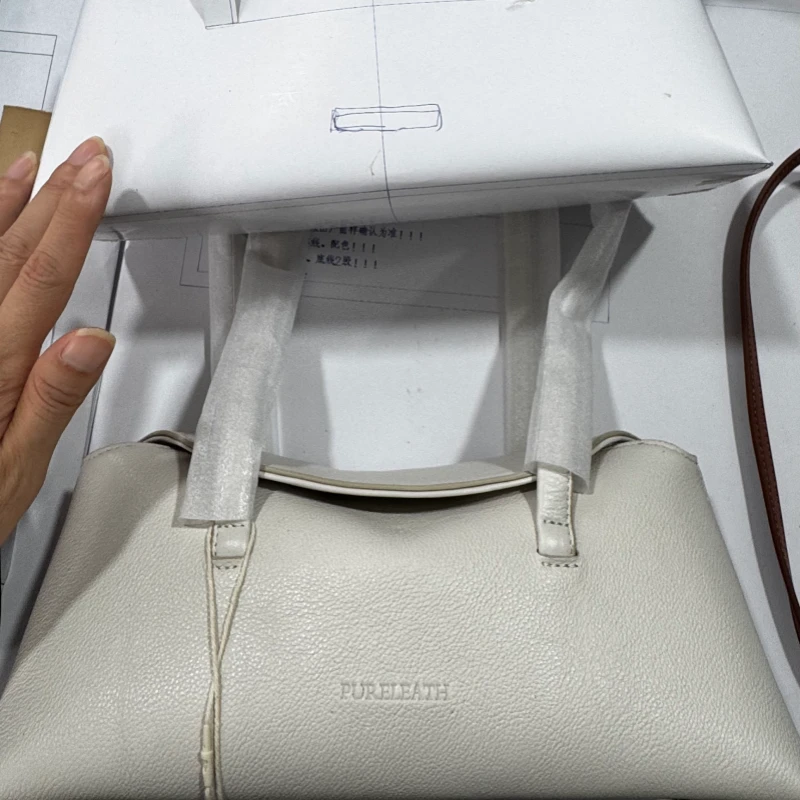
Bring us your early-stage sketches, reference images, or tech materials. BAGSRAIN's technical team will conduct a comprehensive structural and pattern audit to secure your design sovereignty and optimize raw material yield before bulk cutting begins.
Frequently Asked Questions
Why is handbag pattern engineering important for premium bag brands?
Handbag pattern engineering translates 2D designs into precise, 3D structural panels with accurate weight distribution, reinforcement backings, and seam allowances. It prevents structural collapse, ensures aesthetic symmetry, and directly determines leather yield efficiency during bulk production.
How does a custom handbag paper pattern developer impact production costs?
A specialized pattern developer optimizes the arrangement of flat panels on raw hides (nesting). By minimizing negative space and strategically bypassing hide blemishes, they can reduce raw material waste by up to 15%, significantly lowering your cost of goods sold (COGS).
What is included in a professional leather goods tech pack?
A professional tech pack includes detailed flat pattern blueprints, a handbag structural reinforcement guide (specifying EVA foam, Texon, or Salpa backings), exact lining allowances, stitch density parameters, hardware load-bearing reinforcements, and edge paint application standards.
How do I know how to build a handbag tech pack for my startup?
You can begin with detailed 2D sketches, dimensions, and reference images. A professional manufacturing partner like Bagsrain will help you translate these into structured CAD blueprints, bill of materials (BOM), and a formal engineering specification guide.
Why do handbag samples often sag or lose shape over time?
Handbags sag when they lack appropriate internal reinforcement backings behind the leather shell. A comprehensive handbag structural reinforcement guide prevents this by matching the stiffness of different panels with custom-cut boards (microfiber, Salpa, or EVA foam) designed for architectural longevity.
What backing materials are commonly used in bag structural reinforcement?
Common backing materials include Salpa (reconstituted leather for heft and hand-feel), Texon paper or microfiber boards (for base and wall rigidity), EVA foam (for padded, comfortable straps), and non-woven fabric (for lightweight seam reinforcement).
How does BAGSRAIN protect my original design intellectual property?
Every development project at Bagsrain begins with a legally binding Non-Disclosure Agreement (NDA). All proprietary CAD patterns, hardware molds, and tech packs are kept in secured digital silos, ensuring your technical sovereignty is protected from any factory leaks.
What is the typical timeline for handbag pattern development and sampling?
Our standard technical development and sampling process typically requires 20 to 30 days. This includes creating the nested CAD patterns, sourcing custom hardware molds, applying internal reinforcement layers, and completing the final golden sample review.
Do we need to pay for custom hardware molds during prototyping?
Yes. Custom hardware (such as engraved buckles, branded zippers, and unique lock clasps) requires specialized steel or zinc alloy molds. Feasibility and mold fees are calculated and locked during the initial Stage 01 Product Validation review.
What is the typical production timeline after the golden sample is approved?
Once the golden sample is approved and bulk materials are secured, bulk manufacturing and quality control inspections typically require approximately 30 to 45 days, depending on order size and design complexity.
Ben
Senior Bag Manufacturing Consultant & Technical Director
A seasoned expert in high-end bag manufacturing, structural engineering, and zero-defect bulk production. At Bagsrain (the specialized leather goods division of XINZIRAIN, Est. 2001), Ben guides global fashion brands from raw conceptual sketches to compliant, market-ready retail assets through rigorous technical audits.
💡 Have a technical sketch or tech pack?
Email Ben directly to receive a professional production feasibility audit and structural review within 48 hours.
Validate My Design