
By BagsRain Supply Chain Experts | Updated: September 2026
Let’s be brutally honest for a second. If you type "custom handbag manufacturer China" into Google or Alibaba, you will be hit with tens of thousands of results. Every single one of them will claim they offer "high quality," "low MOQs," and "fast delivery."
But if you are a founder of a mid-to-high-end fashion brand, you already know the harsh reality of global sourcing: finding a factory is incredibly easy. Finding a strategic manufacturing partner who won't compromise your brand's reputation to save thirty cents on edge paint is exceptionally rare.
"According to the American Society for Quality (ASQ), the Cost of Poor Quality (COPQ) in manufacturing often eats up to 15% to 20% of sales revenue for brands that fail to vet their supply chain properly."
The global handbag market size is projected to reach $78.46 billion by 2028, according to Grand View Research. Consumers are demanding higher durability, sustainable materials, and flawless finishes. You cannot capture a premium audience with a substandard product.
If you've ever unboxed a bulk shipment and felt your stomach drop because the bags look nothing like the "golden sample" you approved three months ago, this guide is for you. Here are the 10 critical factors you must scrutinize before signing a purchase order (PO) with a private label bag supplier.
OEM vs. ODM Custom Handbag Engineering Capabilities
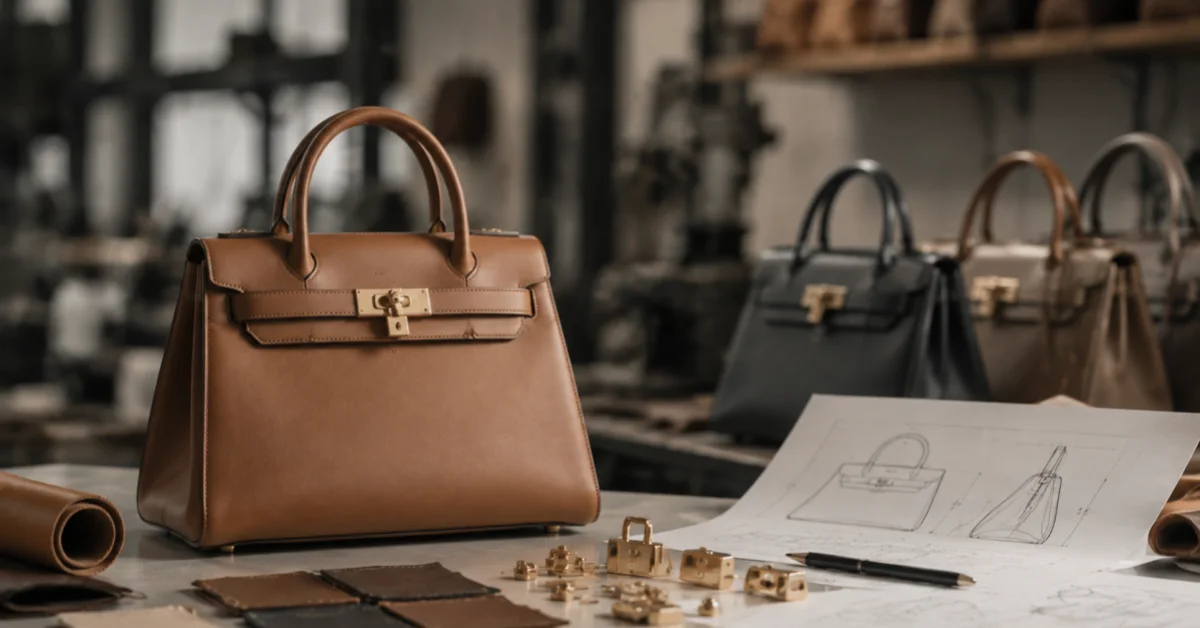
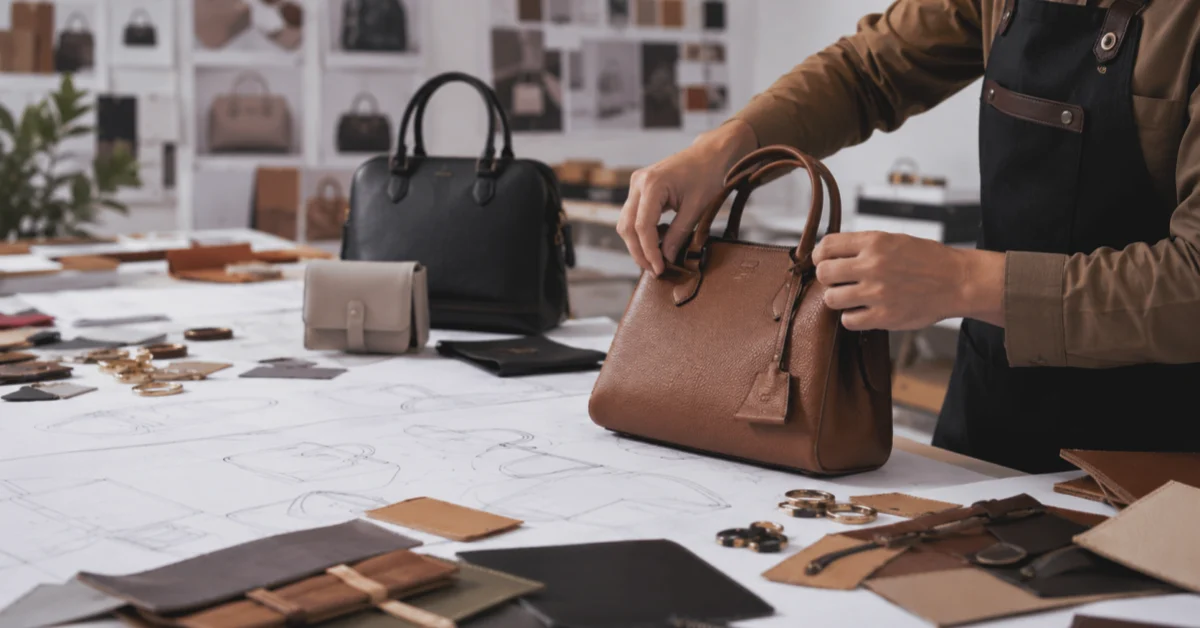
There is a massive difference between a factory that sews and a factory that engineers. If you hand a 2D sketch or a tech pack to a low-tier factory, they will attempt to replicate it visually. They won't consider structural integrity.
A premium custom handbag factory will dissect your design. Does that structured tote need Salpa (leather board) or EVA foam reinforcement so it doesn't collapse after a month of use? If the gusset is too wide, will the leather warp near the zipper? A true manufacturing partner pushes back on your tech pack when they spot a manufacturability risk. If a factory says "yes" to every single wild design request without asking technical questions, run.
The Nightmare of Leather Sourcing & Batch Consistency
Many brands obsess over the initial leather swatch, completely unaware of how tanneries operate. Genuine leather is a natural product; vegan PU/microfiber is a chemical one. Both are subject to severe batch-to-batch color and texture variations.
Ask your potential supplier how they manage material MOQ (Minimum Order Quantity) and dye lots. Do they source from Leather Working Group (LWG) certified tanneries? If you order 500 bags now and reorder 500 bags six months later, how do they guarantee the Pantone color match? Premium handbag OEMs hold master color swatches and conduct strict Incoming Quality Control (IQC) before a single hide is cut.
Hardware: The Fastest Way to Cheapen a Luxury Bag
You can use Italian full-grain leather, but if your zipper sticks or your D-rings tarnish after three weeks in humidity, the customer will demand a refund. Custom hardware is where the hidden costs of handbag manufacturing usually lie.
Dig deep into the hardware specs. Are they using cheap iron, or high-density zinc alloy and solid brass? Ask about the electroplating process. Is it rack plating or barrel plating? Premium hardware requires an anti-oxidation clear lacquer topcoat (often referred to as sealing glaze). Furthermore, discuss custom mold fees upfront so you aren't hit with a surprise $500 invoice just to emboss your logo on a zipper pull.
The "Sample-to-Bulk" Consistency Trap
This is the black hole of fashion production. The "Sample Trap" happens when a factory's master sample-maker—a craftsman with 20 years of experience—handcrafts a flawless prototype. But when the order moves to the assembly line, the factory uses cheaper thread, skips the reinforcement layers, and applies edge paint too thinly to speed up the conveyor belt.
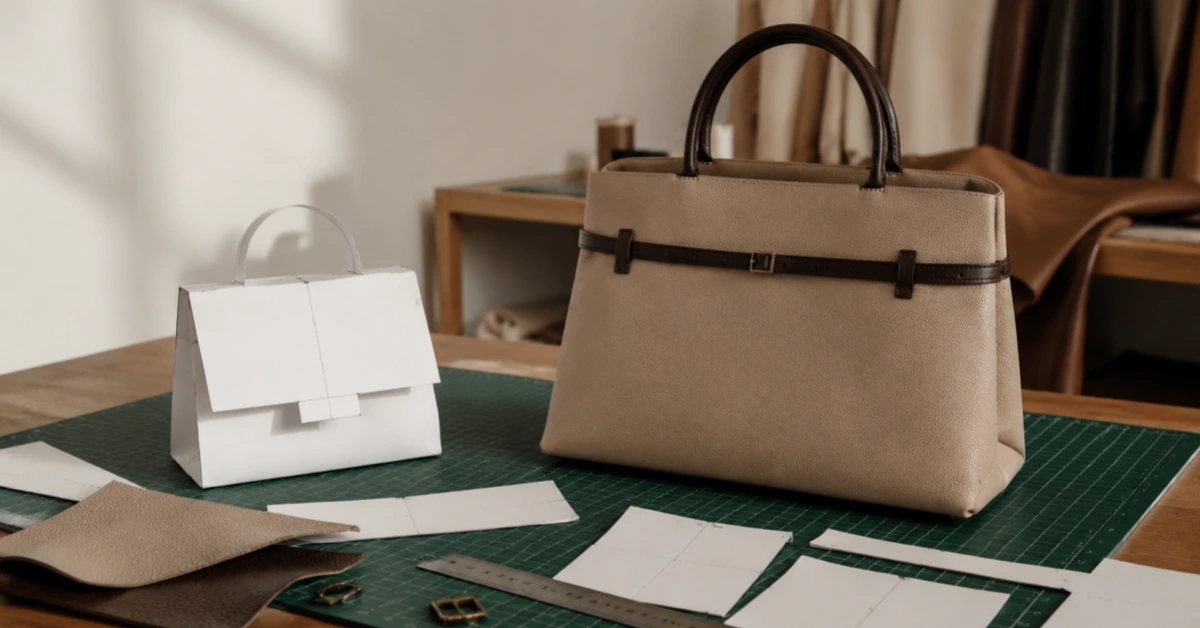
To avoid this, demand a formalized Bill of Materials (BOM) and a sealed "Golden Sample." Ensure the factory uses laser cutting or precision cutting dies for bulk orders, rather than manual hand-cutting, to maintain exact dimensional symmetry across 1,000 units.
Expert Insight: The Edge Paint Tell
Want to test a factory's true quality? Look at the edges of the leather straps. Cheap factories apply one thick layer of edge paint (edge dye) which cracks and peels in cold weather. Premium factories apply heat, sand the edge, apply a primer, and then paint 3-4 thin layers for a seamless, rubbery finish that lasts years.
Granular Quality Control (AQL Standards)
Do not accept the statement "We have strict QC." You need to know their exact protocol. Standard B2B handbag manufacturers should follow an AQL 2.5/4.0 (Acceptable Quality Limit) inspection standard.
Their workflow should be transparent:
- IQC (Incoming): Checking leather thickness, hardware functionality.
- IPQC (In-Process): Checking stitching tension (SPI - Stitches Per Inch) and gluing.
- FQC (Final): Verifying packing, hangtags, and checking for loose threads or glue marks before boxing.
Demystifying Handbag Minimum Order Quantities (MOQs)
Let's talk about the elephant in the room: MOQs. Startup brands want an MOQ of 50; factories want an MOQ of 1,000. Why?
Because tanneries don't fire up a massive dyeing drum for 20 meters of leather. If a factory offers you a ridiculously low MOQ with no setup fees, they are likely buying leftover, deadstock materials from wholesale markets. This means you can never reorder that exact color again once it sells out.
A strategic leather bag factory will work with you. They might set a Style MOQ of 300 pieces, but allow you to split that into 3 colors (100 pieces/color) by using stock colors from their premium tannery partners.
Transparent Quoting vs. Hidden Upcharges
If you receive a quote within 20 minutes of sending a tech pack, it's a fake quote. Accurate costing requires the factory's purchasing team to calculate material yield, hardware costs, labor minutes, and logistics.
A proper quote from a premium bag supplier should itemize:
- Material & lining costs.
- Hardware and specific plating costs.
- Labor and specialized techniques (e.g., hand-stitching, embroidery).
- Standard packaging (dust bags, polybags, moisture desiccants).
Lead Times & Supply Chain Agility
A standard timeline in the premium handbag sector is 10-15 days for a prototype, and 35-45 days for bulk production. However, during Q3 and Q4, factories are slammed preparing for Black Friday and the holidays.
You need a factory that provides a Master Production Schedule. Ask them: "If my hardware supplier delays delivery by 5 days, how does that impact the final shipment date?" Factories that actively manage supply chain bottlenecks will save your seasonal launches.
Compliance, Sustainability, and the Law
If you are importing bags to the European Union or the United States, customs and retail distributors do not play games with compliance.
Your manufacturer must guarantee that their vegan leather, glues, and hardware meet REACH standards (EU) or Proposition 65 (California). This means strictly avoiding lead, cadmium, phthalates, and restricted azo dyes. If your factory buys cheap wholesale glue to save money, your entire container could be seized or rejected by your retail partners.
IP Protection and Non-Disclosure Agreements (NDA)
Finally, your design is your intellectual property. The dark side of overseas manufacturing is seeing your exact silhouette pop up on AliExpress or DHgate two weeks after you finalize your sample.
A reputable OEM handbag manufacturer will sign an NNN (Non-Disclosure, Non-Use, Non-Circumvention) agreement. Furthermore, they will guarantee that custom molds paid for by your brand (like logo plates) will never be used for another client.
Stop Guessing. Start Building with BagsRain.
At BagsRain, we don't just execute orders—we incubate fashion brands. As a specialized OEM/ODM manufacturer for mid-to-high-end markets, we bridge the gap between creative design and flawless mass production.
From structural tech-pack audits to AQL-standard quality control, we protect your margins, your timeline, and your brand equity.
Submit Your Tech Pack for a Free Feasibility ReviewFrequently Asked Questions (FAQ)
What is the difference between an OEM and ODM handbag manufacturer?
OEM (Original Equipment Manufacturer) means the factory produces the handbag entirely based on your brand's specific tech packs and designs. ODM (Original Design Manufacturer) means the factory has existing "white label" designs that you can select, modify slightly (like changing colors or adding your logo), and sell under your own brand.
Why is sample-to-bulk consistency a problem in fashion manufacturing?
Inconsistencies occur because samples are crafted slowly by master artisans using optimal materials. Bulk production is done on assembly lines where speed can compromise quality if strict Standard Operating Procedures (SOPs) and Bill of Materials (BOM) are not heavily enforced by factory management.
What is a normal MOQ for a custom leather handbag?
For genuine leather, a standard premium factory MOQ is typically 200 to 300 pieces per style, often splittable across 2-3 colors. This is largely dictated by the tannery's minimum requirement for dyeing a batch of leather. Extremely low MOQs (under 50) usually mean the factory is using deadstock, unrepeatable materials.
How do I verify a Chinese bag factory's quality before ordering bulk?
Never skip the sampling phase. First, request a prototype to check structural integrity. Once approved, request a Pre-Production Sample (PPS) using the exact bulk materials and hardware. Finally, hire a third-party QC agency (like SGS or V-Trust) to inspect the goods at the factory based on AQL 2.5 standards before authorizing the final balance payment.
Can handbag factories guarantee compliance with EU/US chemical regulations?
Professional export-oriented manufacturers can guarantee compliance. You must specify in your PO that all materials (leather, lining, glue, edge paint) and hardware must pass REACH (EU) or Prop 65 (US) testing, specifically for heavy metals, phthalates, and lead. The factory should be able to provide test reports from certified labs upon request.