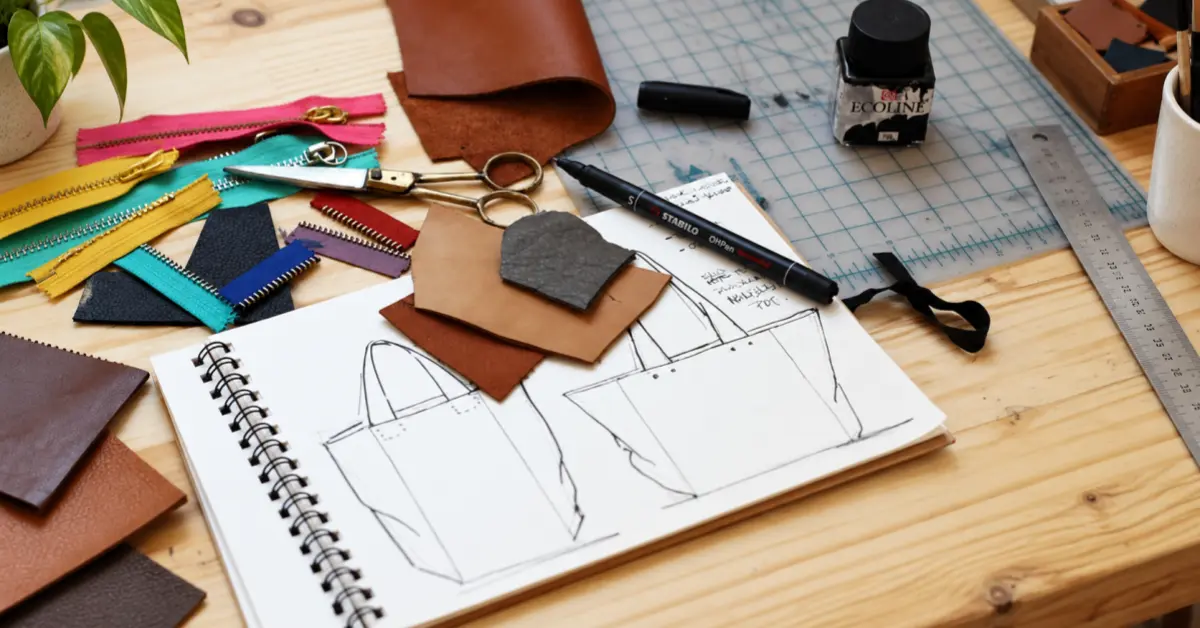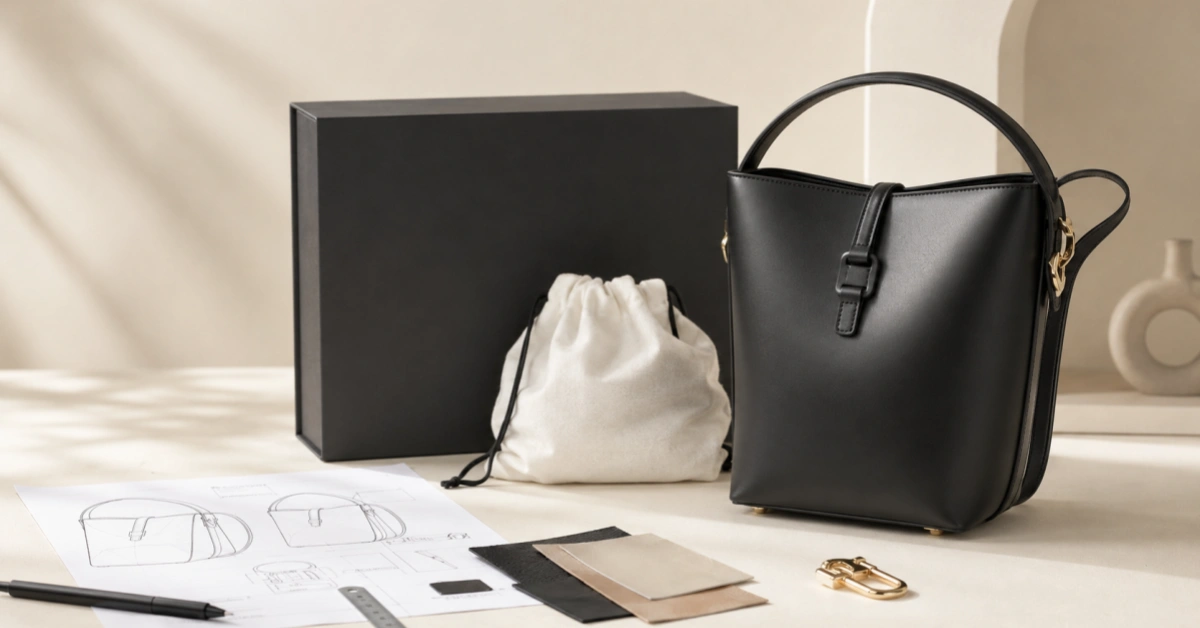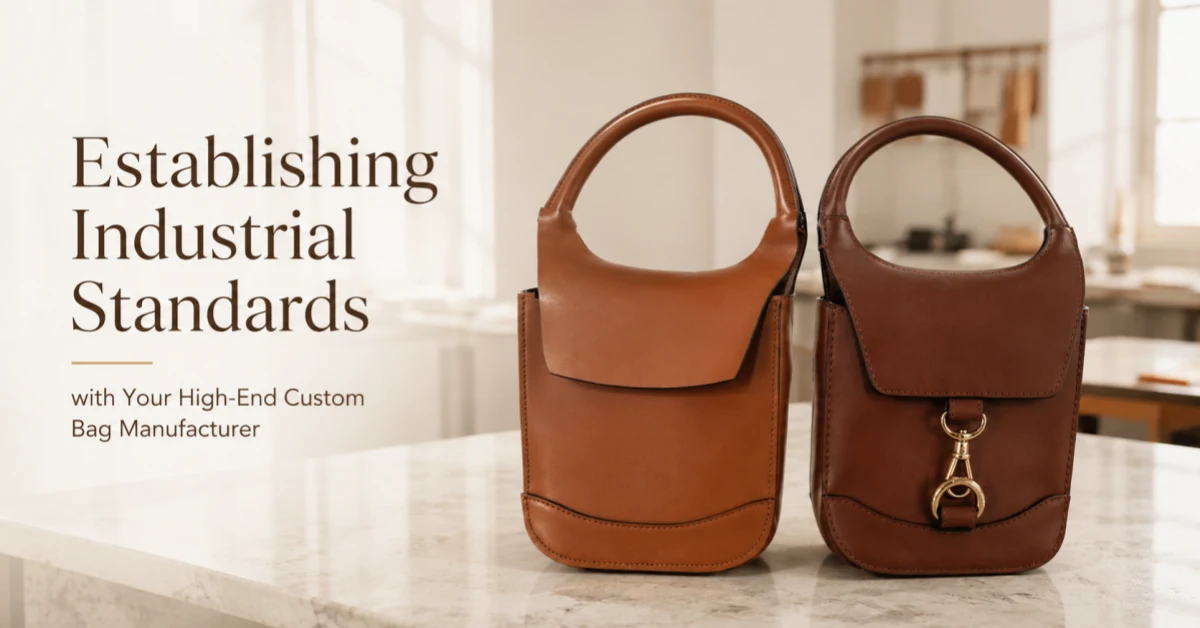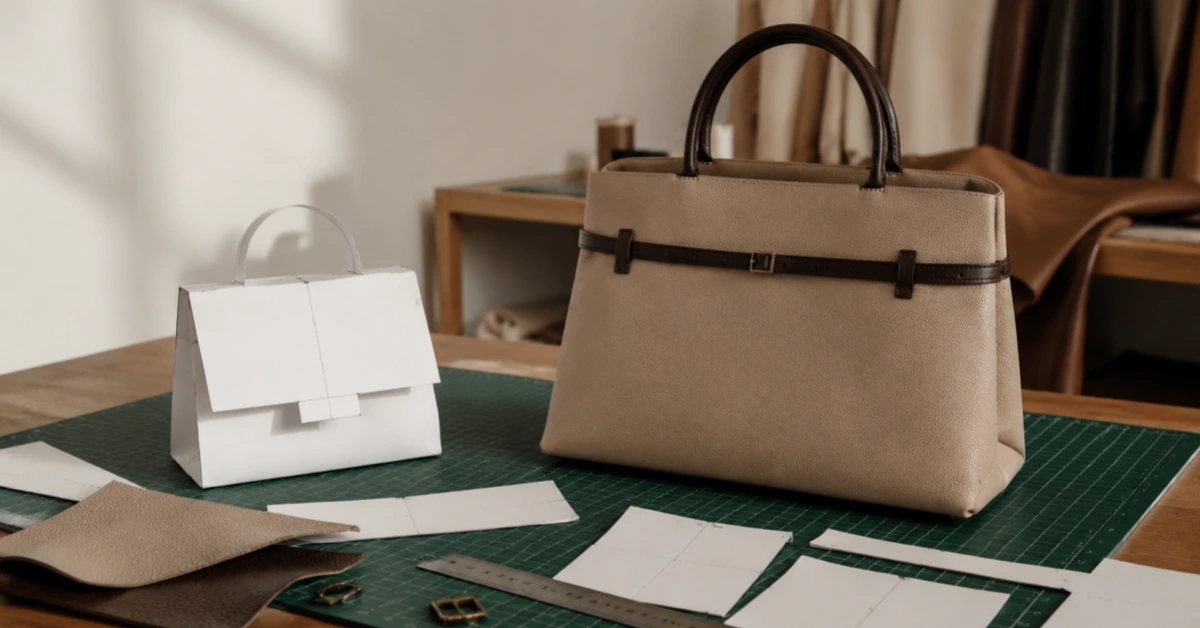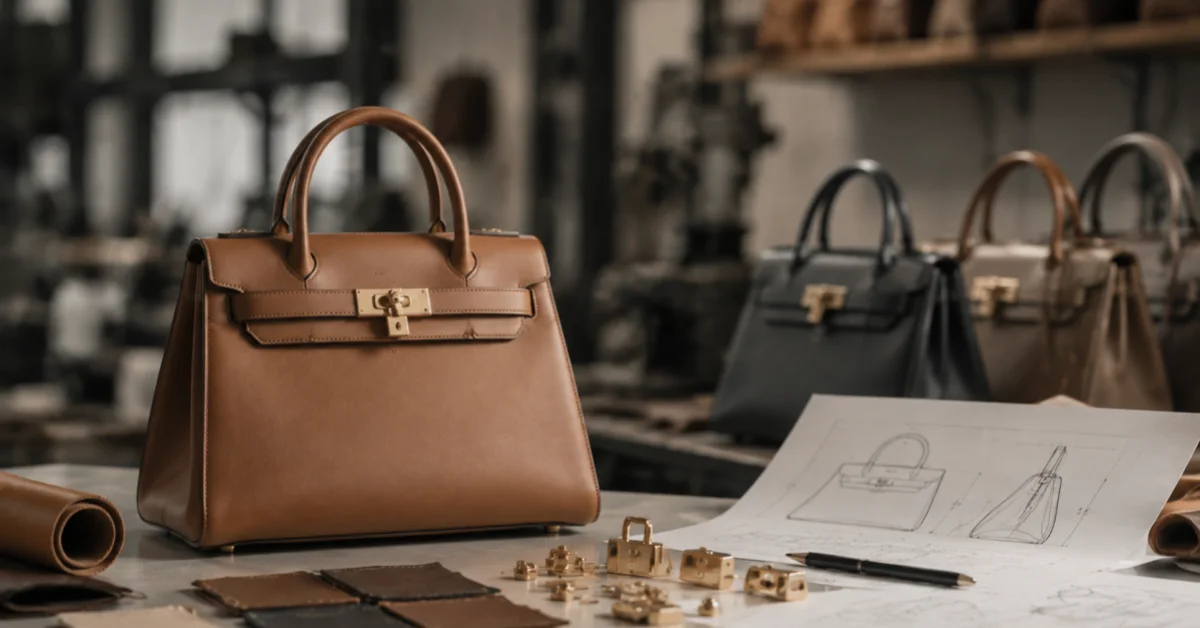

A handbag sample can look finished without actually being ready for production. Understanding that difference is one of the most important parts of professional handbag prototype development.
The proportions may look right, the leather may feel good, the hardware may match the design, and the sample may photograph beautifully. But once the same product moves from one carefully made prototype to hundreds of production units, weaknesses that were easy to overlook can become much more visible.
A slightly unstable handle attachment becomes a recurring construction issue. A zipper that requires manual adjustment becomes inconsistent across a production run. A soft leather that looked attractive on the sample may struggle to hold the intended shape once material variation appears between batches.
Sample approval should not simply answer “Do we like how this bag looks?” It should answer a more important question: “Can this bag now be reproduced consistently at the required quality?”
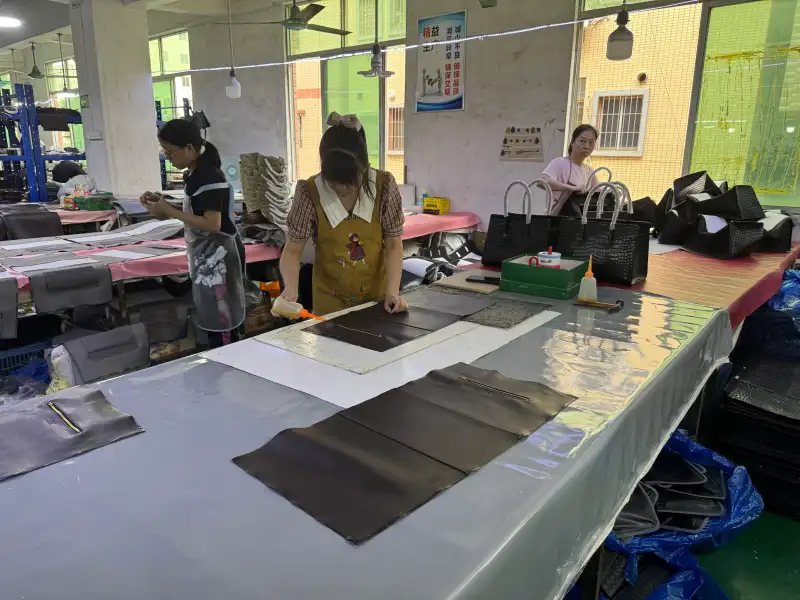
That is the real standard for deciding whether a handbag prototype is ready for production.
What Does “Production-Ready” Actually Mean?
A production-ready handbag sample is not necessarily a mathematically perfect object. Small handmade variations will always exist in products involving leather, textiles, edge painting, stitching, and manual assembly.
The goal is not zero variation. The goal is controlled variation.
Both the brand and manufacturer should understand what the product is supposed to look like, how it should function, which details are critical, and which tolerances are acceptable. By the time the final sample is approved, the major variables should already be resolved. These include overall dimensions, silhouette, material, reinforcement, hardware, closures, straps, internal organization, stitching, edge finishing, branding, and packaging direction.
If several of these areas are still being debated, the sample is not truly ready for production.
Start by Checking the Overall Proportion
The first review should focus on the product as a whole. Place the physical sample beside the approved drawing, rendering, measurement sheet, or reference used during development.
Does the bag communicate the intended silhouette? Check the width, height, depth, handle drop, strap length, opening size, flap proportion, gusset width, pocket placement, and hardware scale.
This is not only a measurement exercise. A bag can technically match most dimensions but still feel visually unbalanced. A handle may be slightly too thick relative to the body. A flap may sit too low. A side gusset may create more volume than the original design intended.
These differences matter because customers experience the entire proportion, not individual measurements. The final prototype should therefore satisfy both dimensional accuracy and visual balance.
Test the Bag Empty and Loaded
A common mistake during handbag sample approval is inspecting the product only while it is empty.
Many bags behave very differently once they are being used. A tote may look structured on a table but lose its shape after carrying weight. A shoulder bag may twist when a phone, wallet, and other everyday items are placed inside. A soft handbag may stretch around the handle attachments.
Testing the sample with realistic contents helps reveal these issues before production. Pay particular attention to the base, handle attachments, strap anchors, side panels, and top opening.
Development Tip: Do not only ask whether the bag can carry weight. Check whether it can carry that weight while still maintaining the intended silhouette, balance, and user experience.
Evaluate Material Performance on the Finished Product
Material selection should not end when the swatch is approved.
The finished prototype shows how the material behaves when it is cut, folded, stitched, reinforced, edge painted, and combined with hardware. Look closely at corners, folds, handle bases, zipper areas, and other points where the material is under tension.
Does the leather crease naturally, or does it create unwanted sharp lines? Does suede show obvious directional variation? Does the material recover after bending? Does a structured body remain stable?
For painted-edge constructions, inspect whether the edge remains smooth and consistent around curves and multi-layer sections.
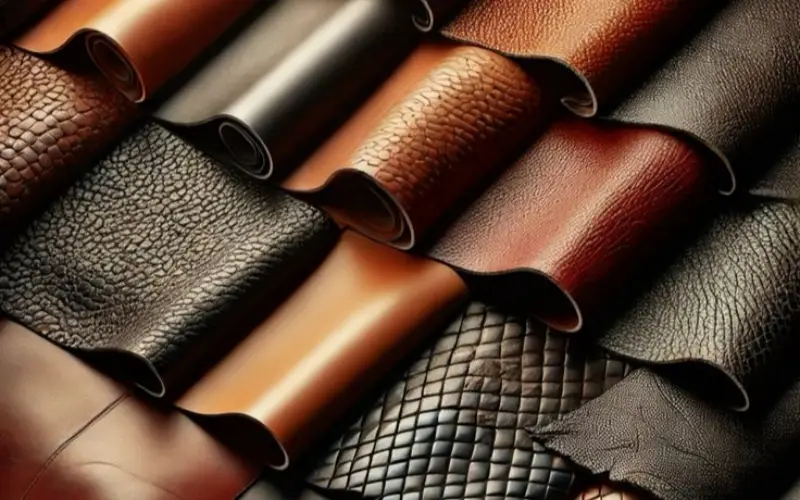
A material can look excellent in isolation but perform poorly once integrated into the actual construction. This is why material performance should be judged on the complete prototype rather than from swatches alone.
Check Every Piece of Hardware in Use
Hardware should be tested as a working component, not just inspected for appearance.
Open and close the lock several times. Move adjustable buckles through their positions. Rotate hooks. Test zipper pulls. Handle the bag normally and observe whether metal parts rub against leather or other components.
Look at the visual relationship between different pieces of hardware as well. If the bag includes rings, chains, feet, buckles, and a logo plate, the finishes should appear consistent when viewed together.
Weight also deserves attention. A heavy metal lock can pull against a soft flap. A large chain may change how a bag hangs. Oversized rings may place unnecessary pressure on leather around the attachment point.
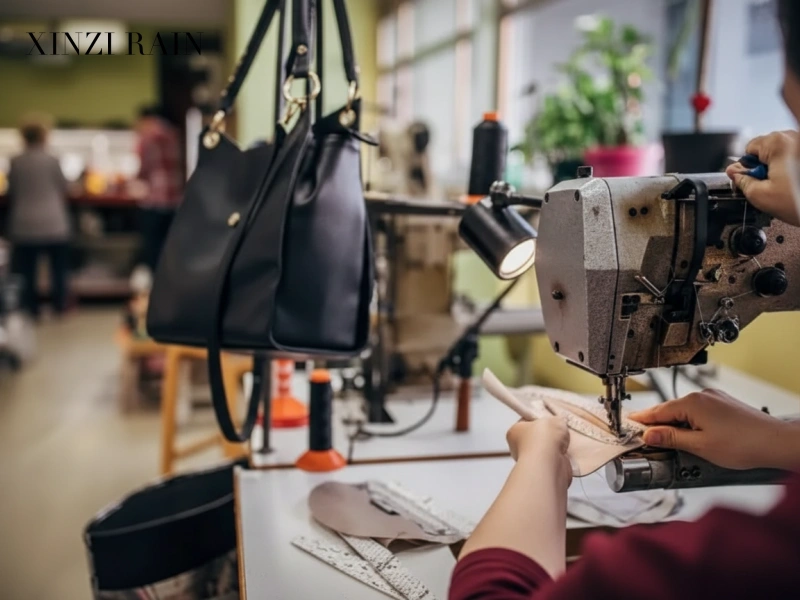
If the hardware changes the structure or carrying balance, the surrounding construction may need reinforcement before the sample can be approved.
Test the Bag as a Customer Would Use It
A prototype should be used, not only photographed.
Open the main compartment repeatedly. Use the pockets. Adjust the strap. Carry the bag by the handle. Wear it on the shoulder or crossbody if that is part of the design.
This often reveals problems that are difficult to identify from appearance alone. A zipper opening may be too narrow for comfortable access. An internal pocket may be positioned too high. A magnetic closure may require too much force. A strap adjuster may sit awkwardly against the body.
These are small details during development, but they strongly influence the customer's impression of the finished product.
For functional products such as laptop bags, work totes, or travel bags, realistic use testing is especially important. The prototype should be evaluated according to what the final customer will actually ask it to do.
Inspect the High-Stress Areas
Some parts of a handbag carry much more structural responsibility than others.
Handle bases, strap anchors, zipper ends, flap hinges, bottom corners, hardware mounting points, and pocket openings should all receive extra attention.
Look for stretching, distortion, uneven stitching, pressure marks, or movement around the attachment points. If the design carries significant weight, hidden reinforcement may be necessary even if the exterior looks simple.
The purpose is not only to prevent immediate failure. Good structural development should also reduce gradual deformation during normal use.
A sample that looks perfect on the first day but quickly loses shape under realistic conditions still needs development work.
Review the Quality of Repeated Details
Production magnifies repetition.
One slightly uneven stitch on a single sample may be minor. The same issue appearing repeatedly across hundreds of pieces becomes a visible quality problem.
During final sample review, examine the details that will be repeated throughout production. This includes stitch distance, stitch alignment, edge paint thickness, pocket placement, hardware position, logo placement, piping, folded edges, and panel symmetry.
Ask whether these details are clearly defined enough that production teams can repeat them consistently.
This is one of the reasons a final approval sample should be more than a visually attractive reference. It should represent a realistic manufacturing standard.
Make Sure the Latest Revisions Are Actually Resolved
Custom bag sampling often involves several rounds of feedback.
The final review should therefore include a simple but important step: confirm that every critical revision has been completed.
If the previous sample required a longer strap, thinner handle, stronger base, adjusted pocket, different edge color, or repositioned logo, those items should be checked individually.
Do not assume that because the new sample looks better overall, every requested change was made correctly.
This is particularly important when feedback has been exchanged across emails, messages, annotated images, and video calls. A clear revision record reduces this risk.
Ask Whether the Construction Is Repeatable
This is where a handbag prototype manufacturer should provide more than visual execution.
Some sample constructions look good because an experienced sample maker spends additional time correcting them manually. That may be acceptable during development, but it can become a problem during production.
Ask whether any part of the sample required excessive manual adjustment. Was the zipper difficult to install consistently? Did the corners require repeated correction? Was the hardware unusually difficult to position? Does the edge finishing depend too heavily on hand correction?
If the answer is yes, the manufacturer should consider whether the construction can be simplified, reinforced, or standardized before production begins.
A successful prototype should not prove only that the bag can be made once. It should provide confidence that the same result can be reproduced across a commercial production order.
Freeze the Important Specifications Before Production
Once the prototype is approved, the product should stop changing casually.
Final measurements, material, color, lining, hardware, stitching, edge finishing, logo placement, straps, interior details, and packaging should be documented clearly.
Late changes can affect much more than expected. Increasing strap length changes material consumption. Switching hardware may require different reinforcement. Changing leather thickness may alter edge finishing and assembly.
The closer a project gets to production, the more carefully changes should be controlled.
Sample approval should therefore represent a real decision point: the product is sufficiently resolved to become a manufacturing standard.

Do Not Rely on the Physical Sample Alone
The approved sample is important, but it should be supported by clear product information.
For repeat production, the manufacturer may need to reference exact material specifications, hardware finishes, measurements, stitching details, edge colors, packaging requirements, and final revisions months later.
If these details exist only in someone's memory, consistency becomes difficult.
A well-managed product normally combines the approved sample with supporting records such as measurement sheets, material references, component information, construction notes, and approval photos.
This becomes especially valuable when a successful style is reordered or developed into new colors.
Know When Not to Approve the Sample
Brands sometimes approve a sample because a launch date is approaching or because another sample round feels inconvenient.
That can be expensive.
A sample should not be approved if there are unresolved concerns about structure, function, material behavior, critical hardware, measurements, or production repeatability.
Cosmetic refinements and critical manufacturing issues are not the same thing. A slightly different stitch tone may be a preference issue. A handle attachment that distorts under load is a production issue.
Knowing which problems must be resolved before manufacturing is one of the most important parts of professional product development.
The Final Question: Can This Sample Become a Reliable Product?
The purpose of custom handbag sampling is not to reach the prettiest prototype as quickly as possible. It is to reduce uncertainty.
By the final sample, the brand should understand how the bag looks, how it functions, how the material behaves, how the hardware works, where the structural risks are, and how the design will be reproduced during production.
That is when a prototype becomes genuinely valuable.
At Bagsrain, we treat the final sample as a bridge between product development and commercial manufacturing. The goal is to resolve critical decisions before production begins so that the approved design can move into the first order with clearer standards and fewer avoidable surprises.
A strong prototype does not simply prove that one bag can be made. It proves that the product is ready to be made again.
Frequently Asked Questions
What should I check before approving a handbag sample?
Review the overall proportion, dimensions, material behavior, hardware, structure, straps, closures, internal organization, stitching, edge finishing, branding, and actual usability. The sample should also be tested under realistic carrying conditions.
Is the first handbag sample usually ready for production?
Not always. Simple designs using familiar materials and existing hardware may need fewer revisions, while highly customized products often require additional development rounds to resolve structure, hardware, material, and functional details.
Can I approve a custom handbag sample from photos?
Photos and videos are useful for preliminary review, but they cannot fully communicate weight, hand feel, balance, stiffness, material recovery, or certain functional details. Physical evaluation is preferable for important final approvals when possible.
Why does sample approval matter for mass production?
The final sample helps establish the standard that production teams need to reproduce. Unresolved issues at the sample stage can become repeated defects or inconsistencies once the product moves into a larger manufacturing run.
What happens after the final handbag prototype is approved?
The manufacturer prepares the product for production by confirming final specifications, materials, hardware, construction details, packaging, and quality requirements. The approved prototype then becomes one of the key references for the first production order.
Is Your Handbag Sample Really Ready for Production?
If you already have a prototype but are unsure whether the structure, material, hardware, or construction is ready for manufacturing, Bagsrain can help review the development direction before your product moves into production.
Request a Development Review