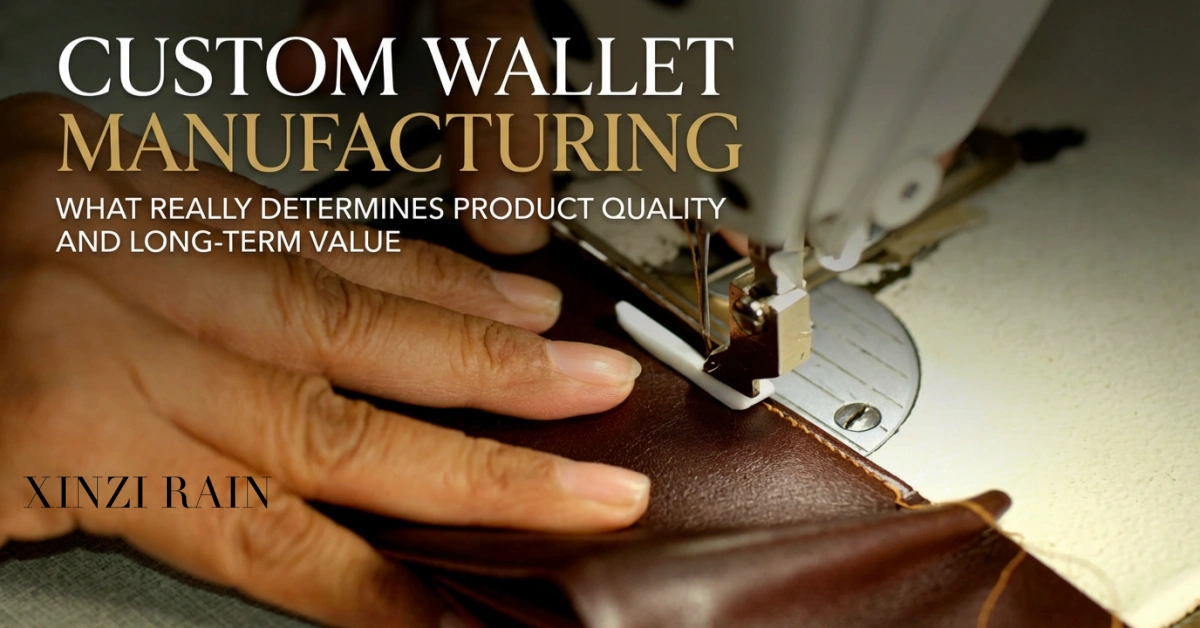

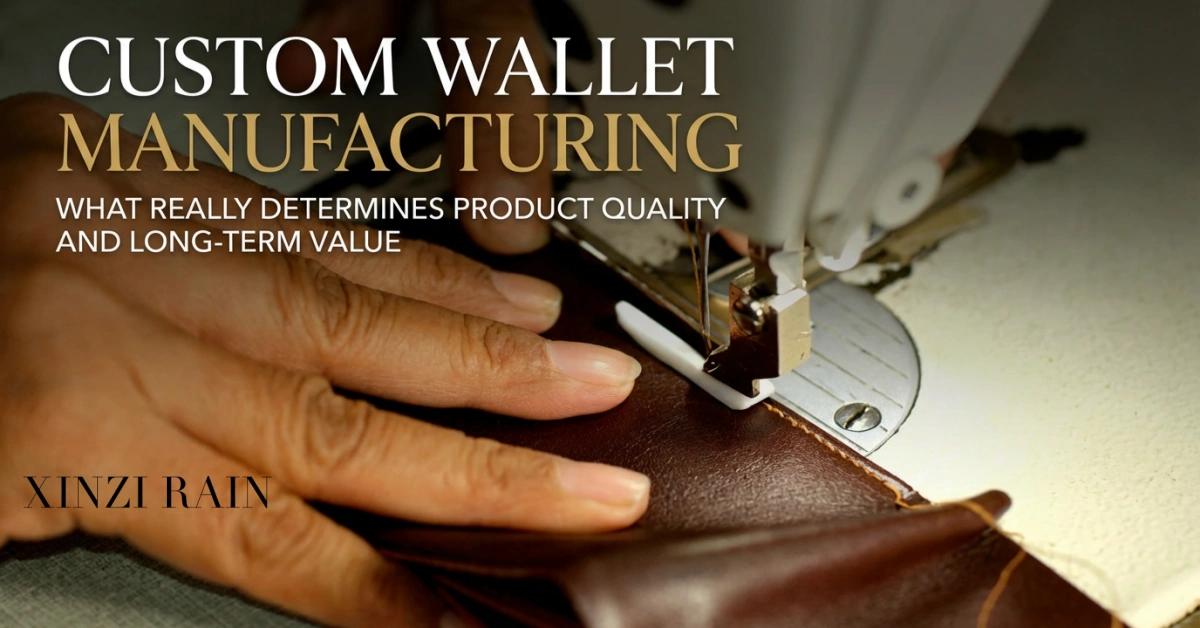
When brands consider developing a custom wallet, the decision often appears simple. Wallets are compact, familiar products, and the market is saturated with ready-made options. However, for experienced B2B buyers, the real challenge lies beneath the surface.
Design intention, material behavior, production feasibility, and long-term consistency must be evaluated simultaneously. These factors are closely connected, and early decisions continue to shape durability, user experience, and brand perception long after the first production run.
As a China-based leather bag and wallet manufacturer, XINZIRAIN has worked with international brands across Europe, North America, and the Middle East. Through long-term OEM and private label production, we have seen how thoughtful customization separates short-lived products from those that deliver lasting value.
This article explains what custom wallet manufacturing truly involves, why it matters for brands, how materials influence real-world performance, and how to choose a manufacturing partner capable of supporting long-term growth.
What Custom Wallet Manufacturing Really Means
Custom wallet manufacturing goes far beyond adding a logo or choosing a color. From a manufacturing perspective, true customization is a structured development process built around usage scenarios, performance expectations, and production control.
A genuinely custom wallet is defined by its internal structure, thickness balance, pocket layout, edge finishing, stitching method, and material temper. These elements determine how the wallet feels in daily use, how it ages over time, and how reliably it can be reproduced at scale.
At XINZIRAIN, custom wallet projects typically begin in one of two ways. Some brands develop products from the ground up, defining every structural detail based on their positioning and target market. Others optimize existing, proven structures by adjusting leather grades, lining materials, dimensions, or hardware specifications. Both approaches can succeed when product objectives are clearly defined.
What ultimately determines success is controllability. A well-developed custom wallet performs predictably, ages naturally, and maintains consistency across production batches. Without close coordination between design, materials, and manufacturing, customization remains superficial and unstable.
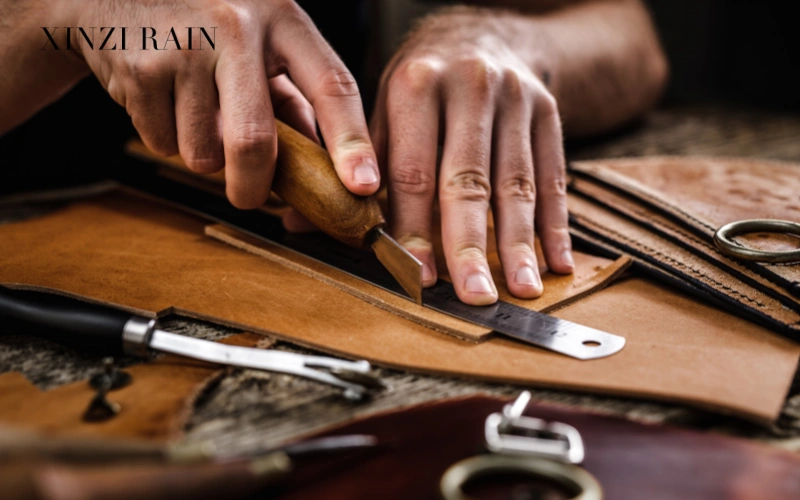
Why Brands Choose Custom Wallets Over Ready-Made Designs
For B2B buyers, choosing custom wallets is rarely about novelty. It is about control, predictability, and long-term product confidence.
Control Over Structure, Not Templates
Off-the-shelf wallets force brands to adapt to existing molds. Custom development allows the structure to adapt to real usage behavior—how many cards are carried, acceptable thickness, opening resistance, and long-term shape retention.
Design Intent Expressed Through Craft
Wallets expose craftsmanship clearly. Users immediately feel stitch density, edge treatment, fold behavior, and leather response. Custom manufacturing ensures these details align with brand intent rather than inherited compromises.
Materials Matched to Market Conditions
Climate, usage frequency, and regional habits all affect material performance. Through custom development, materials are selected based on where and how the wallet will be used, reducing deformation, premature wear, and customer complaints.
Consistency Across Repeat Orders
One of the most practical advantages of custom wallets is repeatability. Once specifications are locked, future orders maintain the same structure, feel, and performance—even as production volumes grow.
More Predictable Long-Term Costs
Although custom wallets may require deeper development initially, they often reduce long-term costs by minimizing defects, rework, and uncertainty in repeat production.
How Materials Shape Wallet Performance Over Time
Material selection is one of the most critical and underestimated aspects of wallet development. Beyond appearance, materials directly affect durability, aging behavior, and user satisfaction.
Natural leathers such as full-grain and top-grain develop character over time, while synthetic options like microfiber or PU offer stability and cost control. Each material behaves differently under repeated handling, environmental exposure, and long-term use.
At XINZIRAIN, material recommendations are based on the product's intended lifecycle. Some wallets are designed to develop patina and soften naturally, while others are expected to maintain a consistent appearance. Matching material behavior to brand expectations is essential for long-term success.
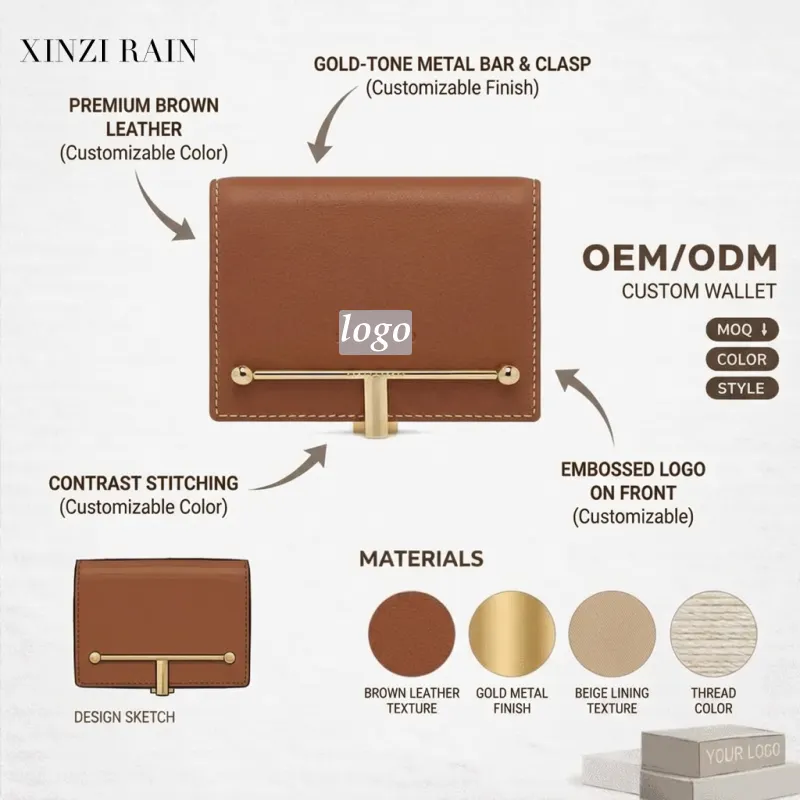
Where Custom Wallets Deliver the Most Value
Custom wallets are particularly effective in scenarios where consistency and differentiation matter.
For brand collections, custom development ensures unified materials and construction logic across product lines. In retail environments, subtle differences in structure and proportion help products stand out without excessive decoration. For professional or corporate use, durability and understated design often outweigh trend-driven features.
Custom manufacturing also allows market-specific adjustments. Regional preferences for size, capacity, and feel can be addressed without redesigning the entire product. For long-term supply programs, locked specifications ensure future batches remain consistent with earlier deliveries.
How to Choose a Reliable Custom Wallet Manufacturer
Selecting the right manufacturer directly impacts product stability and brand reputation. A reliable partner focuses on process control rather than promises.
Experienced manufacturers ask detailed questions before quoting, covering structure, thickness, materials, and usage scenarios. Sampling is treated as structured development, with documented revisions and clear risk assessment.
Stable material sourcing is another key indicator. At XINZIRAIN, long-term supplier relationships and detailed material specifications help ensure consistency across repeat orders. Quality control is integrated throughout production, not limited to final inspection.
Scalability is equally important. A capable manufacturer can explain how quality is maintained as volumes increase, through standardized processes and trained production teams.
China remains a leading manufacturing base for leather wallets and bags due to its mature supply chains and skilled workforce. However, true reliability lies in how complexity is managed, not simply where production is located.
Conclusion
Custom wallet manufacturing is not a single decision but a system of interconnected choices involving structure, materials, production methods, and long-term scalability. These choices may seem minor initially, but they become increasingly visible through extended use and repeated production.
When customization is treated as a complete product system rather than a surface-level adjustment, it delivers stability, predictability, and lasting value. For B2B buyers, this clarity reduces trial and error and enables more confident product decisions.
As a China-based leather bag and wallet manufacturer, XINZIRAIN continues to support brands with structured development, transparent communication, and stable production execution. We believe that long-term success comes from disciplined manufacturing logic rather than short-term customization.