
If you’ve spent as much time in tanneries and showrooms as I have, you start to develop a "sixth sense" for where the market is moving. For years, we were obsessed with the "Visual"—bold logos, flashy hardware, and colors that popped on a smartphone screen.
But as we look toward 2026, the tide has turned. The conversation has shifted from "How does it look?" to "How does it feel?"
We are entering the era of Sensory Luxury. Consumers are tired of the disposable; they are looking for pieces that offer an emotional connection through touch. For brand owners and B2B buyers, this means your material choice isn't just a line item—it’s the soul of your collection.
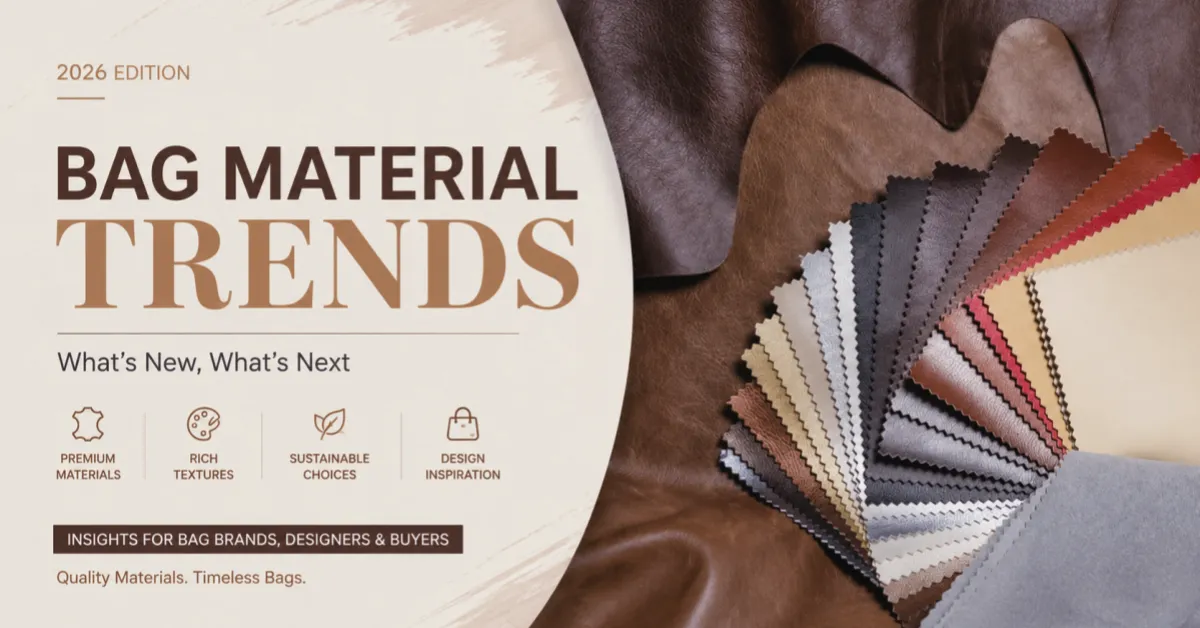
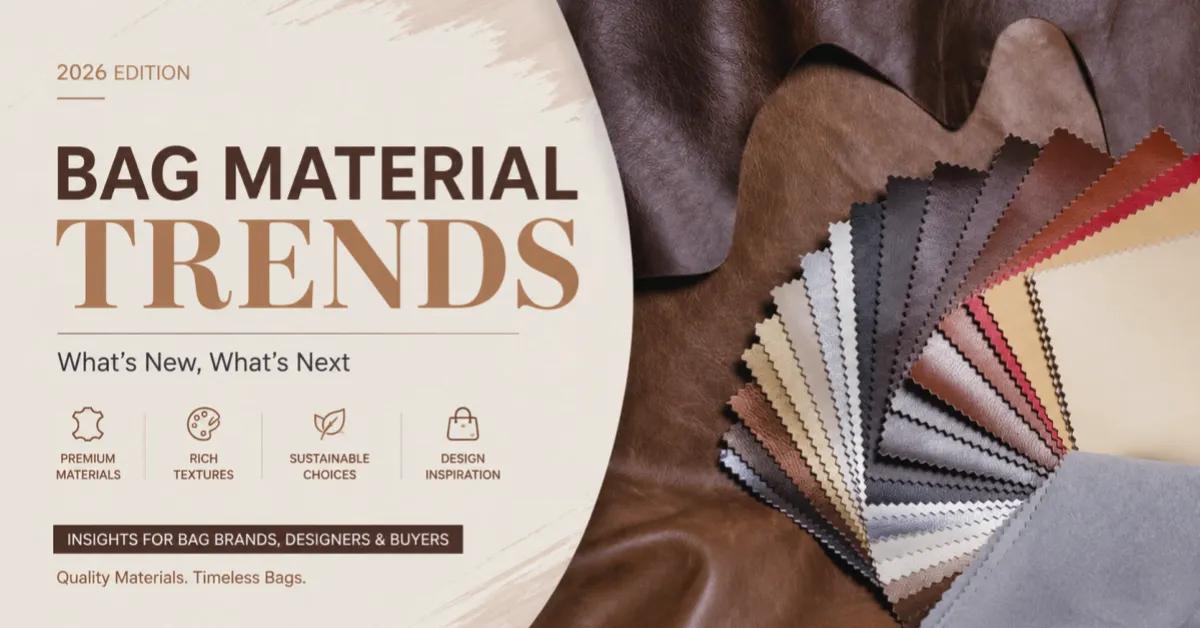
Here is my breakdown of the materials that will define the 2026 handbag landscape.

Premium Suede: The "Soft Power" of 2026
If 2024 was about "Quiet Luxury," 2026 is about "Textural Depth."
Suede is making a massive comeback, but not the thin, fragile stuff of the past. We’re talking about heavyweight, velvety premium suede that carries a sense of "visual warmth."
When you run your fingers across a high-quality suede bag, there should be a slight, satisfying resistance—a "tactile nap" that changes shade as you brush it. It’s that 1970s effortless chic, modernized. In a world of cold screens, a suede tote feels grounded, nostalgic, and incredibly expensive.
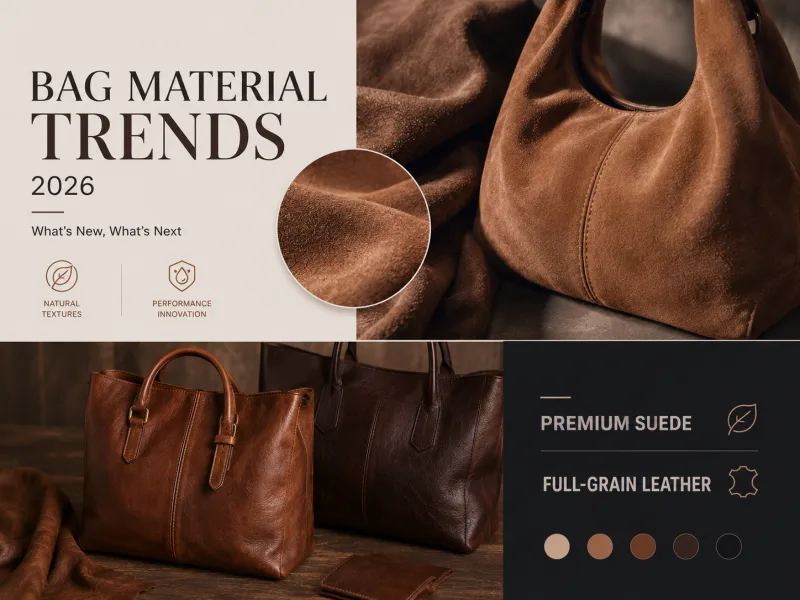
- Buyer’s Note: Look for "Water-Resistant Suede" innovations. The biggest barrier to suede has always been its vulnerability. Sourcing suede that maintains its buttery touch while offering nanotechnology protection is your winning ticket for 2026.
2. Full-Grain Leather: The Beauty of "Growing Old Together"
There is a specific kind of reliability that only Full-Grain Leather provides. In the B2B space, we often talk about durability, but I prefer the word "Companionship."
A full-grain leather bag doesn’t just stay the same; it evolves. As it absorbs the oils from the wearer’s hands and the sunlight of their travels, it develops a patina—that unique, soft glow that can’t be faked in a factory. By 2026, professional consumers will be looking for "investment pieces." They want a bag that tells a story, where every tiny grain and natural mark is a badge of authenticity.
- Design Tip: Keep the silhouettes minimal. Let the natural texture of the hide do the heavy lifting. A structured full-grain briefcase or a slouchy hobo bag in a rich mahogany tone is a timeless bestseller.
The "Bio-Tech" Revolution: Beyond Just "Vegan"
Let’s be honest: the early days of "vegan leather" were often just glorified plastic (PU). But 2026 is the year Bio-based materials finally go mainstream in the mid-to-high-end segment.
We are seeing incredible results from Mushroom leather (Mycelium) and Cactus-based polymers. These aren't just eco-friendly alternatives; they are high-performance materials with unique textures that stand on their own. They have a certain "coolness" factor that appeals to Gen Z and Alpha buyers who demand transparency without sacrificing the premium hand-feel.
Sourcing Cheat Sheet: 2026 Material Comparison
Why Brands Partner with xinzirain for 2026
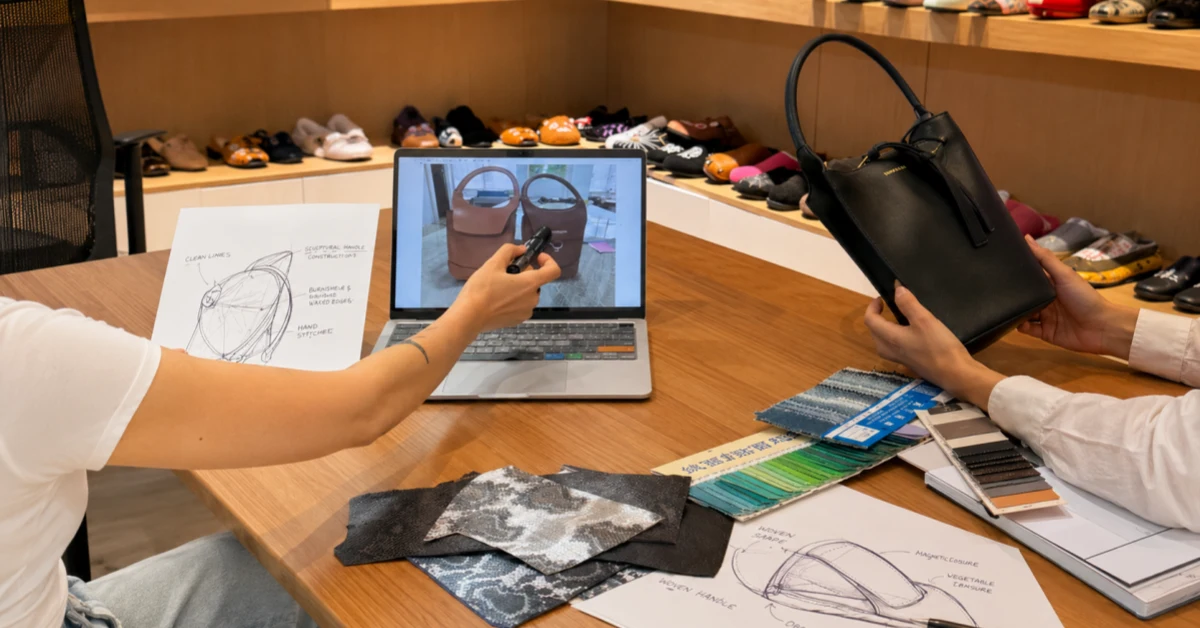
As a manufacturing partner, we bridge the gap between a designer’s vision and the technical reality of the factory floor. Here is how we ensure your 2026 collection stands out:
- Hardware Harmony: We match tactile materials with brushed brass or matte gunmetal hardware, ensuring the metal feels like it "grew" out of the leather.
- Raw Craftsmanship: We are seeing a return to burnished edges. Our artisans at xinzirain specialize in raw-edge finishing that highlights the quality of the hide.
- The Sensory Signature: Luxury is multi-sensory. We ensure our tanning processes—especially for bio-based materials—leave a pleasant, natural scent, not a chemical odor.
Final Thoughts
In 2026, the most successful brands won't be the ones with the loudest logos, but the ones that offer the most comforting touch.
Whether you’re leaning into the rugged soul of a full-grain hide or the futuristic whisper of mycelium leather, xinzirain is here to help you source, design, and manufacture the future.
Ready to start your 2026 journey? Connect with xinzirain today to explore our latest material swatches and start building your next bestseller.