
Introduction
In sustainable handbag manufacturing, material selection has become one of the most strategic decisions for brands. While many discussions focus on marketing claims, long-term performance in real handbag manufacturing environments requires deeper technical evaluation.
This report compares pineapple leather and corn-based bio-PU from a handbag manufacturing perspective, examining structural behavior, durability, sustainability verification, and production scalability.
Pineapple Leather (Leaf-Fiber Composite) vs. Corn-Based Bio-PU
“Sustainable leather” isn’t one material — it’s a category with very different structures, performance limits, and supply-chain proofs. If you’re developing handbags for real customers (not just a concept drop), you need an engineering view: how the material behaves at stress points, how it ages, and what sustainability claims can actually be documented.
This report compares two popular options used in handbag production:
-
Pineapple leather (pineapple leaf fiber composite; often sold under branded variations)
-
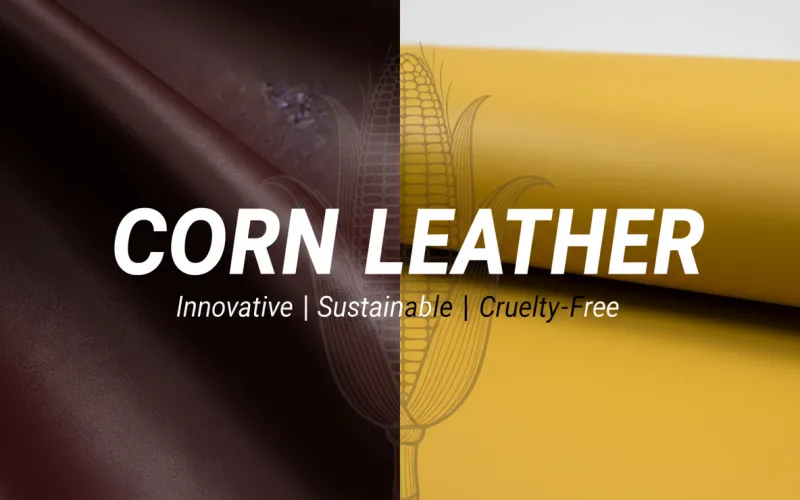
Corn-based leather (bio-based PU; a polymer made with a percentage of plant-derived content)
What these materials really are (and why that matters)
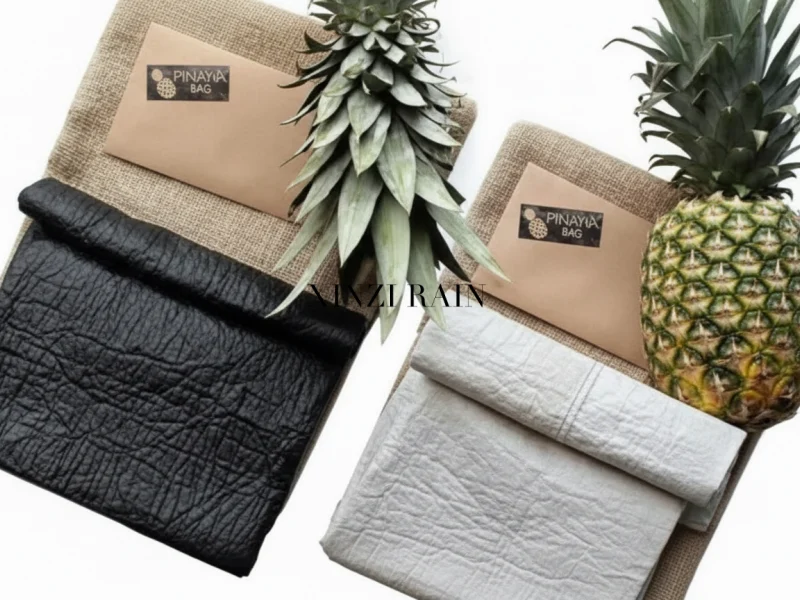
Pineapple leather (leaf-fiber composite)
-
Structure: non-woven plant fiber mat + resin/coat layer (typically a polymer coating).
-
What you get: visible organic texture, matte finish, strong “upcycled waste” story.
-
Engineering reality: it behaves more like a coated textile than full-grain leather. The fiber layer provides character; the coating drives most performance.
Corn-based leather (bio-PU)
-
Structure: PU (polyurethane) system where a portion of the polymer content comes from bio-based feedstock (e.g., corn-derived components), applied on a backing fabric.
-
What you get: consistent grain options, stable production, leather-like feel.
-
Engineering reality: performance is closer to premium PU. Bio-based content helps footprint claims, but end-of-life is still challenging because it’s still a polymer composite.
Handbag performance requirements (the “real world” checklist)
In handbag manufacturing, structural failure rarely occurs in flat panels. Most issues appear at handle anchors, folded gussets, bottom corners, and hardware attachment points.
— not in the middle of a panel, but at:
-
Handle roots (high cyclic load)
-
Corner wraps & bottom edges (abrasion)
-
Fold lines (flex fatigue/cracking)
-
Edge paint zones (adhesion + cracking)
-
Zipper plackets & hardware tabs (tear strength)
If a “sustainable leather” can’t survive these zones, it becomes marketing over product.
Side-by-side: what changes when you build a bag with each material
A) Material behavior in bag construction
| Build Factor | Pineapple Leather (Leaf-Fiber Composite) | Corn-Based Leather (Bio-PU) |
|---|---|---|
| Best visual strength | Organic, matte, “natural fiber” look | Leather-like grains; premium uniformity |
| Best product types | Soft totes, pouches, light-structure bags, limited drops | Daily handbags, structured silhouettes, repeatable core styles |
| Creasing/fold memory | Crease lines show more easily | Better fold recovery; cleaner long-term look |
| Abrasion zones (corners/bottom) | Needs a reinforcement strategy | More robust; still needs edge protection for long wear |
| Edge finishing | Requires careful edge paint + sealing; higher risk of fray/edge exposure | More predictable edge paint adhesion and consistency |
| Stitching behavior | Needle holes can “read” more; needs stitch length tuning | Cleaner stitching appearance; more forgiving |
| Lamination & reinforcement | Often benefits from backing/lamination to improve stability | Generally stable; reinforcement based on bag structure needs |
Wear & aging profile (what customers notice after 3–12 months)
| Aging Signal | Pineapple Leather | Corn-Based Leather |
|---|---|---|
| Surface “polish” over time | Texture can look more fibrous | Surface remains more uniform |
| Flex lines/stress whitening | More likely on folds | Lower risk (depends on topcoat grade) |
| Corner scuff visibility | Higher | Medium |
| Color consistency across batches | Medium | High |
| Cleaning tolerance | Gentle only; avoid aggressive rubbing | Wider cleaning tolerance |
Sustainability: how to make claims without getting burned
A material can be “plant-based” and still fail sustainability scrutiny if you can’t prove it. For EU/UK/US retail, the winning approach is documented, specific, non-absolute language.
Claim strength comparison (practical compliance lens)
| Sustainability Topic | Pineapple Leather | Corn-Based Leather |
|---|---|---|
| Story & consumer appeal | Very strong (“agri-waste fibers”) | Strong but more technical (“bio-based content”) |
| What must be documented | Source of fibers, processing chain, coating composition | Bio-based content method, % basis (mass balance?), VOC/chemicals info |
| Greenwashing risk | Medium (people assume “fully natural”) | Medium (people assume “biodegradable”) |
| End-of-life reality | Not truly biodegradable due to coatings | Not biodegradable; polymer composite |
| Best “safe” wording | “made with pineapple leaf fibers.” | “bio-based PU with plant-derived content.” |
Important: Avoid absolute claims like “100% eco-friendly,” “biodegradable,” or “plastic-free” unless you have documentation and test proof. These claims trigger returns, retailer rejections, or regulatory risk.
Testing plan (what a serious brand should request before bulk)
Instead of guessing, request a material datasheet and lab testing for your target bag type.
Core tests to request (handbag-relevant)
Ask suppliers/manufacturers to provide results for:
-
Abrasion resistance (corner + panel suitability)
-
Flex resistance (fold line cracking)
-
Color rub fastness (dry/wet crocking)
-
Tear strength (hardware tabs, handle anchors)
-
Adhesion strength (lamination + edge paint adhesion)
-
Hydrolysis resistance (PU aging risk; critical for humid markets)
For hot/humid regions (e.g., Gulf countries): hydrolysis and adhesive stability matter more than “grain look.”
Engineering playbook: how to build better bags with these materials
If using pineapple leather (leaf-fiber composite)
You get the best results when you design for the material:
-
Choose silhouettes that minimize sharp fold lines (avoid tight gusset folds).
-
Reinforce high-wear areas: bottom panels, corner wraps, and handle tabs.
-
Use controlled stitch length and backing to reduce “needle-hole reading.”
-
Use higher-performance topcoat options where possible for abrasion zones.
-
Treat it as a premium coated textile in construction planning, not as full-grain leather.
If using corn-based leather (bio-PU)
You’ll win on consistency, but still need smart choices:
-
Specify topcoat grade (scratch/abrasion performance varies hugely).
-
Confirm edge paint system compatibility (primer + base + top).
-
For structured bags, dial in interlining selection to avoid “boardy” feel.
-
If the brand wants “luxury handfeel,” choose a surface with a softer polymer feel and a suitable backing fabric.
Which material should a handbag brand choose?
Here’s the decision logic we use when advising brands (the “no-nonsense” version):
Choose pineapple leather when:
-
You’re launching a story-led capsule or sustainability-focused drop.
-
Your customer values visual texture + narrative.
-
Your bag design is soft/relaxed and not meant for heavy daily abrasion.
-
You’re okay with more visible aging as part of the “natural” character.
Choose corn-based leather when:
-
You need a core SKU for daily sales, repeatable quality, and scale.
-
Your bags are structured and must stay clean-looking over time.
-
You need batch consistency (color, grain, feel) across restocks.
-
You want a “vegan leather” look without giving up durability.
Spec sheet template (copy/paste for supplier inquiry)
When your customer asks, “Is it sustainable?” you’ll want this in your inbox:
Material Identification
-
Material type (leaf-fiber composite / bio-PU)
-
Backing fabric (microfiber/woven / non-woven)
-
Coating system (topcoat type, thickness range if available)
-
Bio-based content (if applicable): method + basis (mass/content statement)
Performance
-
Abrasion (method + result)
-
Flex (method + result)
-
Rub fastness dry/wet (method + result)
-
Tear strength (method + result)
-
Hydrolysis resistance (method + result)
Compliance
-
Chemical compliance statement (EU/UK/US relevant)
-
VOC/odor statement for finished goods
-
Traceability / chain-of-custody if available
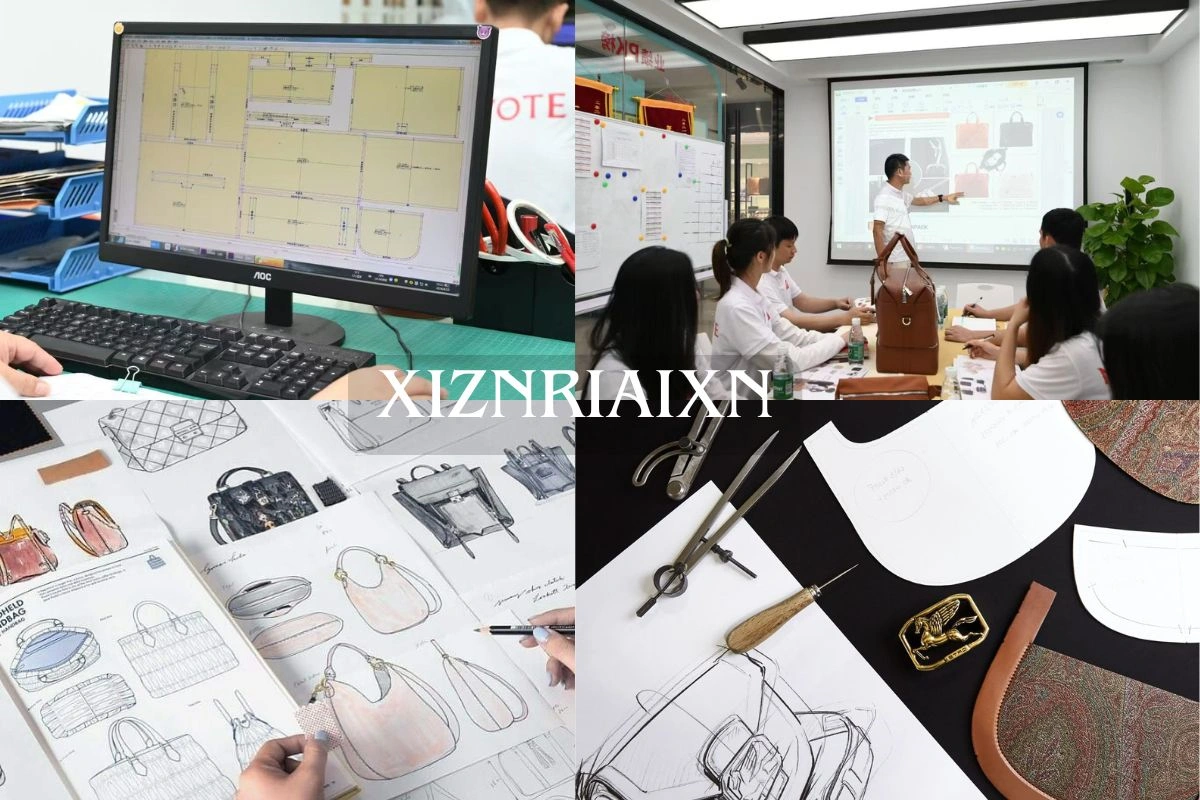
What we recommend at XINZIRAIN Bag Manufacturer (practical, brand-safe approach)
For most brands, the best “sustainable handbag” strategy isn’t picking one material — it’s building a material ladder:
-
Hero story SKU: pineapple leather (limited, narrative-led)
-
Core commercial SKU: corn-based leather (repeatable, durable, scalable)
That lets you protect the brand promise and protect the product reviews.
If you’re producing with MOQ 50, this ladder is especially effective: you can test market response without locking yourself into one material forever.
For brands developing sustainable collections, understanding how materials behave in real handbag manufacturing conditions is more important than following material trends. Performance data, testing protocols, and production compatibility should guide final selection.
FAQ (high-conversion, buyer-style questions)
1) Is pineapple leather fully plastic-free?
Usually no. Most versions use coatings/binders for durability. Ask for composition disclosure.
2) Is corn-based leather biodegradable?
Typically no. It’s a polymer composite (bio-based input ≠ , biodegradable output).
3) Which one feels more “luxurious”?
Corn-based leather generally feels closer to leather. Pineapple leather wins on “design texture” and story.
4) Which is better for structured handbags?
Corn-based leather supports predictable forming and a cleaner long-term appearance.
5) What’s the biggest failure risk?
Pineapple leather: abrasion + edge exposure.
Bio-PU: hydrolysis risk if low-grade or wrong storage/market conditions.
More related articles
Sustainable & Responsible BagManufacturing: How XINZIRAINBuilds Long-Term Value for Brands
Sustainable Bags Guide: Styles,Impact, and How to Make the RightChoice