
Launching a handbag brand has never been more accessible. Independent designers, boutique labels, and startup fashion companies are entering the market faster than ever.
However, many new brands quickly discover that creating a beautiful handbag concept is very different from developing a product that can be manufactured consistently, profitably, and at scale.
From unclear tech packs to unrealistic production expectations, small mistakes during development can lead to expensive delays, unstable quality, failed samples, and inventory problems.
Working with an experienced handbag manufacturer early in the process can help brands reduce production risks and improve product consistency before bulk manufacturing begins.
This guide explains the most common mistakes new fashion brands make when developing handbags — and how to avoid them.
About BAGSRAIN — Powered by the XINZIRAIN Manufacturing Group
BAGSRAIN is the dedicated handbag manufacturing division of XINZIRAIN Group, an experienced OEM and ODM fashion manufacturing company serving global brands, retailers, wholesalers, and private label businesses.
While XINZIRAIN is widely known for footwear manufacturing, BAGSRAIN was established to provide specialized custom handbag manufacturing solutions for brands looking to develop premium bags with flexible production support.
Through BAGSRAIN, clients gain access to:
- custom handbag development
- leather and vegan material sourcing
- private label manufacturing
- handbag sampling
- OEM and ODM production
- compliance support
- packaging coordination
- global logistics assistance
As part of the XINZIRAIN manufacturing ecosystem, BAGSRAIN combines experienced development teams, stable supply chains, quality control systems, and international export experience to help brands move from concept to commercial production more efficiently.
Mistake #1 — Starting Without a Clear Tech Pack
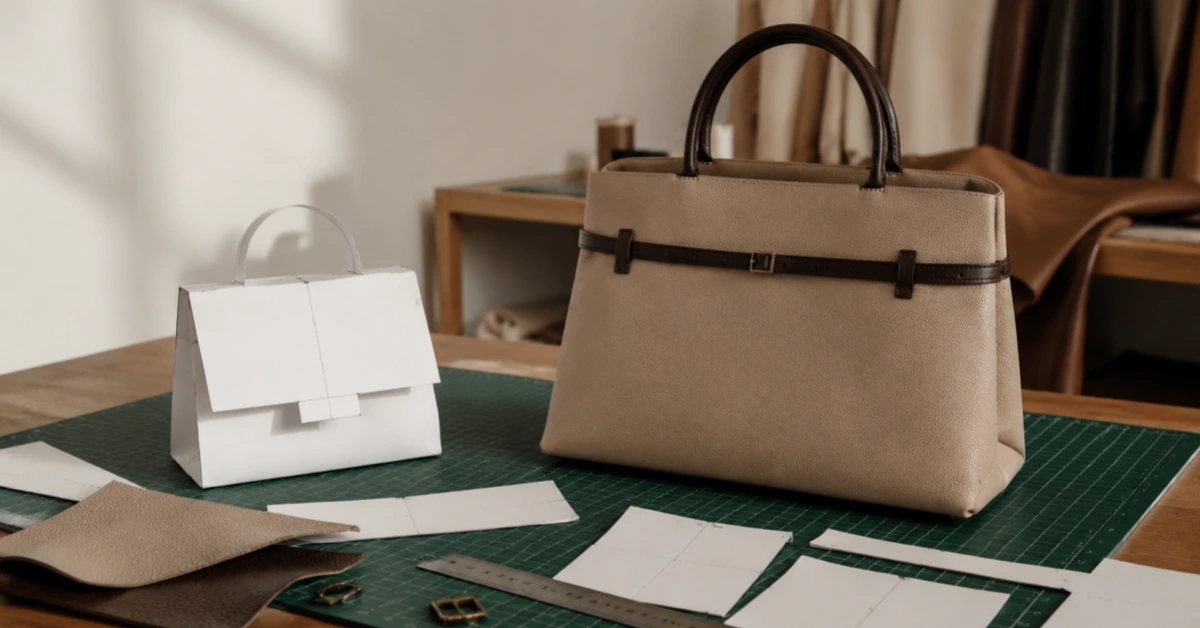
One of the most common mistakes in custom bag manufacturing is starting development with incomplete product information.
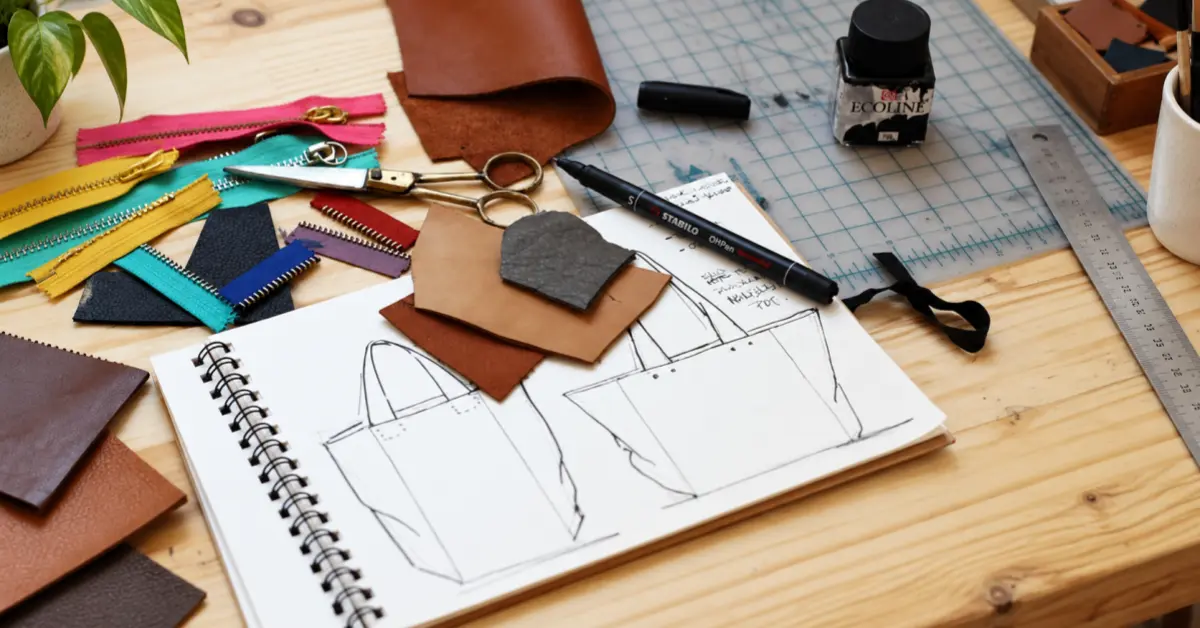
Many startup brands only provide reference photos or rough sketches without technical details. This creates confusion during sampling and increases revision time.
A professional handbag tech pack should include:
- dimensions
- material specifications
- hardware details
- stitching requirements
- lining information
- logo placement
- zipper specifications
- packaging instructions
- color references
An experienced custom handbag manufacturer can help optimize incomplete tech packs, but the clearer the information is from the beginning, the faster and more accurate the development process becomes.
Mistake #2 — Choosing Materials Based Only on Appearance
Many new brands focus only on how a material looks in photos without understanding its long-term performance.
A material that appears luxurious online may not perform well during daily use or bulk production.
Low-quality materials can create problems such as:
- peeling surfaces
- cracking edges
- color transfer
- weak structural support
- inconsistent texture
An experienced leather handbag supplier evaluates materials based on durability, flexibility, thickness, target pricing, and compliance requirements.
At BAGSRAIN, we help brands compare genuine leather, microfiber leather, vegan leather, nylon, canvas, and specialty materials based on the product’s positioning and market expectations.
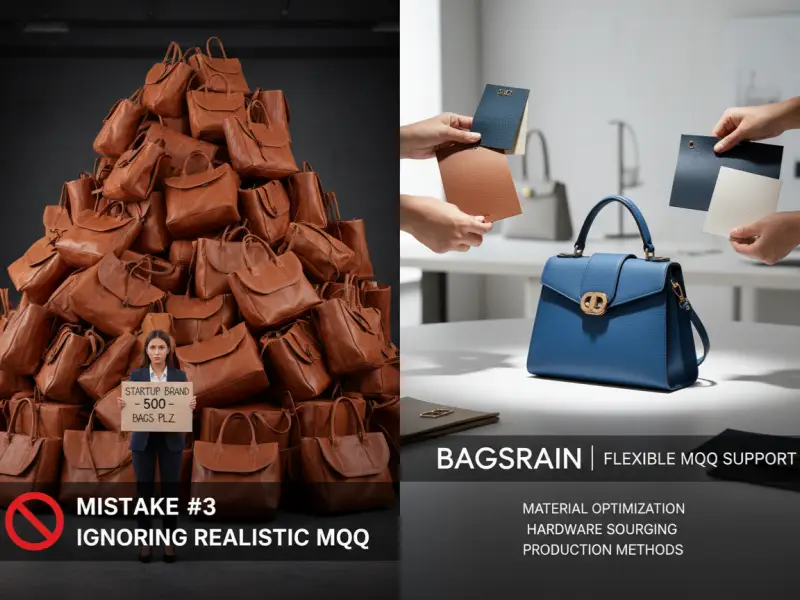
Mistake #3 — Ignoring Realistic MOQ Requirements
Many startup brands expect fully customized handbags at extremely low quantities.
In reality, custom bag manufacturing involves material sourcing, mold preparation, hardware allocation, and production line setup costs.
This is why most handbag manufacturers establish minimum order quantities.
However, flexible MOQ support is still possible when brands work with the right low MOQ handbag manufacturer.
At BAGSRAIN, we help emerging brands optimize:
- material selection
- hardware sourcing
- production methods
- packaging solutions
This allows smaller brands to launch collections more efficiently without excessive inventory pressure.
Mistake #4 — Underestimating Sample Development Time
Another common issue is unrealistic expectations regarding the handbag sampling process.
Many first-time brands assume samples can be completed within a few days. In reality, proper sample development requires:
- pattern making
- material sourcing
- hardware matching
- logo testing
- structural adjustments
- stitching corrections
- quality reviews
For most custom handbag projects, the sampling process typically requires 20–30 days depending on complexity.
Revisions are also normal during development. Professional OEM bag manufacturers understand that sampling is part of the product refinement process.
Rushing development often creates larger production problems later.
Mistake #5 — Prioritizing Price Over Manufacturing Capability
Choosing a supplier based only on the lowest price is one of the biggest long-term risks in handbag manufacturing.
Extremely low pricing often leads to:
- unstable quality
- poor communication
- delayed production
- inconsistent materials
- weak quality control
A reliable custom leather bag manufacturer should provide more than production capacity.
Brands should evaluate:
- sampling capability
- communication efficiency
- compliance experience
- quality inspection systems
- material sourcing networks
- export experience
Strong development support often saves brands significantly more money over time than simply choosing the cheapest factory.
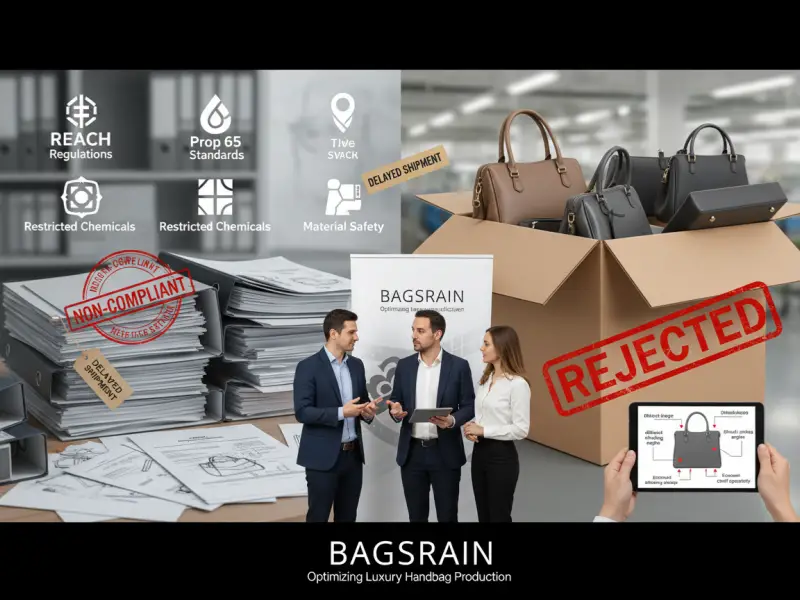
Mistake #6 — Forgetting About Compliance Requirements
Many startup brands overlook compliance standards during early development.
For brands selling into Europe and North America, compliance requirements are increasingly important.
Depending on the target market, products may need to comply with:
- REACH regulations
- Prop 65 standards
- restricted chemical requirements
- material safety regulations
Failure to address compliance early can create delays, rejected shipments, or costly redesigns.
Professional handbag manufacturers should discuss compliance requirements before bulk production begins.
At BAGSRAIN, we support brands with material sourcing aligned with international market requirements.
Mistake #7 — Designing Products That Are Difficult to Manufacture
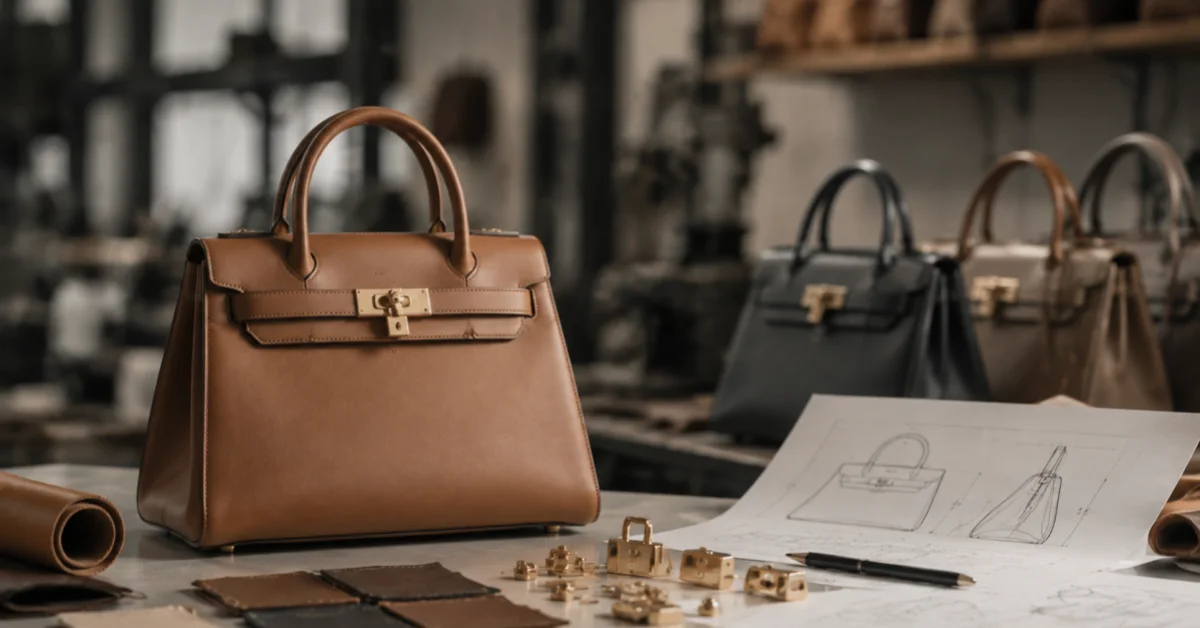
Some handbag concepts look impressive in sketches but become highly unstable during actual production.
Common structural issues include:
- weak handles
- unstable bag bases
- zipper distortion
- poor weight balance
- difficult stitching angles
- excessive panel complexity
An experienced handbag manufacturer helps optimize products for both appearance and manufacturability.
This process is especially important for luxury handbags, structured bags, travel bags, and oversized totes where engineering accuracy directly affects product quality.
At BAGSRAIN, our development team works closely with brands to balance aesthetics, functionality, durability, and production efficiency.
Mistake #8 — Neglecting Branding and Packaging Details
Many brands spend significant time developing the handbag itself while ignoring packaging and branding details.
However, private label presentation strongly impacts customer perception.
Common branding mistakes include:
- inconsistent logo finishes
- oversized branding
- poor foil stamping quality
- weak packaging structure
- mismatched hardware colors
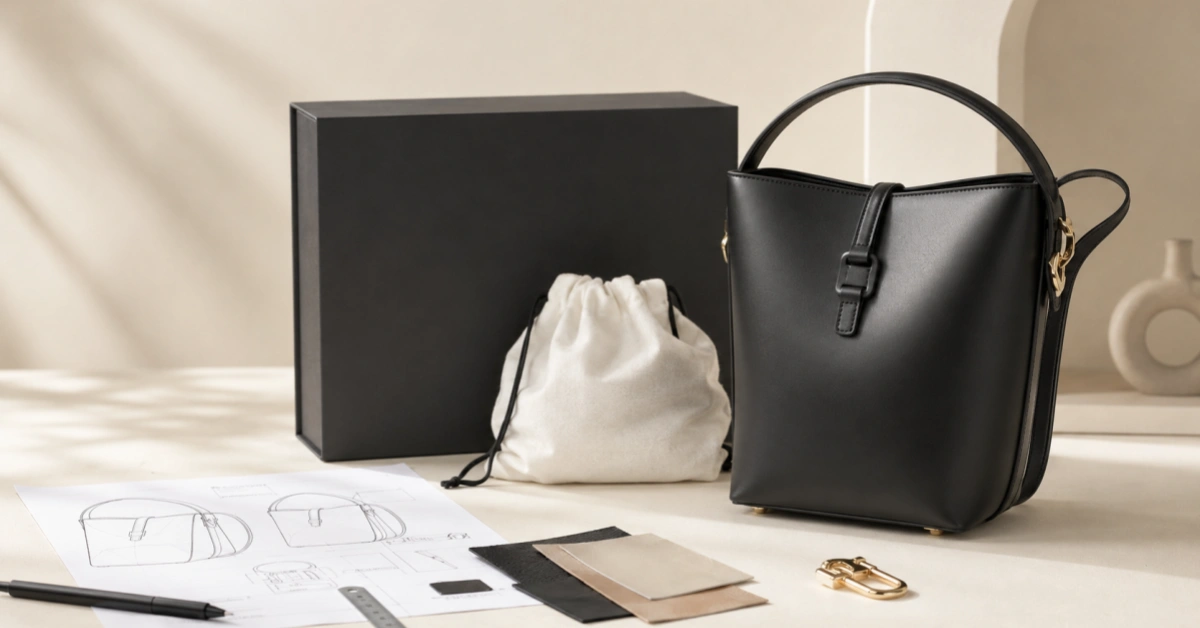
Professional private label handbag manufacturers should support coordinated branding systems including:
- logo applications
- dust bags
- hang tags
- boxes
- custom tissue paper
- hardware finishing
Consistent branding helps new fashion brands appear more professional and commercially established.
Mistake #9 — Failing to Plan Production Timelines Properly
Production delays are one of the biggest frustrations for new fashion brands.
Many delays happen because brands underestimate how many stages are involved in bulk production.
Common delay factors include:
- material sourcing lead times
- hardware production
- sample approvals
- packaging preparation
- holiday schedules
- logistics coordination
For most handbag projects, bulk production generally requires 30–45 days after sample confirmation.
Working with an organized OEM bag manufacturer helps brands create more realistic launch schedules and reduce avoidable delays.
Mistake #10 — Choosing the Wrong Manufacturing Partner
The right manufacturing partner can significantly improve product development efficiency, quality stability, and long-term scalability.
The wrong partner can create ongoing production problems.
Common warning signs include:
- slow communication
- unclear pricing structures
- inconsistent samples
- poor development knowledge
- lack of quality systems
- limited customization capability
A professional handbag manufacturer should provide:
- product development support
- quality control systems
- sourcing capability
- compliance guidance
- packaging coordination
- scalable production support
Long-term manufacturing relationships are built on communication, reliability, and shared growth.
How BAGSRAIN Supports Emerging Fashion Brands
At BAGSRAIN, we help brands simplify the custom handbag manufacturing process through integrated OEM and ODM services.
Our services include:
- handbag design consultation
- material sourcing
- logo customization
- handbag sampling
- hardware development
- packaging coordination
- quality inspection
- bulk production
- global shipping support
We support various product categories including:
- tote bags
- crossbody bags
- backpacks
- wallets
- travel bags
- leather handbags
- vegan handbags
With flexible MOQ support and production timelines typically ranging from 30–45 days, we help brands move from concept to market more efficiently.
Whether you are launching your first handbag collection or scaling an existing brand, our team works closely with clients throughout every stage of development.
Final Thoughts
Developing handbags successfully requires much more than strong visual design.
Material selection, structural engineering, compliance planning, sampling accuracy, production coordination, and supplier communication all influence the final product outcome.
By avoiding these common mistakes and partnering with an experienced custom handbag manufacturer, brands can reduce production risks, improve consistency, and build stronger long-term collections.
If you are planning your next handbag project, working with the right manufacturing partner early can save significant time, cost, and development frustration later.
Start Your Custom Handbag Project Today
Send your tech pack, sketches, or reference ideas to the BAGSRAIN development team to begin your next collection.
WhatsApp: +8615530191496
FAQ
What is the typical MOQ for custom handbags?
MOQ depends on the product structure, materials, and customization requirements. Flexible MOQ options are available for many projects.
How long does handbag sample development take?
Most handbag samples require approximately 20–30 days depending on design complexity and material sourcing.
Can I develop handbags with only sketches?
Yes. Professional handbag manufacturers can help optimize sketches into production-ready samples.
What materials are commonly used for premium handbags?
Common materials include full-grain leather, top-grain leather, microfiber leather, vegan leather, canvas, and nylon.
How long does bulk production take?
Bulk production typically requires 30–45 days after final sample approval.
Do manufacturers help with packaging customization?
Yes. Many private label handbag manufacturers provide packaging customization including boxes, dust bags, and logo applications.
What certifications are important for handbag production?
REACH and Prop 65 compliance are commonly requested for EU and US markets.
Can startup brands work with OEM bag manufacturers?
Yes. Many manufacturers now offer flexible MOQ solutions for startup fashion brands.
What causes delays in handbag production?
Common delays include material shortages, approval revisions, packaging coordination, and logistics scheduling.
How do I choose the right handbag manufacturer?
Look for experience, communication quality, development capability, quality control systems, and compliance knowledge.