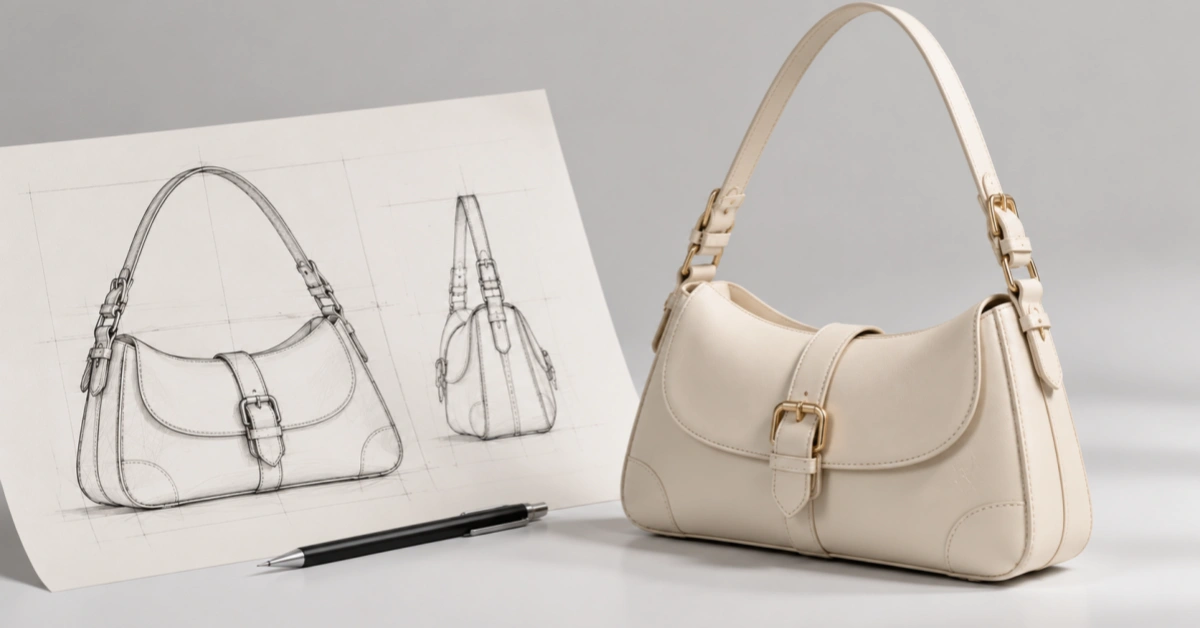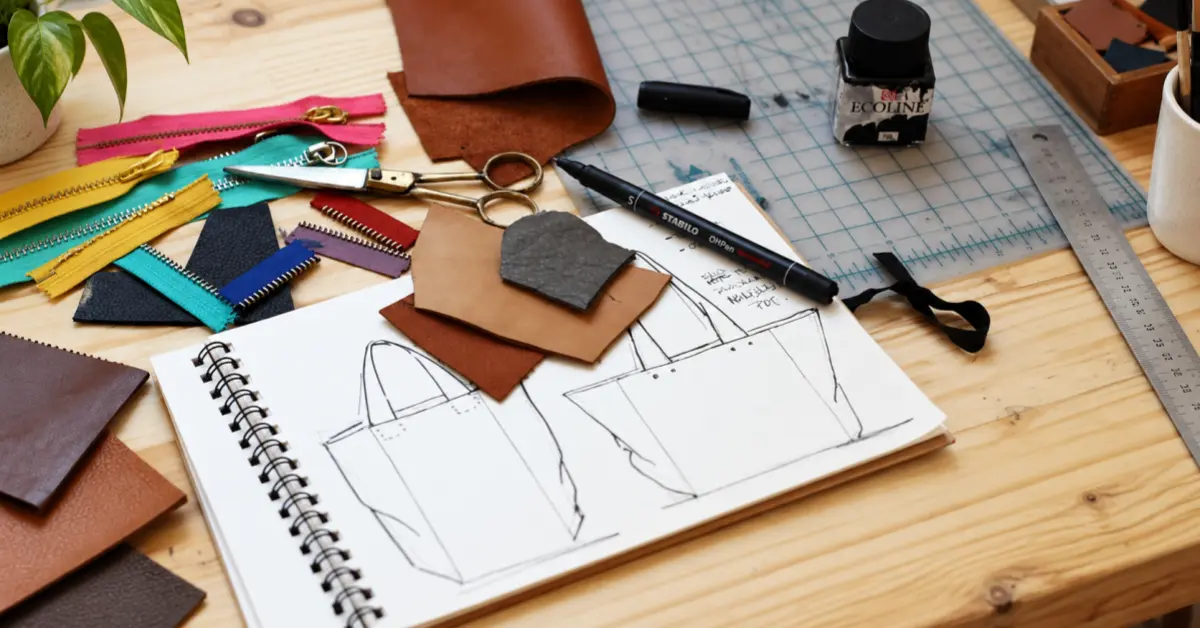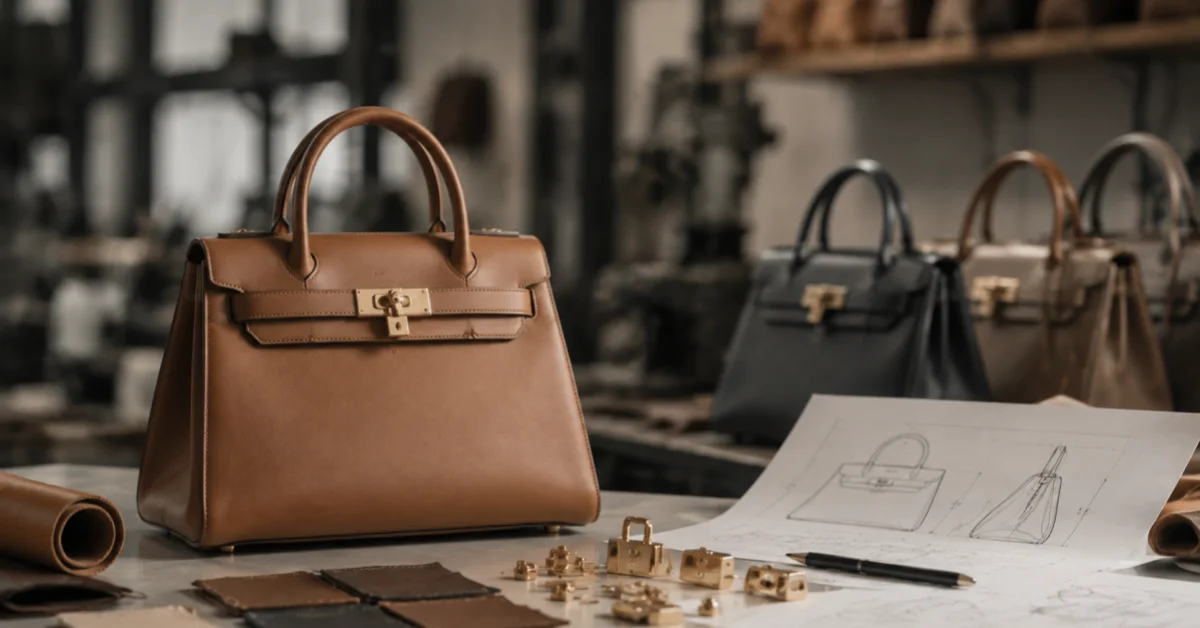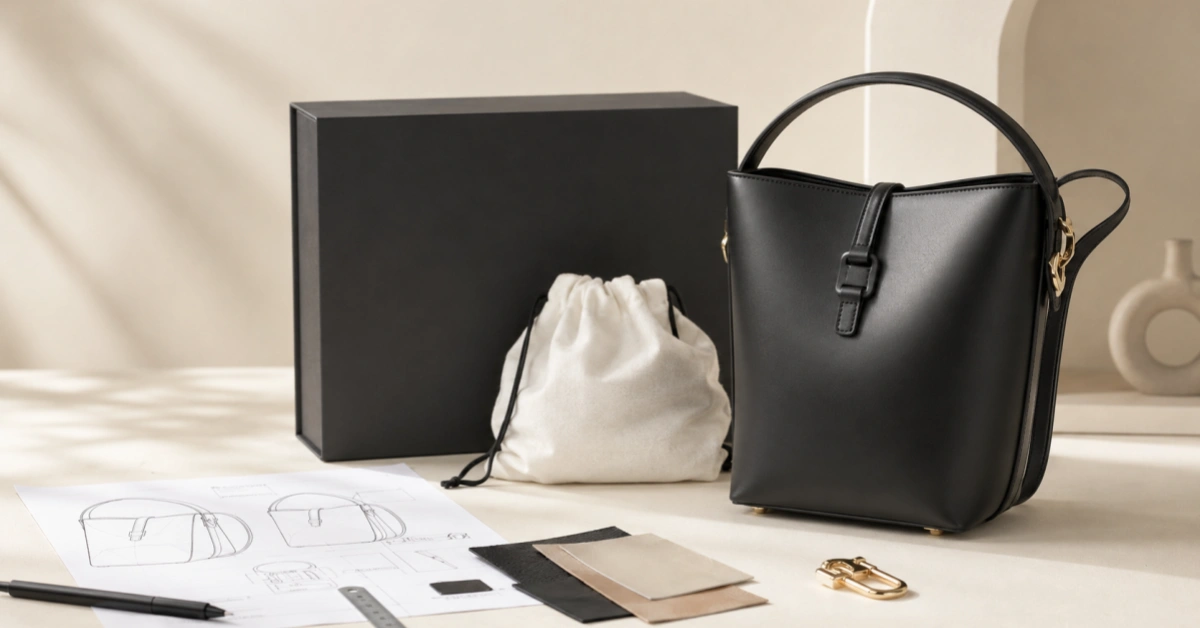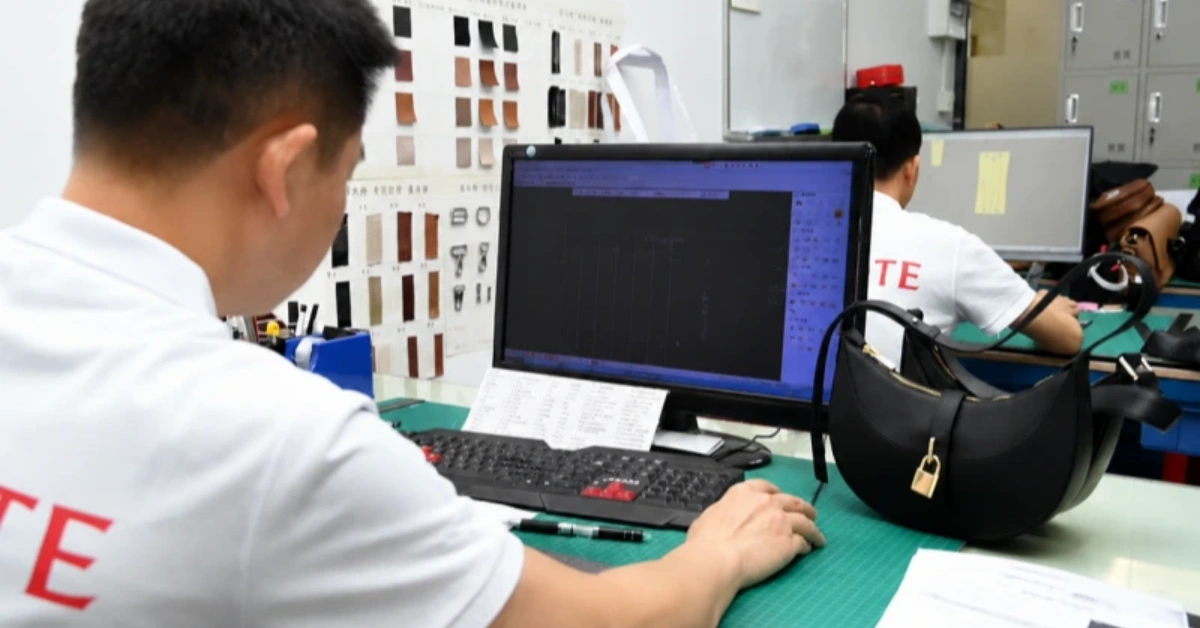


For premium handbag designers and retail brands, calculating the ex-factory cost is never as simple as looking at leather and labor. Learn how to peel back the industry black box, audit a $299 retail bag's real handbag manufacturing cost, and calculate the critical hidden variables that define your net profitability.
In the luxury leather goods sector, pricing transparency is often kept inside a black box. Many emerging brand founders and B2B buyers calculate their budget based on a basic retail multiplier, assuming that if they want to sell a handbag for $299 USD, they simply need a factory to quote them a flat ex-factory price. However, without a detailed breakdown of leather bag production pricing, brands often run into unexpected fees during sampling, leading to major margin erosion or unviable products during bulk manufacturing.
The true cost of a custom handbag is determined long before the leather is cut. Every design line, reinforcement thickness, lining selection, and metal weight directly shifts the manufacturing budget. To protect your brand's bottom line, you must understand where every penny is allocated and identify the hidden, overlooked variables that shape the final invoice.
In this comprehensive guide, we dissect the complete cost structure of a mid-to-high-end $299 USD retail handbag, unpack the primary pillars of leather bag production pricing, and provide a checklist of the three most overlooked hidden supply chain costs you must calculate to maintain your margin.
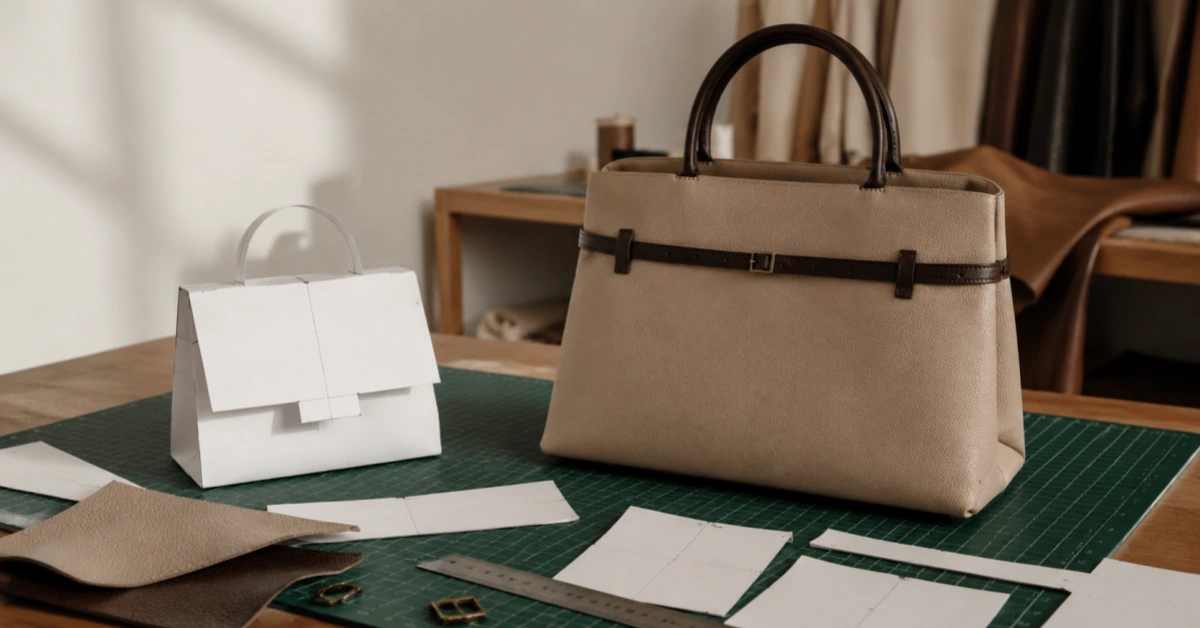
Deconstructing the Retail Mark-up: The Anatomy of Handbag Manufacturing Cost
To accurately evaluate your handbag manufacturing cost, we must first look at a real-world B2B benchmark. A high-quality, genuine leather handbag that retails for $299 USD typically operates on a standard 5x retail multiplier. This means the target ex-factory (FOB) manufacturing price must be locked at approximately $60.00 USD. Let's peel back the curtain and break down exactly how this $60.00 USD ex-factory price is distributed across a premium production line:
| Cost Component | Physical Materials & Technical Allocation | Estimated FOB Cost (USD) | Percentage of Total COGS |
|---|---|---|---|
| Outer Shell Leathers | ~12 sq. ft. of Grade-A Full-Grain Cowhide Leather | $24.00 | 40.0% |
| Lining Material | High-density Cotton Twill, Microfiber, or Pigsplit Liner | $3.60 | 6.0% |
| Internal Reinforcements | Structural Backings (Salpa, EVA foam, Texon Boards) | $4.80 | 8.0% |
| High-Grade Alloy Hardware | Custom Zippers, Buckles, Rivets, and D-Rings | $9.00 | 15.0% |
| Edge Paint & Finishings | Multiple passes of polymer paint and sanding post-treatments | $3.00 | 5.0% |
| Stitching & Assembly Labor | Precision panel splitting, skiving, stitching, and assembly | $12.00 | 20.0% |
| Quality Control & Packaging | Branded Dustbags, silica gel, protective tissue, shipping cartons | $3.60 | 6.0% |
| Total Ex-Factory Cost | FOB China - Production Ready (For $299 Retail Handbag) | $60.00 | 100.0% |
Note: This is an idealized cost-breakdown table based on a standard 500-unit production run. Material costs may fluctuate depending on current leather market pricing and design complexity. Reference: Bagsrain Private Label Handbag Manufacturing.
As shown above, the raw leather shell represents 40% of your ex-factory budget, while hardware and assembly labor take up another 35% combined. If any of these parameters are budgeted incorrectly, your gross margin will quickly deteriorate. This makes a clear understanding of leather bag production pricing the most crucial asset for any fashion brand builder.
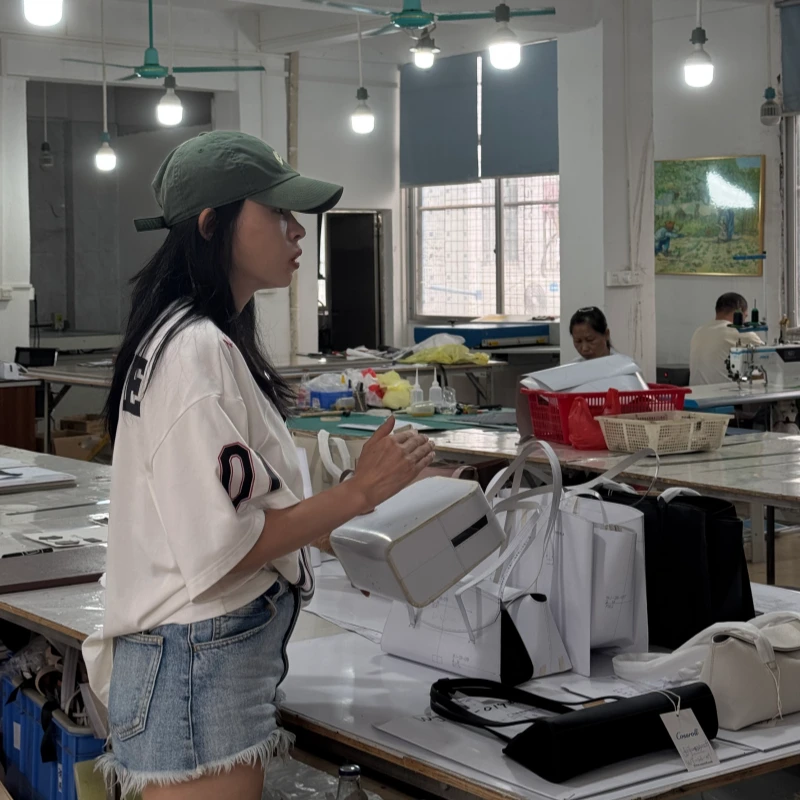
The Pillars of Transparency: 3 Hidden Supply Chain Costs Most Buyers Overlook
When comparing factory quotes, many brands fall into the trap of looking only at the unit price. However, there are three critical "supply chain hidden costs" that are often omitted from initial pricing sheets but must be accounted for to calculate your true landed cost.
Custom Handbag Hardware Mold Fee (The Initial Capital Hurdle)
If your design includes custom-engraved buckles, unique lock clasps, or branded zipper pulls, you cannot use open-market stock components. A professional factory must open a dedicated steel or zinc alloy injection mold. This incurs a one-time custom handbag hardware mold fee, which typically ranges from $1,200 to $3,500 USD depending on the complexity of the hardware set.
To prevent this mold fee from crushing your initial margin, you must calculate its impact on your unit pricing. For example, if your custom hardware mold fee is $2,000 USD and your first order is 200 units, that adds a staggering $10.00 USD to the cost of every single bag. However, if you scale the order to 1,000 units, the amortized mold fee drops to just $2.00 USD per bag, keeping your overall handbag manufacturing cost highly competitive.
Leather Layout and Nesting Waste (The Blemish Yield Rate)
Leather is a natural skin, not a uniform roll of synthetic polyester. Every hide has natural variations: tick bites, brand marks, neck wrinkles, and thin, loose flanks near the belly. Consequently, you can never utilize 100% of a raw leather hide. A critical part of handbag costing is the leather yield and waste calculation.
If your handbag features large, uninterrupted panels (such as a seamless tote bag), the craftsman must cut from the pristine, central portion of the hide. This leaves behind irregular scraps that cannot be used, pushing the waste rate as high as 45%. Conversely, if your handbag design utilizes smaller, paneled sections, the patterns can be nested tightly around natural blemishes. This optimizes the hide utilization, lowering the waste rate to just 20%. Understanding this material utilization factor makes leather bag production pricing a predictable science rather than a guessing game.

Volumetric Weight Freight & Port Delivery (FOB vs. DDP Dynamics)
A handbag is a high-volume, low-density product. Unlike flat-packed garments, structured handbags must be shipped in pre-stuffed, rigid boxes to prevent creasing and crushing. This means air and ocean freight carriers charge you based on "volumetric weight" (dimensional volume) rather than physical weight.
Failing to calculate your handbag FOB and DDP shipping cost early in the pipeline can result in shipping invoices that are double your initial estimates. FOB (Free on Board) means you are responsible for freight, customs clearances, and local duties once the cargo leaves the Chinese port. DDP (Delivered Duty Paid), on the other hand, is a fully door-to-door, hassle-free shipping service where the manufacturer handles all customs, clearance, and local duties. DDP is highly recommended for emerging brands to lock in clear margins before bulk shipping begins.
How BAGSRAIN Minimizes Hidden Costs to Secure Your Brand's Margin
At BAGSRAIN, we believe that B2B manufacturing is not just about executing a stitching line—it is about active, data-driven margin engineering. We leverage advanced tech pack optimization to protect our partners from unnecessary hidden costs:
- Digital Material Nesting: We use high-precision CAD mapping to optimize your pattern nesting, reducing your material waste rate by up to 15% and saving you thousands on leather sourcing.
- Stock Mold Library Integration: For emerging brands with limited capital, we offer a massive catalog of premium, pre-engineered, generic hardware molds. This allows you to achieve a "quiet luxury" aesthetic while completely bypassing the custom handbag hardware mold fee.
- All-Inclusive DDP Shipping Infrastructure: We maintain direct integrations with top-tier international freight forwarders, providing transparent, fixed-price DDP shipping quotes to ensure no surprise charges arrive at your warehouse door.
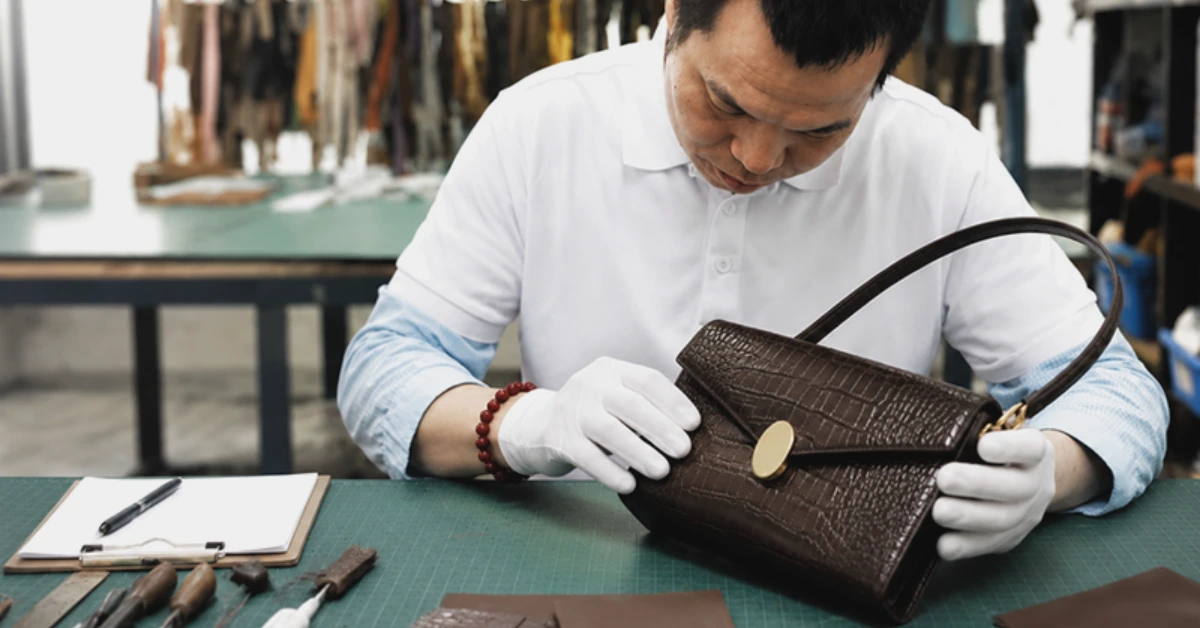
By conducting a comprehensive feasibility review during Stage 01 Product Validation, we help you align your handbag design with your target retail price point. This eliminates the traditional revision loops, helping you launch your collection faster and with guaranteed profit margins.
Submit your design sketches, reference files, or early tech packs. BAGSRAIN's consulting team will conduct a professional manufacturing price audit and leather utilization review within 48 hours.
Frequently Asked Questions
What is the typical manufacturing cost of a genuine leather handbag?
The manufacturing cost of a genuine leather handbag generally ranges from $40.00 to $120.00 USD for mid-to-high-end brands. This cost is highly dependent on leather grade (e.g., full-grain vs. split), the complexity of the internal reinforcement layers, custom hardware requirements, and the total order volume.
Why do handbag hardware molds cost so much to create?
Custom handbag hardware requires steel or zinc alloy injection molds to ensure perfect structural strength and clean logo engravings. Creating these molds requires high-precision CNC tooling, which represents a one-time capital investment ranging from $1,200 to $3,500 USD per set.
How does pattern nesting affect leather bag production pricing?
Leather hide surfaces are irregular and contain natural blemishes. Pattern nesting is the process of arranging cutting panels to minimize negative space. Poor nesting results in material waste of up to 45%, which drives up your unit leather costs. Advanced CAD nesting reduces waste to 20%-25%, saving substantial raw material budgets.
What is the difference between FOB and DDP shipping for handbags?
FOB (Free on Board) means the manufacturer delivers the goods to the origin port, and you are responsible for ocean freight, customs clearances, import tariffs, and local trucking. DDP (Delivered Duty Paid) is an all-inclusive shipping model where the manufacturer delivers the goods directly to your warehouse with all clearances, taxes, and duties pre-paid.
How can emerging handbag brands avoid expensive custom hardware mold fees?
Emerging brands can bypass custom hardware mold fees by utilizing high-quality "open stock" hardware molds provided by the manufacturer. Brands can still customize these stock components using laser-engraved logos or unique electroplating finishes (such as 24K gold, gunmetal, or brush nickel) without paying for a new mold.
Why is volumetric weight shipping so expensive for structured handbags?
Because structured handbags must be shipped in fully expanded shapes stuffed with paper to prevent creasing, they occupy a large physical volume relative to their light physical weight. Courier and freight carriers charge based on volumetric weight (Length x Width x Height / 5000), which makes shipping structured handbags more expensive than flat-packed garments.
What backing materials are commonly used in premium handbag construction?
Common structural reinforcements include Salpa (leather board) for leather-like weight and body, Texon or heavy-duty fiberboard for bottom panels and rigid structures, EVA foam for cushioned handles, and soft non-woven liners to prevent delicate leather from stretching.
What is the typical MOQ for custom handbag manufacturing?
While traditional factories often require high minimum order quantities, Bagsrain offers a flexible scaling structure. Our standard introductory MOQ starts at 100 units per style (which can be split across 2 colors), making it accessible for growing fashion brands to test the market without overextending inventory.
How long does the sample development process take for custom handbags?
The entire sample development process typically takes 20 to 30 days. This includes translating your initial sketch into nested CAD paper patterns, sourcing matching leather swatches, casting custom metal hardwares, applying structural reinforcements, and performing a final golden sample inspection.
How does BAGSRAIN guarantee quality control during bulk production?
We implement a strict, multi-stage quality control process. This includes incoming raw material inspections, inline stitching reviews, and a 100% final post-assembly quality check under AQL 2.5 standards before your handbags are packed into protective custom dustbags and shipping cartons.
💡 Have a technical sketch or tech pack?
Email Ben directly to receive a professional production feasibility audit and structural review within 48 hours.
Validate My Design