For independent handcraft designers, luxury boutique buyers, and modern fashion label directors, embarking on a new handbag development project is a journey filled with creative passion. Yet, translating a fluid 2D sketch or digital render into a structured, functional physical container is an entirely different discipline. This physical realization phase is where artistic intent meets the uncompromising laws of structural engineering. Choosing a professional custom leather bag maker who can interpret your exact design language while maintaining durability is critical to the survival and long-term reputation of your fashion brand.
BAGSRAIN is the dedicated leather bag division of XINZIRAIN Group, a global footwear and leather manufacturing leader with over 25 years of leather engineering and export experience. We do not mass-produce cheap, unvalidated commodities. Instead, we function as a high-end physical brand incubator. In this guide, we will break down the five crucial technical milestones you must establish with your selected custom bag maker to ensure your creative vision transitions seamlessly from paper to the retail shelf, free from manufacturing errors.
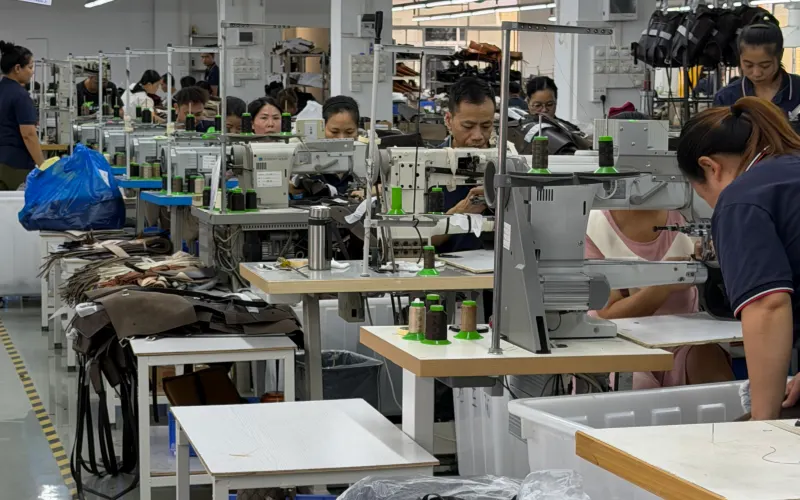
Milestone 1: The Paper Pattern and Spatial Engineering
The first point of failure for many emerging brands occurs during pattern translation. Standard factories often skip formal pattern rendering and rush directly to cutting, resulting in mismatched panels and uneven seams. A professional custom designer bag maker begins with a detailed paper pattern and CAD draft. This spatial engineering step adjusts the flat dimensions of your sketch to accommodate three-dimensional folding radiuses, seam allowances, and stitch lines, ensuring perfect geometric alignment.
At BAGSRAIN, our master pattern makers analyze your original sketches to build a complete 3D paper draft. This step allows us to correct spatial proportions and simulate how the leather behaves under tension, avoiding uneven stretching. By engineering these tolerances early, we achieve a highly synchronized development process that prepares your designs for bulk manufacturing without visual distortion.
Milestone 2: Sourcing Authenticity and Material Batch Consistency
Premium leather is an organic material, and raw hides naturally vary in fiber density, thickness, and temper. If your manufacturer does not enforce strict selection standards, you will encounter the trauma of leather batch inconsistency across your bulk run. To prevent this issue, your manufacturing partner must implement rigorous selection gates to group hides by similar weight and fiber density before cutting begins.
Furthermore, look out for the quality of edge-paint and hardware finishes. Standard factories often apply cheap polymer-based paints that dry rapidly but crack easily under stress, resulting in the common issue of edge paint peels. Additionally, using low-grade electroplated metals leads to rapid hardware tarnishing. A luxury-tier maker prevents these defects by using multi-stage sanding, hand-painting cycles, and corrosion-resistant metal coatings, preserving your brand's premium image.
Milestone 3: Reinforcement Engineering and Silhouette Preservation
The true mark of high-end craftsmanship is a handbag's ability to retain its elegant silhouette when empty, while remaining comfortable to wear. This stability is achieved through a hidden layer of internal reinforcements. Low-end factories often use uniform, rigid cardboard, which causes the bag to crease, deform, or collapse under normal wear, leading to structural sagging.
A professional custom leather bag maker analyzes each individual panel's load requirement and executes "temper matching"—pairing the outer leather’s weight with the exact density of internal stabilizers. We use specialized materials, such as high-density Salpa boards for structured base plates, flexible micro-foams for gussets, and high-tensile non-woven fabrics for handle straps, ensuring your bag retains its geometric form over years of consumer use.
Milestone 4: Structural Prototyping and Regulatory Compliance
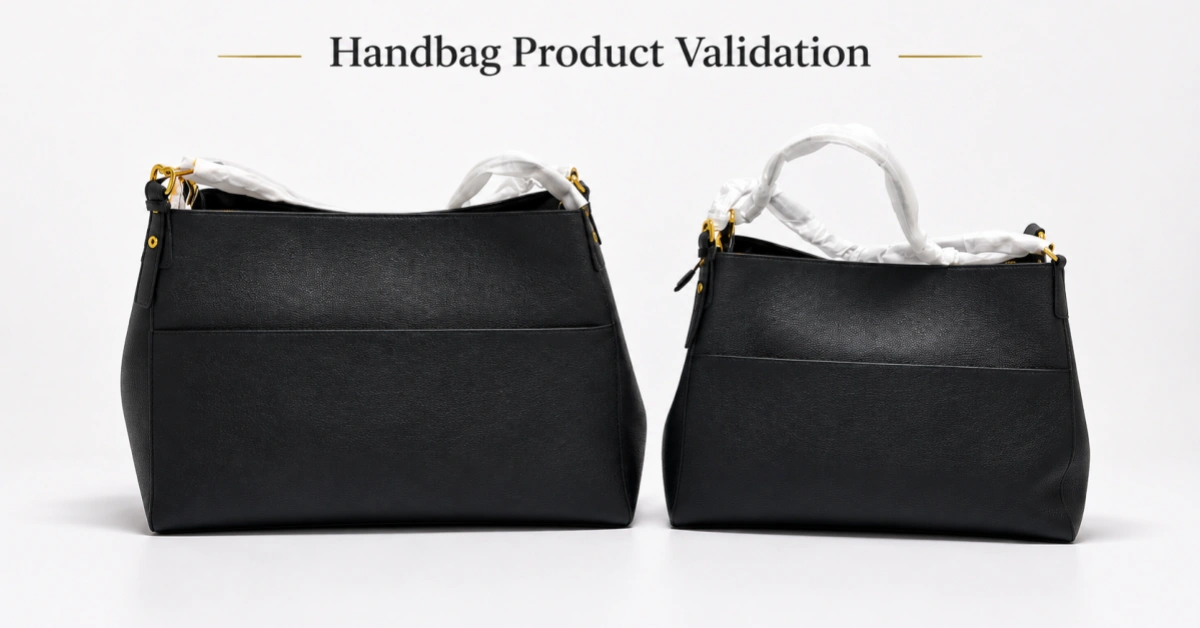
To ensure that your designs are truly market-ready, your development partner must guide you through a comprehensive, step-by-step handbag product validation process. This phase is designed to physically stress-test every component and verify international import compliance before launching bulk production:
- Fitting Sample Verification: Constructing a secondary leather prototype to verify internal dimensions, pocket placements, zipper clearances, and strap drops.
- Stress and Load Simulation: Testing handle attachment strength under weight, and testing snaps and zippers through thousands of opening cycles.
- Chemical Compliance: Verifying that all raw leathers, linings, adhesives, edge-paints, and metal coatings comply fully with European Union REACH regulations and California Proposition 65 standards (Prop 65), protecting your brand from customs delays or regulatory fines.
Our standard timeline for this prototyping and validation phase is 20–30 days for sample development. Once the sample is approved and designated as the Golden Sample, we lock in the Bill of Materials (BOM) and execute manufacturing over a predictable timeline of 30–45 days for bulk production.
Milestone 5: Visual Evidence of Technical Craftsmanship
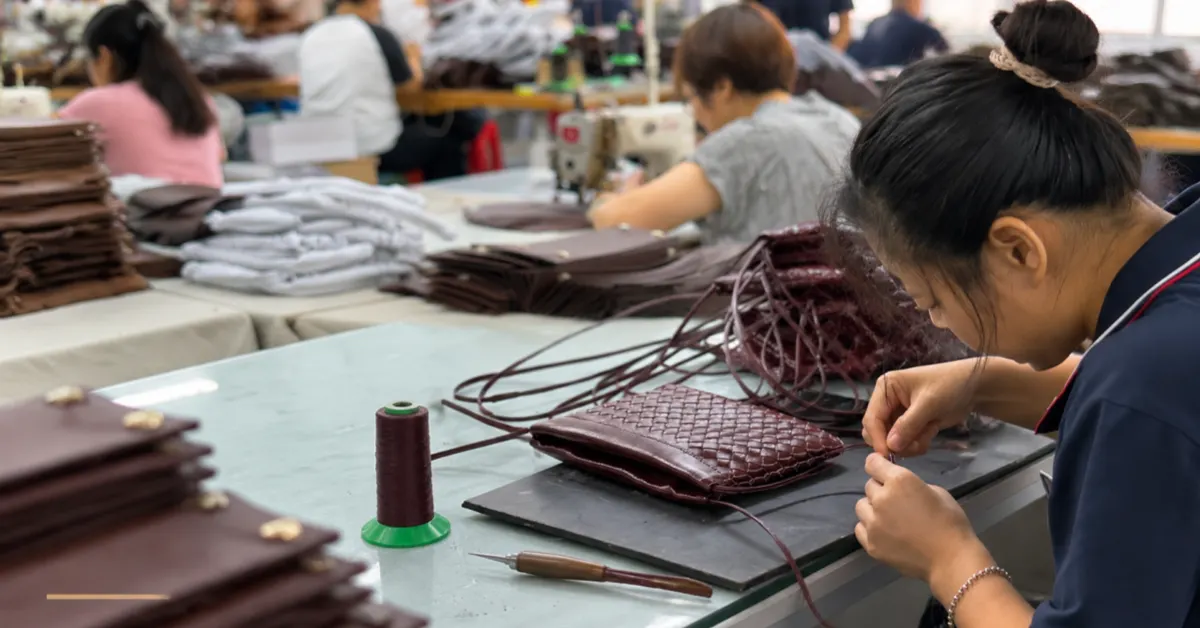
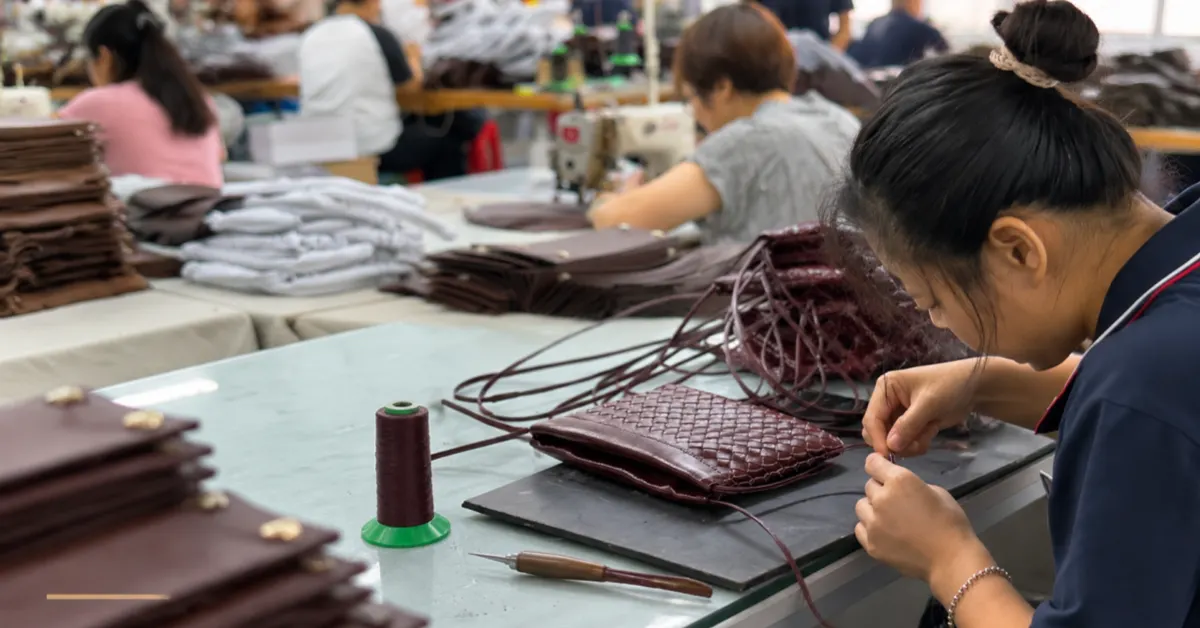
We believe in visual transparency, proving our technical capabilities through macro close-up evidence from our atelier floor:
Visual Exhibit A: CAD Fiber Alignment Scan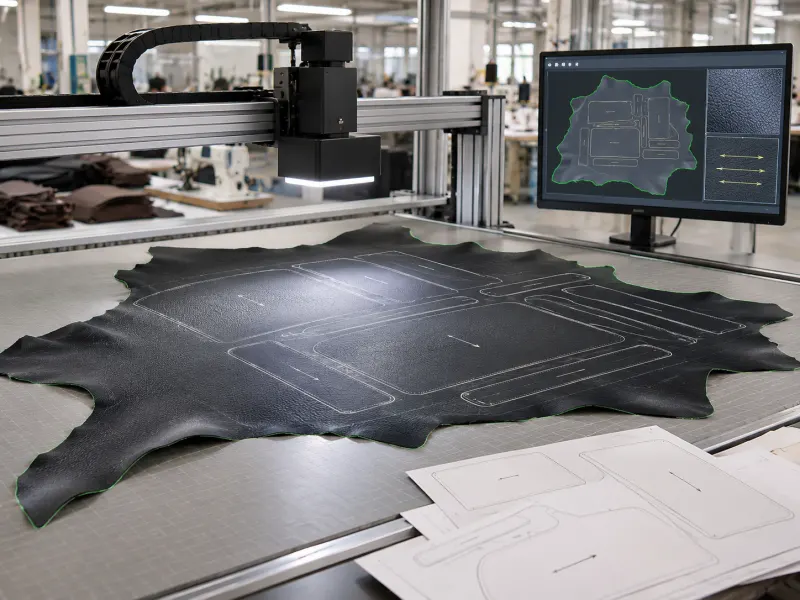
A photograph showing our computerized CAD scanner aligning paper pattern files with the natural grain fibers of a premium calfskin hide, ensuring uniform tension and shape retention.
Scale Safely with Demand-Led Manufacturing (DLM)
For independent brands, scaling production can be a major financial risk. Traditional factories force brands to order thousands of units, locking up critical working capital in unproven inventory. BAGSRAIN removes this barrier by offering a Flexible MOQ model powered by Demand-Led Manufacturing (DLM).
Under this agile framework, we enable you to produce smaller, market-validated batches, allowing you to test different colorways and leather finishes with minimal financial risk. Our experienced cost engineers work with you to establish an Optimized Landed Cost Structure that protects your retail margins, while our strict factory-level compliance protocols guarantee complete Technical Sovereignty and IP Protection for your proprietary CAD paper patterns and custom hardware molds.
Accelerate Your Design Validation
Partner with an elite custom leather bag maker to audit your handbag designs, secure your pricing structures, and access premium production capacity.
Request a Technical Prototyping ReviewDirect Technical Expert Review
Email Ben directly to receive a professional production feasibility audit and structural review within 48 hours.
Frequently Asked Questions (FAQ)
Q: How does a custom leather bag maker differ from a mass-production factory?
A: A specialized maker focuses heavily on Technical Prototyping, reinforcement engineering, and pattern drafting (Paper Patterns) before cutting. This meticulous approach prevents structural failures like sagging, edge-paint peeling, and hardware corrosion, which mass factories often overlook.
Q: How does BAGSRAIN prevent leather batch inconsistencies?
A: We enforce strict material controls. Our raw leather hides are sourced from certified tanneries in consolidated batches, and our quality control specialists sort hides by fiber density, temper, and thickness before they reach our automated cutting tables.
Q: What are your typical timelines for prototyping and bulk runs?
A: We maintain a highly reliable, structured schedule: 20–30 days for sample development (incorporating full Technical Prototyping & Structural Engineering) and 30–45 days for bulk production, calculated from master sample sign-off.
Q: Are your materials approved for international customs?
A: Yes. All leathers, internal stabilizers, edge-paints, adhesives, and metal plating used by BAGSRAIN are verified to comply fully with European REACH regulations and California Proposition 65 standards.