
At BAGSRAIN, many clients come to us with an idea, a reference image, or an early concept rather than a fully developed technical package.
This mini tote bag project is a good example of how professional bag development works behind the scenes.
The client wanted a compact handbag collection that combined clean modern aesthetics, premium details, and practical daily functionality. The goal was to create a product suitable for boutique retail stores and online fashion brands while maintaining reasonable production costs and scalable manufacturing potential.
This case study explains the entire development process—from concept validation and material selection to sample making and bulk production preparation.
Project Overview
Client Type:
Independent Fashion Brand
Product Category:
Mini Tote Bag Collection
Manufacturing Service:
OEM Development & Production
Market:
North America
Development Scope:
- Product structure development
- Material sourcing
- Hardware selection
- Sample development
- Branding integration
- Production preparation
- Quality control planning
Like many startup and growing brands, the client wanted a product that looked premium but remained commercially viable for retail distribution.
The challenge was finding the right balance between design, functionality, durability, and manufacturing efficiency.
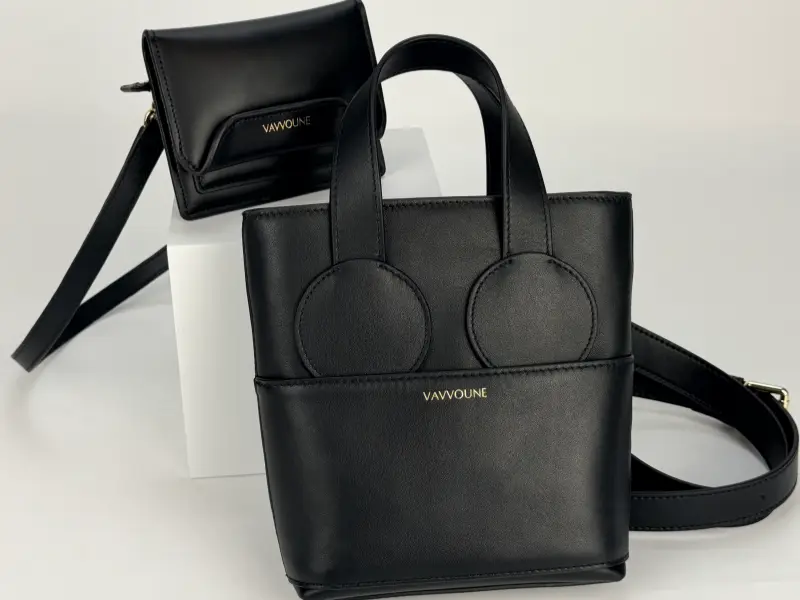
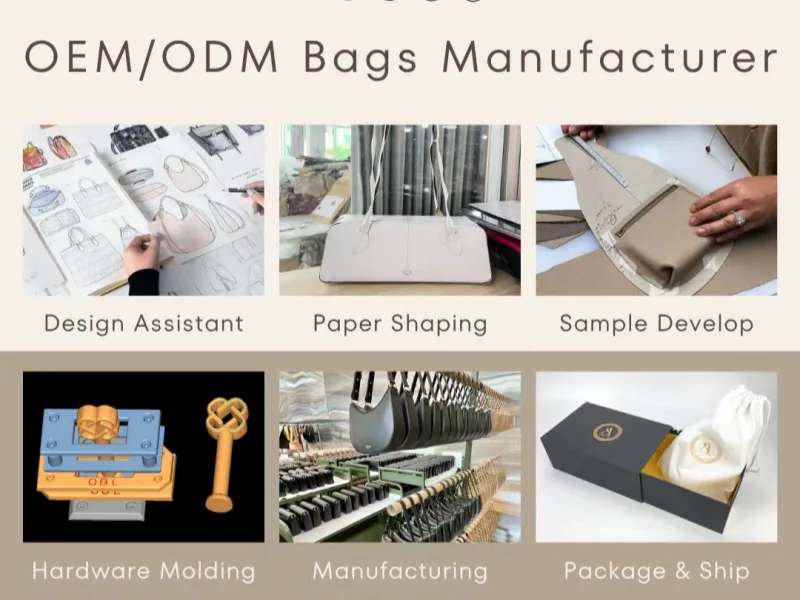
Step 1: Turning the Design Concept Into a Production Plan
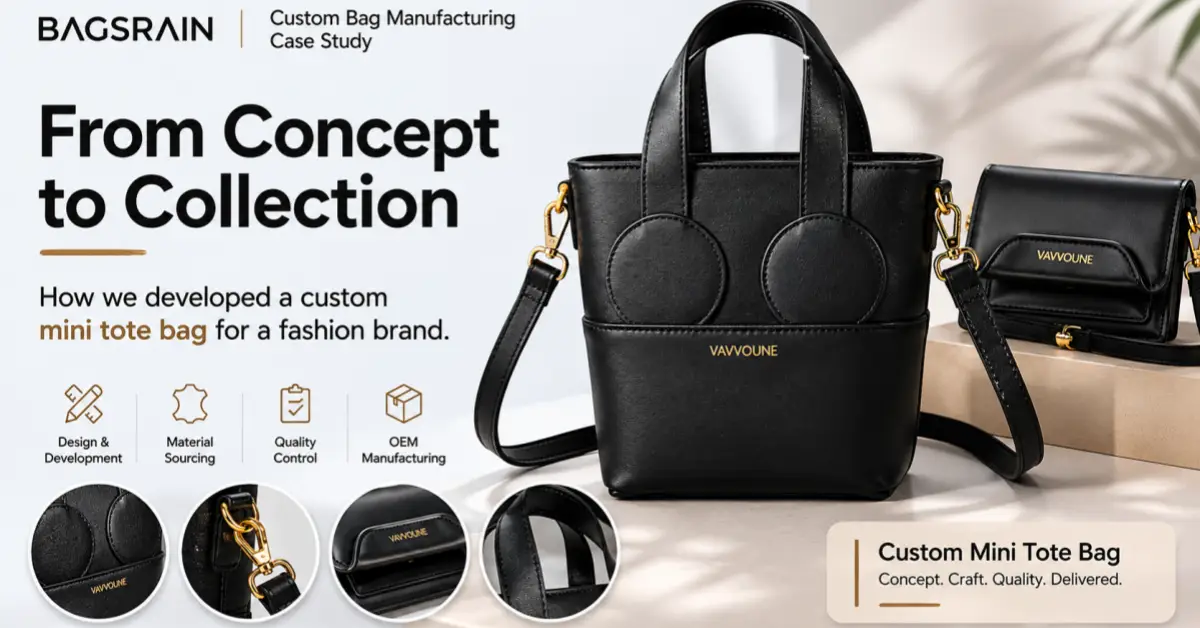
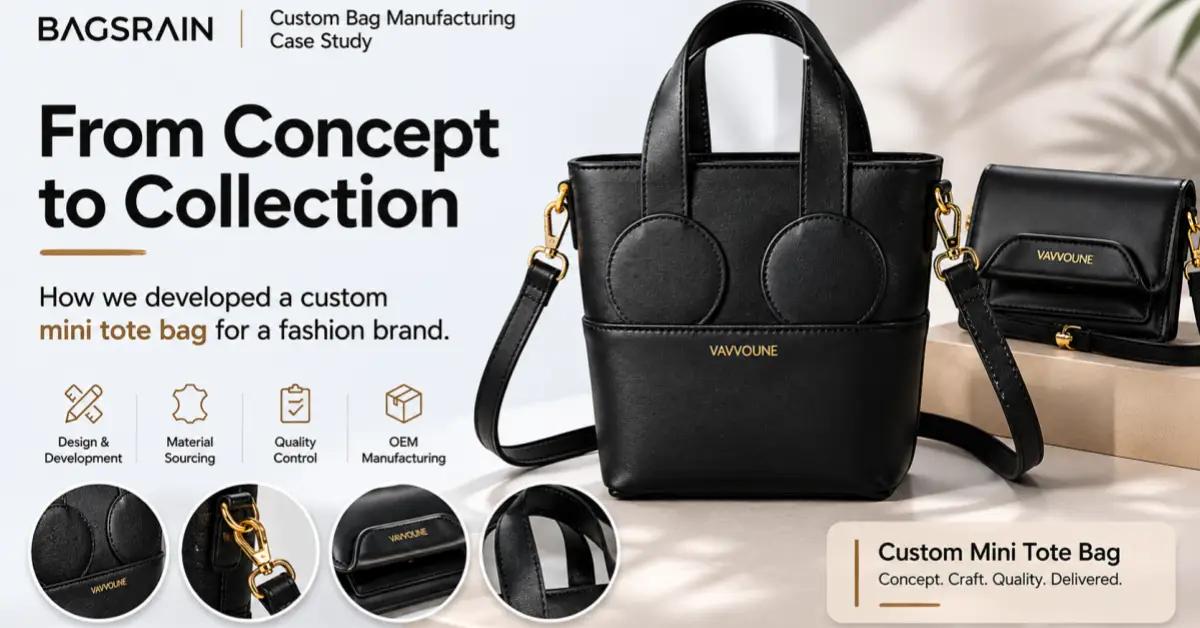
The original concept featured a compact tote silhouette with a distinctive circular handle reinforcement design.
While the design looked simple, several technical questions needed to be addressed before production could begin:
- Can the handle structure support daily use?
- Will the circular panels maintain shape over time?
- How should the shoulder strap attachment be reinforced?
- What construction method provides the best balance of appearance and durability?
- Which materials can achieve the desired aesthetic without significantly increasing production costs?
This is where an experienced handbag manufacturer adds value.
Rather than immediately producing samples, our development team first evaluates the design from a manufacturing perspective to identify potential risks and optimization opportunities.
This early-stage review helps reduce costly revisions later in the project.
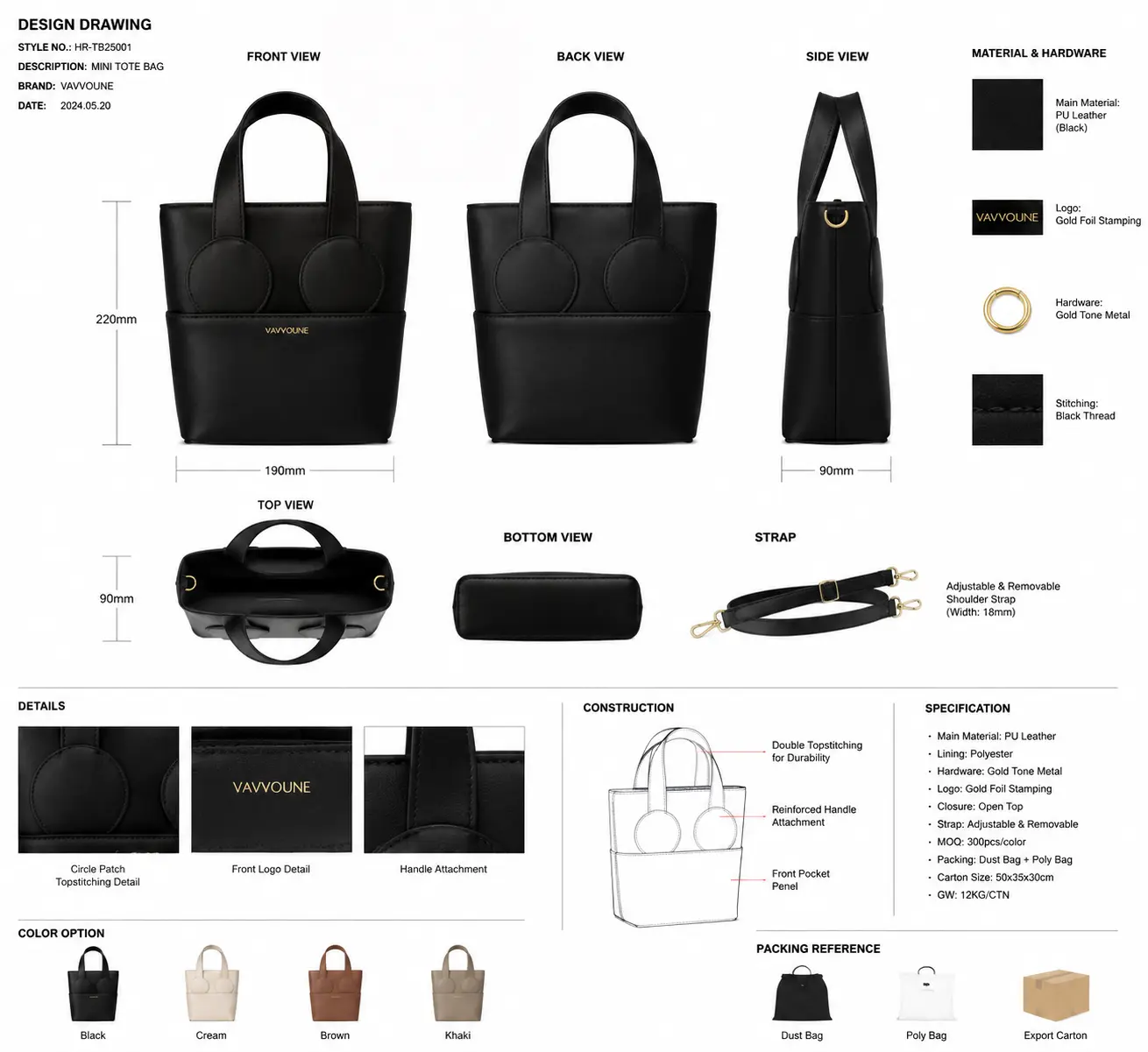
Step 2: Material Selection and Sourcing
Material selection is one of the most important stages in handbag development.
The final appearance of a bag is heavily influenced by the quality, texture, and performance of its materials.
For this project, we selected:
Main Exterior Material
Premium PU leather with a smooth matte finish.
Reasons for selection:
- Consistent appearance
- Excellent shape retention
- Easy maintenance
- Suitable for everyday use
- Cost-efficient for scalable production
Lining Material
Durable polyester lining was chosen because it offers:
- Strong abrasion resistance
- Stable color consistency
- Reliable long-term performance
Hardware Components
Gold-tone metal hardware was selected to complement the clean black exterior.
Key hardware included:
- D-rings
- Swivel hooks
- Magnetic snap closures
- Adjustable strap buckles
Every hardware component underwent supplier evaluation before approval for development.
Reliable hardware is critical because many customer complaints originate from hardware failures rather than leather or stitching issues.
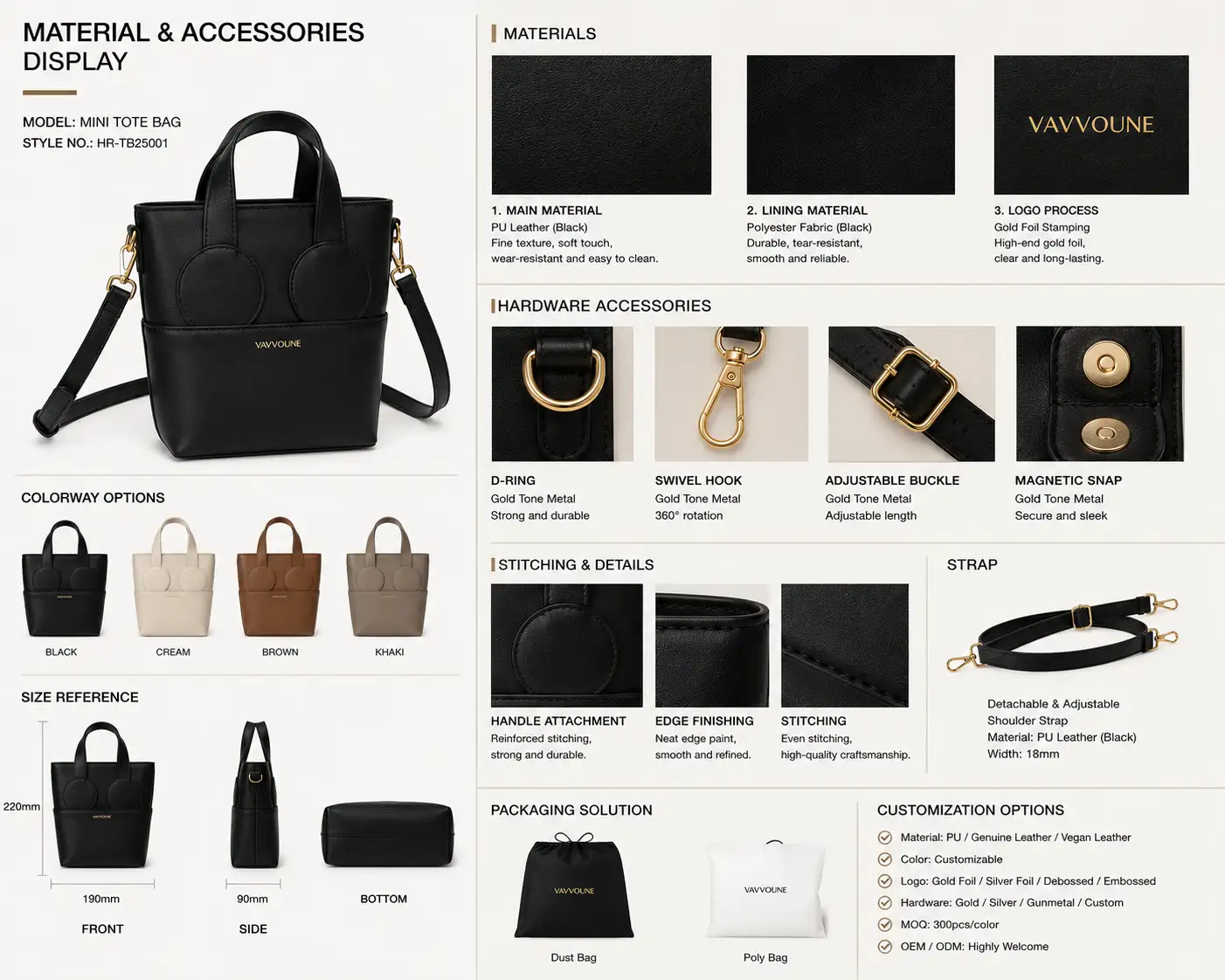
Step 3: Prototype Development
Once materials were approved, the sample room began developing the first prototype.
This stage included:
- Pattern creation
- Material cutting
- Assembly testing
- Hardware installation
- Construction verification
Many buyers underestimate the complexity of sample development.
Even relatively simple tote bags often require multiple rounds of adjustments before reaching production standards.
For this project, our sample team focused heavily on:
Handle Reinforcement
The circular handle attachment design is a visual feature of the bag.
However, decorative design elements must also withstand repeated use.
Additional reinforcement layers were integrated behind the circular panels to improve structural stability.
Edge Finishing
Clean edge painting was essential to achieve the desired premium appearance.
Multiple finishing tests were conducted to ensure:
- Smooth edges
- Consistent color
- Long-term durability
Strap Construction
Because the bag can be carried by hand or worn crossbody, the strap system required additional strength testing.
The attachment points were reinforced to prevent stress-related failures during daily use.
Step 4: Quality Control Preparation
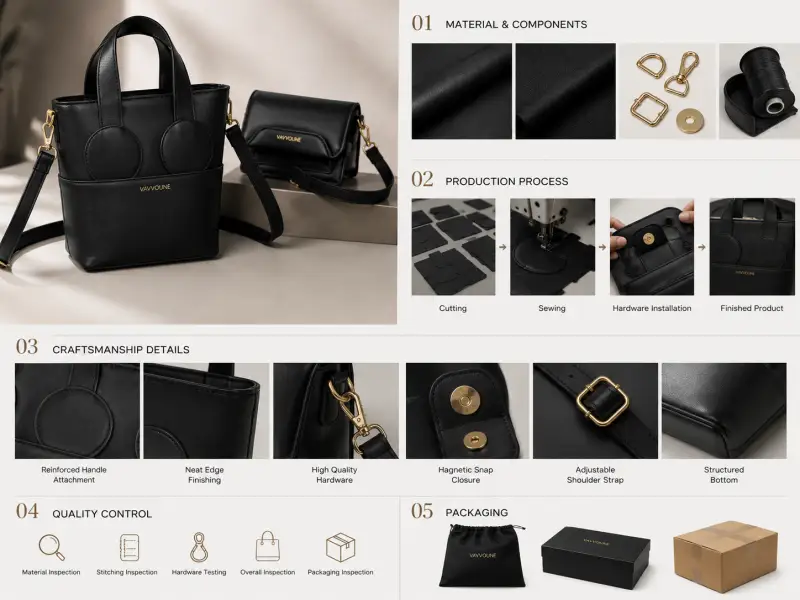
Many factories only inspect products after production is completed.
At BAGSRAIN, quality planning starts before bulk manufacturing begins.
For this project, we established inspection standards covering:
Material Inspection
Before entering production, materials are checked for:
- Surface defects
- Color consistency
- Thickness accuracy
- Texture uniformity
Stitching Inspection
Our QC team verifies:
- Stitch density
- Stitch alignment
- Thread tension
- Corner finishing
Hardware Testing
Each hardware component is evaluated for:
- Finish consistency
- Functional performance
- Attachment security
Structural Inspection
Special attention is given to:
- Handle attachment strength
- Pocket construction
- Base stability
- Strap connection points
This proactive approach significantly reduces production risks and improves final product consistency.
Step 5: Branding and Customization
One advantage of working with an OEM handbag manufacturer is the ability to customize products according to brand requirements.
For this project, the client selected gold foil logo branding.
Other available options included:
- Embossed logos
- Debossed logos
- Metal logo plates
- Screen printing
- Custom hardware engraving
The client also explored multiple color variations to support future seasonal collections.
Developing several color options from a single base design allows brands to expand product offerings while minimizing development costs.
Step 6: Packaging Development
Packaging is often overlooked during product development.
However, packaging plays an important role in customer perception and brand presentation.
For this collection, the packaging system included:
- Custom dust bags
- Protective poly bags
- Export cartons
The objective was to ensure both retail presentation quality and international shipping protection.
For brands selling online, good packaging helps improve customer experience while reducing transit-related damage.
Preparing for Bulk Production
After sample approval, the project entered pre-production preparation.
This stage involved:
- Final specification confirmation
- Material ordering
- Production scheduling
- QC checkpoint planning
- Packaging approval
Many production problems can be avoided when these details are finalized before manufacturing begins.
A structured pre-production process helps ensure that the approved sample accurately reflects the final production run.
Results
The completed mini tote bag collection successfully met the client's objectives:
✓ Premium appearance
✓ Clean modern design
✓ Durable construction
✓ Scalable production capability
✓ Consistent branding integration
✓ Retail-ready packaging
Most importantly, the development process created a repeatable production framework that allows the client to expand the collection with additional colors and future product variations.
What Brands Can Learn From This Project
Successful handbag manufacturing is about much more than producing a beautiful sample.
The real challenge is ensuring that the same quality, construction standards, and visual details can be reproduced consistently during bulk production.
When evaluating a handbag manufacturer, brands should look beyond pricing and focus on:
- Development expertise
- Material sourcing capabilities
- Sample accuracy
- Quality control systems
- Communication efficiency
- Long-term production support
A reliable manufacturing partner helps reduce risk throughout the entire product lifecycle.
About The Author
Ben Chen
Senior Product Development Consultant | BAGSRAIN
Ben has worked in footwear and handbag manufacturing for more than 25 years, helping fashion brands, retailers, and private label companies transform product concepts into scalable commercial collections. His experience covers material sourcing, prototype development, production management, quality control, and international supply chain coordination. Through BAGSRAIN, Ben and his team support emerging brands and established companies across North America, Europe, and the Middle East with OEM, ODM, and private label manufacturing solutions.
Start Your Custom Bag Project
Have a handbag concept, sketch, tech pack, or reference image?
BAGSRAIN helps brands develop custom handbags, tote bags, crossbody bags, backpacks, wallets, and private label leather goods from concept to production.
Services Include:
- Design Consultation
- Material Sourcing
- Sample Development
- OEM Manufacturing
- ODM Development
- Private Label Branding
- Quality Control
- Global Logistics Support
Send your design files or reference images and our development team will help evaluate the most efficient path from concept to production.