
Quick Answer: The Essence of OEM Bag Manufacturing
An OEM bag manufacturer is more than a factory; it is the technical architect of your brand’s physical identity. They produce custom handbags, luxury totes, and specialized leather goods according to your exact specifications. For premium brands in North America, Europe, and the Middle East, a professional OEM partner provides a turnkey solution—spanning from precision material sourcing and 72-hour prototyping to REACH-compliant bulk production and global logistics. Choosing the right partner is the difference between a product that merely exists and a brand that dominates the market.
What is an OEM Bag Manufacturer?
Definition and Core Services
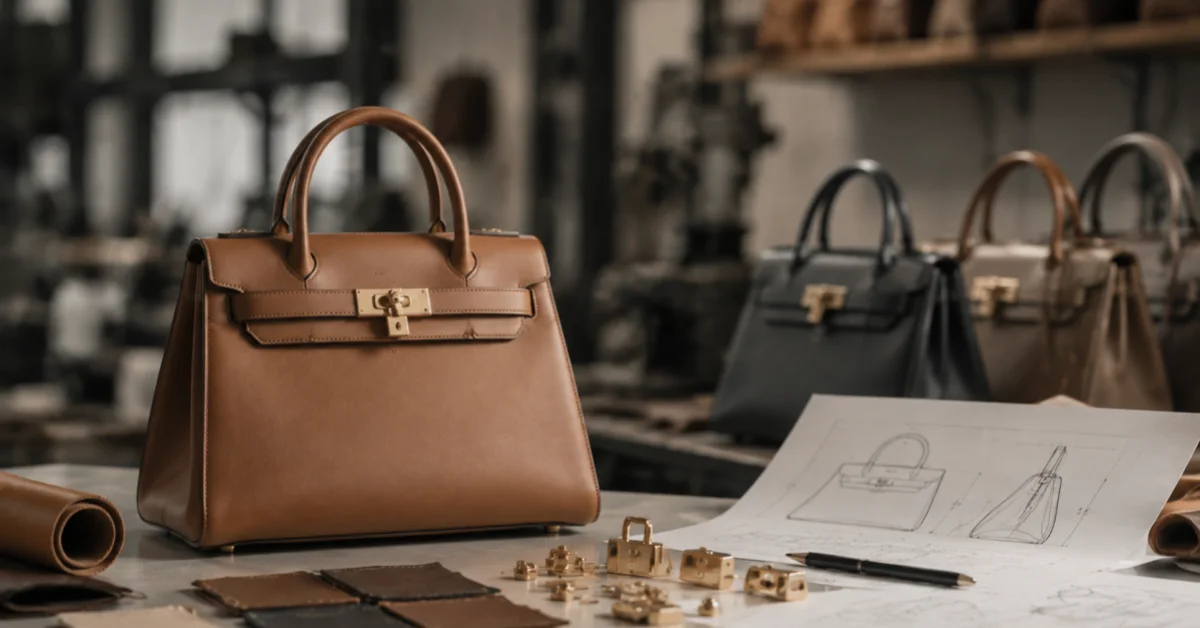
An OEM bag manufacturer (Original Equipment Manufacturer) specializes in producing bags based on your brand's designs. Core services include:
- Design consultation and pattern development
- Material sourcing (leather, vegan leather, microfiber, lining fabrics)
- Prototype and sample creation
- Bulk manufacturing with quality inspections
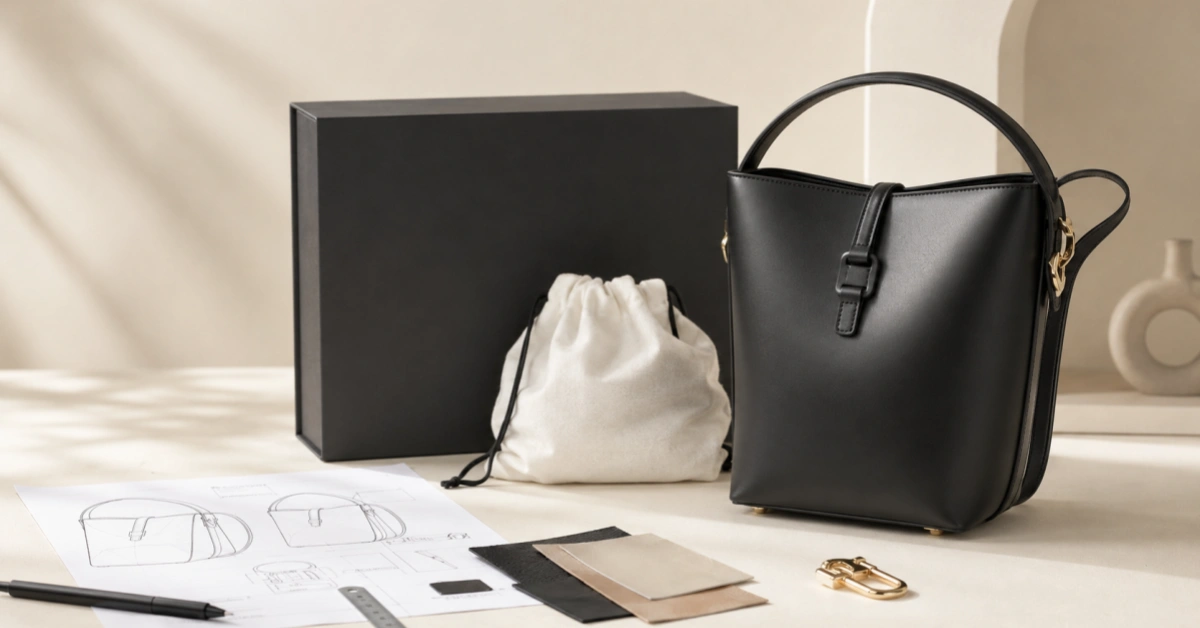
- Custom packaging, hardware, and branding
Difference Between OEM, ODM, and Private Label
- OEM – Produces bags entirely according to your design
- ODM – Offers pre-designed templates that can be modified
- Private Label – Pre-existing designs you brand and sell
Current Market Trends and Industry Overview
Global Demand
The handbag market continues to grow globally, fueled by:
- Luxury and premium segments
- Sustainable and vegan materials
- Limited-edition collections
Key Materials and Styles
- Pebbled leather and microfiber
- Minimalist structured totes
- Convertible and multifunctional designs
Regional Insights
- Europe: Sustainability and premium finishes
- North America: Functionality and DTC packaging
- Middle East: Structured designs, vibrant colors, premium hardware
Applications and Buyer Scenarios
| Buyer Type | Typical Use Case | Key Considerations |
|---|---|---|
| Fashion Startups | Launching first collection | MOQ flexibility, design support |
| Boutique Brands | Seasonal limited editions | Material sourcing, craftsmanship |
| Retail Chains | Large volume orders | Lead time, compliance, cost efficiency |
| E-Commerce Brands | Direct-to-consumer | Packaging, branding |
| Global Distributors | Multi-brand logistics | Consistency, scalability |
Bag Structure and Manufacturing Process
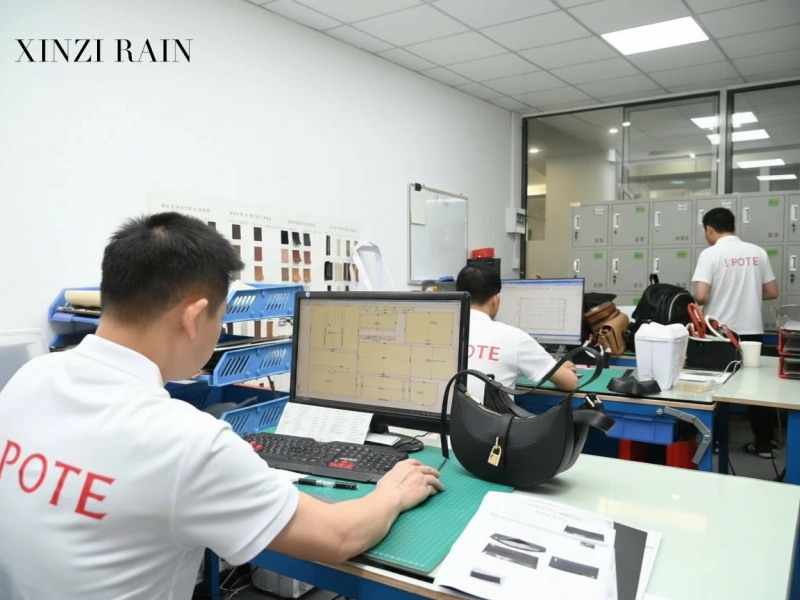
Components
- Exterior: Leather, PU, microfiber
- Interior: Cotton, polyester, microfiber
- Hardware: Zippers, buckles, rings, feet
- Additional: Pockets, straps, compartments
Workflow
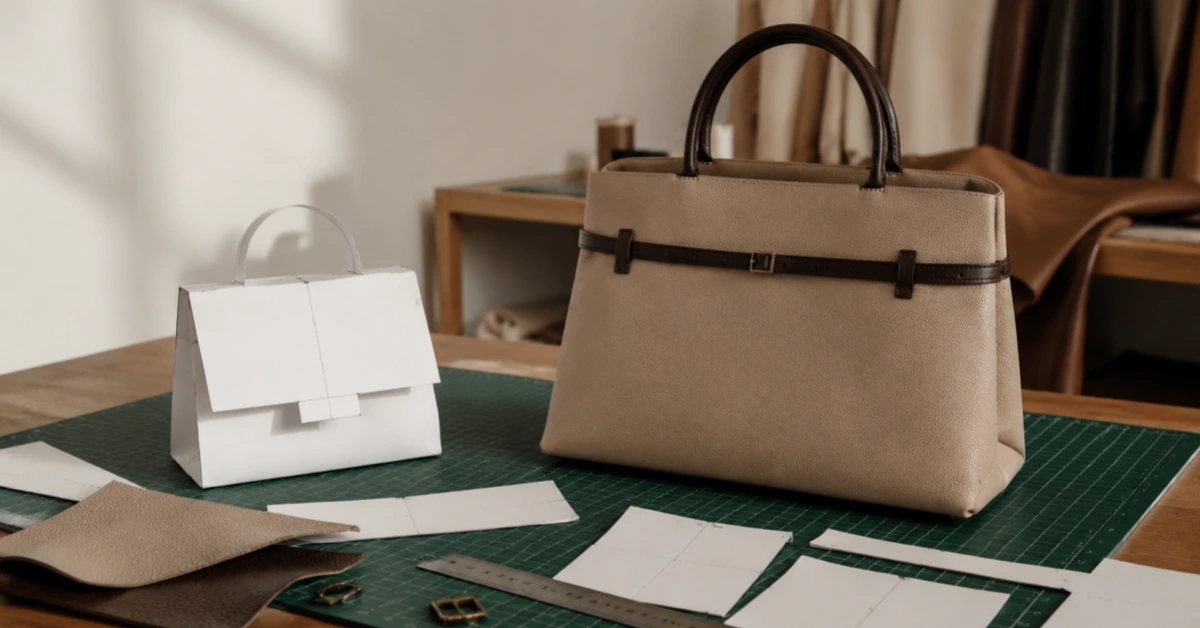
- Tech pack creation
- Material selection and approval
- Sample creation and testing
- Revisions and final sample confirmation
- Bulk production with in-line QC
- Final inspection and packaging
- Global shipping
Materials and Craftsmanship
Leather Types and Alternatives
- Full-grain leather
- Top-grain leather
- Vegan leather (PU, microfiber)
Hardware and Detailing
- Gold, silver, matte finishes
- Custom logos, engraved plaques
Edge Finishing and Stitching
- Edge painting, piping
- Precision stitching for durability
Technical Parameters and Specifications
Specs Table
| Item | Specification | Buyer Notes |
|---|---|---|
| Material | Full-grain leather / PU / Microfiber | Confirm durability and compliance |
| Size | Customizable | Check dimensions for compartments |
| Weight | 0.5–1.2 kg | Depending on materials and hardware |
| Color Options | Custom palette | Pantone reference recommended |
| Hardware | Zipper, buckles, rings, feet | Customizable finishes |
| MOQ | 50 pcs | Flexible for small or large brands |
| Lead Time | Sample 20–25 days, Bulk 30–45 days | Account for revisions and shipping |
| Certification | REACH, Prop 65, ISO9001 | Ensure compliance for target markets |
| Packaging | Custom box, dust bag | Branding support |
Quality Assessment and Evaluation Criteria
- Verify certifications and compliance
- Inspect samples for stitching, hardware, and finishing
- Review factory references and production processes
Certifications and Compliance Standards
- REACH (EU)
- Prop 65 (California, USA)
- ISO9001 / GRS (Quality & Sustainability)
OEM/ODM Capabilities
- Logo embossing, stamping
- Custom hardware and packaging
- Sample rounds 25–35 days, bulk 30–45 days
Cost and Risk Considerations
| Factor | Impact |
|---|---|
| Material quality | High-quality increases cost |
| Hardware customization | Adds complexity and cost |
| Production location | China vs local affects logistics |
| Order volume | MOQ impacts per-unit cost |
| Quality control | Reduces defects, increases time |
Risk Mitigation: IP protection, clear specs, structured QC
Supplier Comparison
| Supplier Type | Pros | Cons |
|---|---|---|
| Chinese OEM Factory | Full customization, low MOQ, fast scaling | Longer shipping overseas |
| Local OEM Factory | Short shipping, easier visits | Higher cost, limited materials |
| Trading Company | Handles logistics and communication | Less direct control, markup |
Case Example: BAGSRAIN/XINZIRAIN provides MOQs from 100 pcs, full tech pack support, and certifications for EU/US markets.
Conclusion
Choosing the right OEM bag manufacturer is critical. Evaluate materials, certifications, production capacity, and customization. A professional OEM partner ensures your designs are delivered on time, compliant, and high-quality.
Contact Us to request a free quote, sample, or technical consultation. Our experts will guide you from design to global delivery.

FAQ
Q1: What is the minimum order quantity (MOQ) for custom bags?
A: Most OEM bag manufacturers accept MOQs starting from 50 pieces per style, allowing both startups and boutique brands to place small orders. MOQ may vary depending on material, customization, and hardware requirements.
Q2: How long does sample production take?
A: Sample production typically takes 23–35 days, including design adjustments and testing. Revisions may add 3–5 days per round.
Q3: Can I use vegan leather for my designs?
A: Yes, OEM manufacturers offer options such as PU, microfiber, apple, cactus, or grape leather. All options can meet quality and durability standards for commercial use.
Q4: Are there compliance certifications for EU and US markets?
A: Reliable manufacturers provide compliance documentation such as REACH for Europe, Prop 65 for California, and ISO9001 for quality management. These ensure legal and safety standards are met.
Q5: Can the factory produce fully customized hardware?
A: Yes, factories can produce zippers, buckles, rings, and other hardware according to your specifications, including custom finishes and brand logos.
Q6: What is the typical bulk production lead time?
A: Bulk orders usually take 30–45 days after sample approval, depending on order size, material availability, and production schedule.
Q7: How do I protect my IP when working with an OEM?
A: Sign non-disclosure agreements (NDA) and provide clear tech packs. Choose manufacturers with a proven record of confidentiality and secure production processes.
Q8: Can I request revisions after the first sample?
A: Yes, most manufacturers allow 1–2 rounds of revisions to adjust size, materials, or hardware before approving bulk production.
Q9: Do you offer packaging customization?
A: Yes, options include custom boxes, dust bags, tissue paper, and branded stickers to align with your brand identity.
Q10: How do you ensure consistent quality across large orders?
A: Factories implement in-line quality control, final inspection, and testing reports to maintain consistent craftsmanship and material quality for every unit.
Q11: Are small-batch orders possible for startups?
A: Yes, many OEMs offer flexible MOQs starting at 50 pieces, ideal for emerging brands testing the market or launching limited editions.
Q12: Can I mix materials in one design (e.g., leather + vegan)?
A: Yes, designers can combine different materials within a single product, provided they meet durability and structural requirements.
Q13: Is international shipping available for bulk orders?
A: Yes, most OEMs handle global logistics, including air and sea shipping, customs clearance, and delivery to Europe, North America, and the Middle East.
Q14: How are defects or quality issues handled?
A: Manufacturers provide replacement or rework for defective units within agreed-upon tolerances. Clear QC standards and inspection reports minimize the risk of defects.
Q15: Can the manufacturer provide design consultation if I lack tech packs?
A: Yes, professional OEM manufacturers offer design support, creating tech packs, material selection guidance, and prototype development for brands without detailed designs.