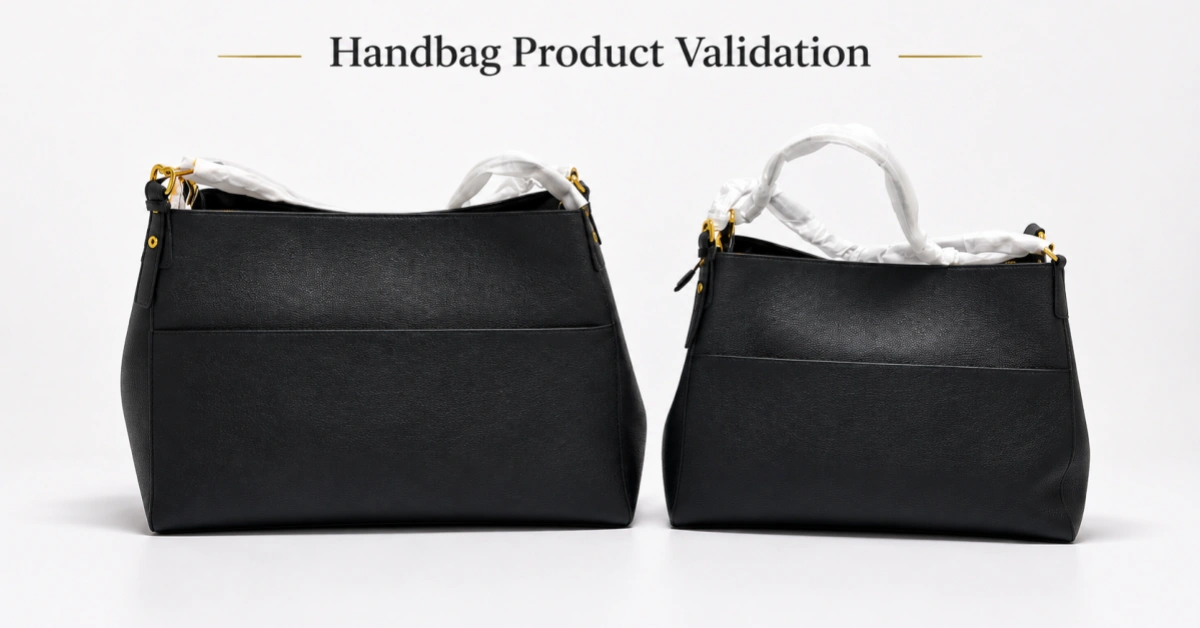
In the luxury and premium leather goods market, the distance between a brilliant design concept and a commercially successful product is often underestimated. For emerging designers, established boutique owners, and direct-to-consumer (DTC) fashion founders, the journey from a technical sketch or a mood board to a physical handbag involves complex engineering decisions. Translating a creative vision into an elegant, durable, and production-ready handbag requires a rigorous process of handbag product validation. Without this critical step, brands risk launching products that fail in the hands of consumers, eroding brand equity and leading to costly returns.
BAGSRAIN is the dedicated leather bag manufacturer division of XINZIRAIN Group, a global OEM/ODM manufacturing leader with over 25 years of leather engineering and export experience. Drawing on this deep group heritage, we understand that a high-end handbag is not merely a stitched piece of leather; it is a structural container subjected to constant mechanical tension and environmental factors. In this comprehensive guide, we will explore why physical and technical product validation is the absolute cornerstone of premium handbag production, how to conduct it systematically, and why skipping it is the single most common reason why fashion startups fail.
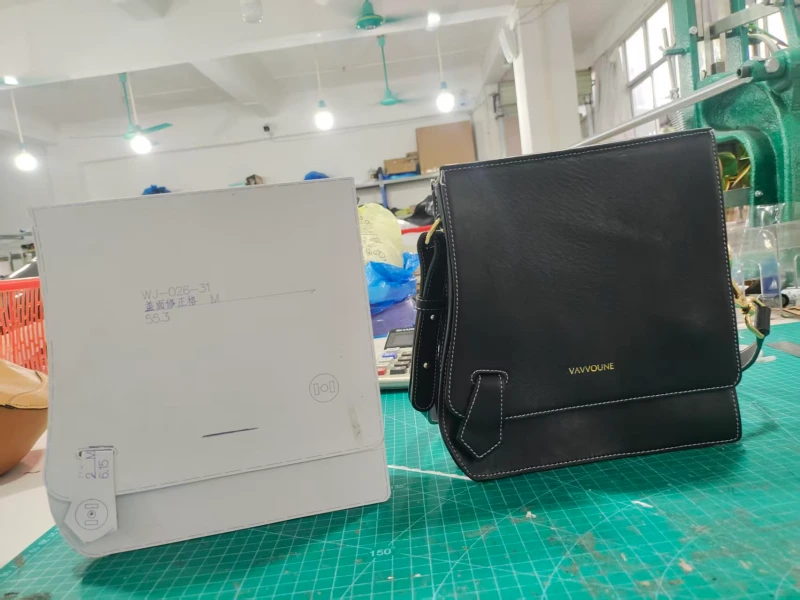
Sourcing Traumas: The Structural and Material "Red Flags" of Skipped Validation
Many emerging handbag brands partner with standard high-volume factories that rush directly from a rough sketch to bulk manufacturing. While this may seem like a faster route to market, it is a primary source of supply chain "trauma." In our 25 years of industry experience, we have identified four devastating red flags that consistently ruin unvalidated handbag productions:
- Leather Batch Inconsistency: Raw hides naturally vary in fiber density, moisture content, and thickness. Without a dedicated validation stage to establish master-sample standards and batch tolerance thresholds, a bulk production run can result in bags that feel stiff, look mismatched, or vary in grain texture across the same collection.
- Edge Paint Peeling: One of the most glaring indicators of low-end manufacturing is edge paint that cracks or peels within a few weeks of use. Edge-paint application is a multi-step thermodynamic process. Validating the adhesive bond between specific leather tanners and polymer-based edge coatings is vital to withstand repeating flexing and temperature variations.
- Structural Sagging: A beautiful tote or satchel should retain its elegant silhouette when empty, yet remain pliable enough for daily use. When factories fail to perform structural load-bearing validation, the bag collapses, sags, or buckles under the weight of a consumer's daily essentials (laptop, wallet, keys). This is caused by a failure in internal reinforcement engineering.
- Hardware Tarnishing and Friction Wear: High-end handbags rely on custom-developed, electroplated hardware. If the hardware is not validated through salt-spray chamber testing and cyclic abrasion simulations, the gold, brass, or palladium finishes will oxidize, tarnish, or flake, making a premium handbag look cheap and worn within months.
By implementing a strict handbag product validation protocol, BAGSRAIN eliminates these structural risks before a single square foot of leather is cut for bulk production.
The Three Pillars of Technical Prototyping & Structural Engineering
At BAGSRAIN, we do not simply "make samples." We execute a highly coordinated phase of Technical Prototyping & Structural Engineering that treats the handbag as a piece of functional architecture. This process rests on three fundamental pillars:
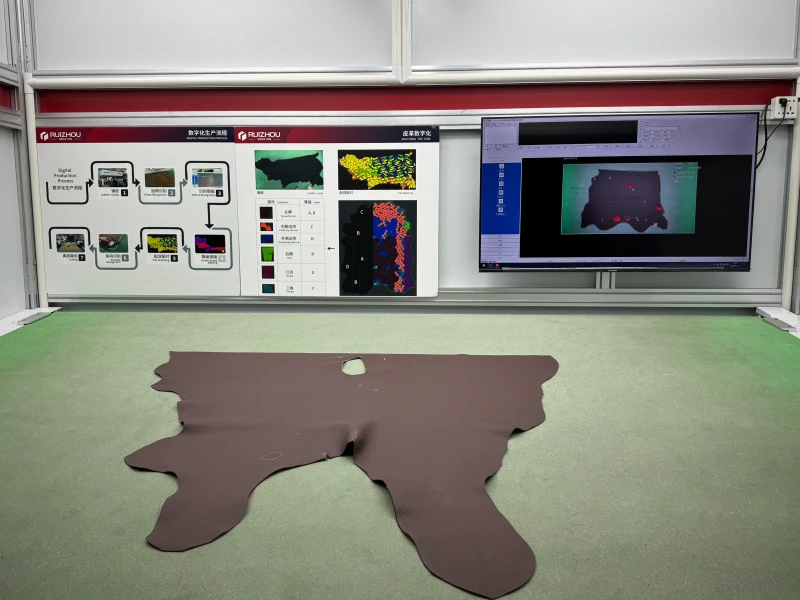
Pillar I: The Paper Pattern and CAD Blueprinting
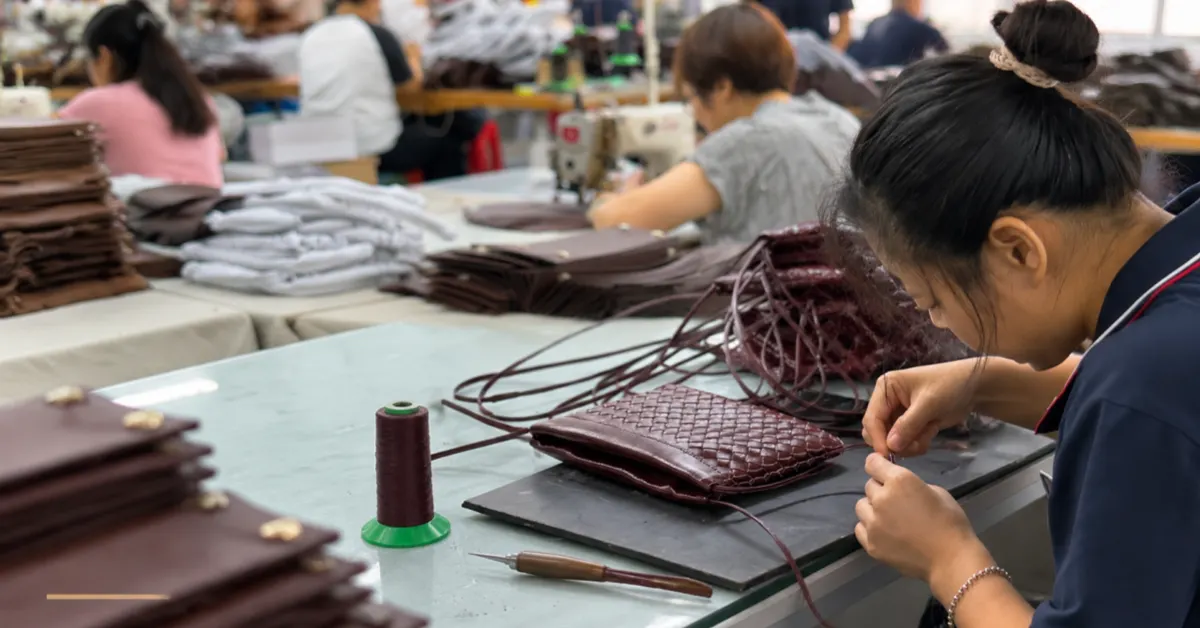
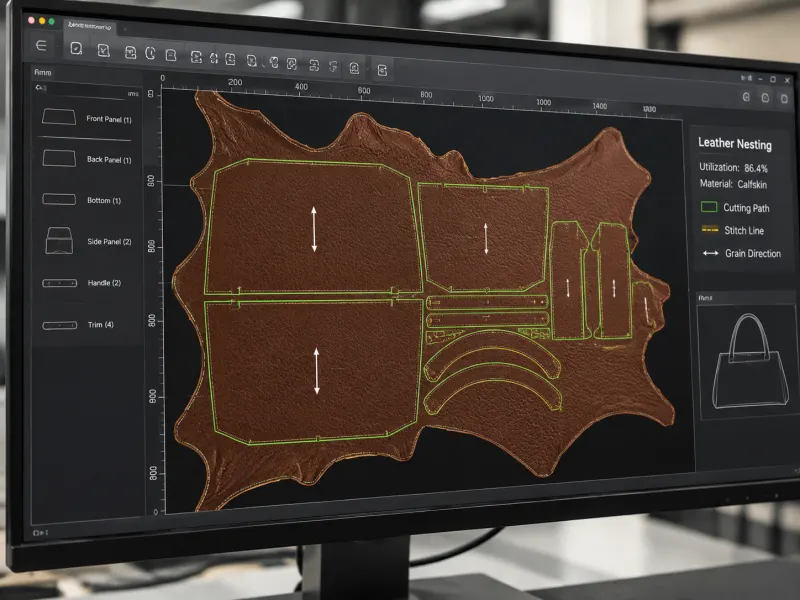
Before touching leather, our master pattern makers translate the designer’s 2D sketch or Technical Package (Tech Pack) into a precise 3D paper pattern. This step is where spatial proportions are corrected. We analyze stitch allowances, fold radiuses, and seam stress points. CAD blueprinting allows us to simulate the nesting pattern of the leather, optimizing material yield and ensuring that the tension of the leather fibers is distributed evenly across the bag's panels.
Pillar II: Reinforcement Engineering and Temper Matching
The "soul" of a luxury handbag lies in its internal structure. Different parts of a bag require different types of support. A structured base requires high-density board (such as Texon or Salpa), while the side gussets might require a soft micro-foam or thermal-adhesive non-woven fabric. Our technical team performs "temper matching"—pairing the natural drape and thickness of the selected outer leather with the precise weight and elasticity of internal stabilizers. This ensures the bag flexes naturally without losing its geometric integrity.
Pillar III: Hardware Integration and Mechanical Tolerances
Custom hardware—such as custom lock buckles, D-rings, clasp hooks, and logo plaques—must be engineered alongside the leather elements. We calculate the exact thickness of the leather layers that will pass through handles, strap connectors, and buckle bars. This prevents hardware from pinching the leather (which causes cracking) or having too much clearance (which causes rattling and misalignment).
The Step-by-Step Handbag Product Validation Process
To ensure that every design is truly production-ready, BAGSRAIN guides brands through a rigorous, multi-stage, Google-compliant handbag product validation workflow. This process is engineered to move step-by-step from structural testing to aesthetic and regulatory compliance.
Step 1: Structural Prototyping (The "Fitting" Sample)
We construct the initial prototype using secondary, structurally identical leather. The purpose of this step is strictly functional. We verify:
- Are the internal pocket dimensions practical (e.g., fitting the latest smartphone models)?
- Does the zipper slide smoothly around curves without binding or catching the lining?
- Are the strap drops and handle heights comfortable on various body types?
Step 2: Mechanical and Stress Testing
Once the physical form is approved, we subject the prototype to rigorous stress testing:
- Static Load Test: The bag is filled with double its maximum intended weight capacity and suspended by its handles for 72 hours to monitor stitch elongation and handle attachment stability.
- Cyclic Pull Test: Zipper pullers, magnetic snaps, and lock clasps are opened and closed 2,000+ times to guarantee mechanical endurance.
- Flex-Fatigue Analysis: Seams and strap attachment points are analyzed under motion to ensure there is zero thread fraying or leather tearing.
Step 3: Chemical and Regulatory Compliance
For premium brands targeting the North American and European markets, chemical safety is a major legal hurdle. Every material used by BAGSRAIN—including leathers, synthetic linings, edge paints, adhesives, and metal plating finishes—is rigorously checked to comply with REACH regulations (European Union) and California Proposition 65 standards (Prop 65). We ensure that lead, cadmium, phthalates, and hexavalent chromium are strictly below the legally permissible parts-per-million (PPM) thresholds.
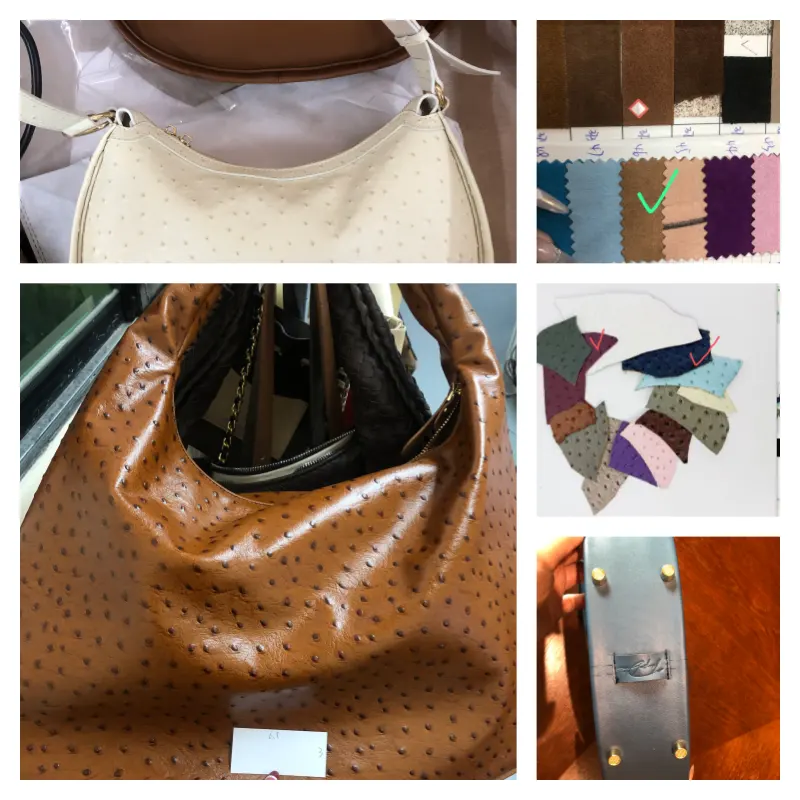
Step 4: Golden Sample & Master Specification Sign-Off
Once the prototype passes all mechanical, aesthetic, and chemical gates, it is designated as the Golden Sample. We lock down the precise "Master Specification" sheet, which details: precise leather batch origin, colorway, stitch density (typically 7–8 stitches per inch), thread weight, and multi-layered edge-paint specifications.
Our standard timeline for this comprehensive Technical Prototyping & Structural Engineering phase is 20–30 days for sample development. Once signed off, this serves as the unbending quality baseline for the subsequent bulk run, which carries a predictable timeline of 30–45 days for bulk production.
Visual Evidence: Macro Craftsmanship in Our Validation Lab
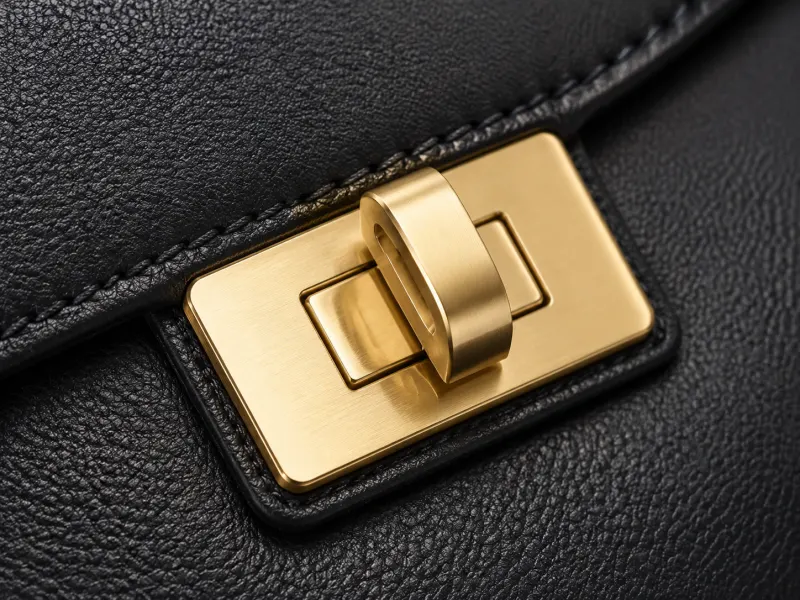
As a premium custom leather bag manufacturer, BAGSRAIN relies on tangible visual evidence to prove craftsmanship. We believe in visual transparency, showcasing the exact details that define luxury-tier manufacturing:
CNC Precision Hardware Alignment
Master Leather Nesting & Pattern Engineering
Moving From Validation to Demand-Led Manufacturing (DLM)
Once your brand has successfully completed handbag product validation, you gain Technical Sovereignty. You are no longer at the mercy of unpredictable assembly-line factories. You possess a blueprint that is optimized for commercial scaling.
To support high-growth DTC brands and independent designers, BAGSRAIN offers a Flexible MOQ model. Instead of forcing you to commit to thousands of unproven units (which drains capital and leads to dead inventory), we support Demand-Led Manufacturing (DLM). This allows you to launch validated designs in limited quantities, gather real-time market feedback, and scale production seamlessly as demand spikes. Our optimized supply chain is built to transition from validated samples to bulk production with zero loss in craftsmanship quality, providing your brand with an Optimized Landed Cost Structure that maximizes initial retail margins.
Accelerate Your Production Readiness
Validate your handbag design's functional architecture, materials, and cost-efficiency with our master leather patterns team.
Request a Technical Prototyping ReviewDirect Technical Expert Review
Email Ben directly to receive a professional production feasibility audit and structural review within 48 hours.
Frequently Asked Questions (FAQ)
Q: What does handbag product validation actually mean?
A: It is the scientific and technical process of testing a handbag prototype to ensure that the materials, structural engineering, reinforcements, and custom hardware are structurally sound, manufacturable at scale, chemically compliant (REACH/Prop 65), and capable of enduring daily consumer wear without structural failure.
Q: Why can't I just skip validation and start bulk production with my sketches?
A: Rushing into bulk production without validation almost always leads to catastrophic product failures, such as edge paint peeling, structural sagging, uneven leather stretching, and hardware tarnishing. These defects result in brand-destroying customer returns and wasted capital.
Q: What are BAGSRAIN's standard timelines for prototyping and bulk production?
A: We maintain a strict and highly predictable timeline: 20–30 days for sample development (incorporating full Technical Prototyping & Structural Engineering) and 30–45 days for bulk production, depending on the design complexity and material sourcing.
Q: Do you guarantee compliance with international safety regulations?
A: Yes. All leathers, adhesives, edge paints, and hardware components used by BAGSRAIN are verified to comply with European REACH regulations and California Proposition 65 standards.