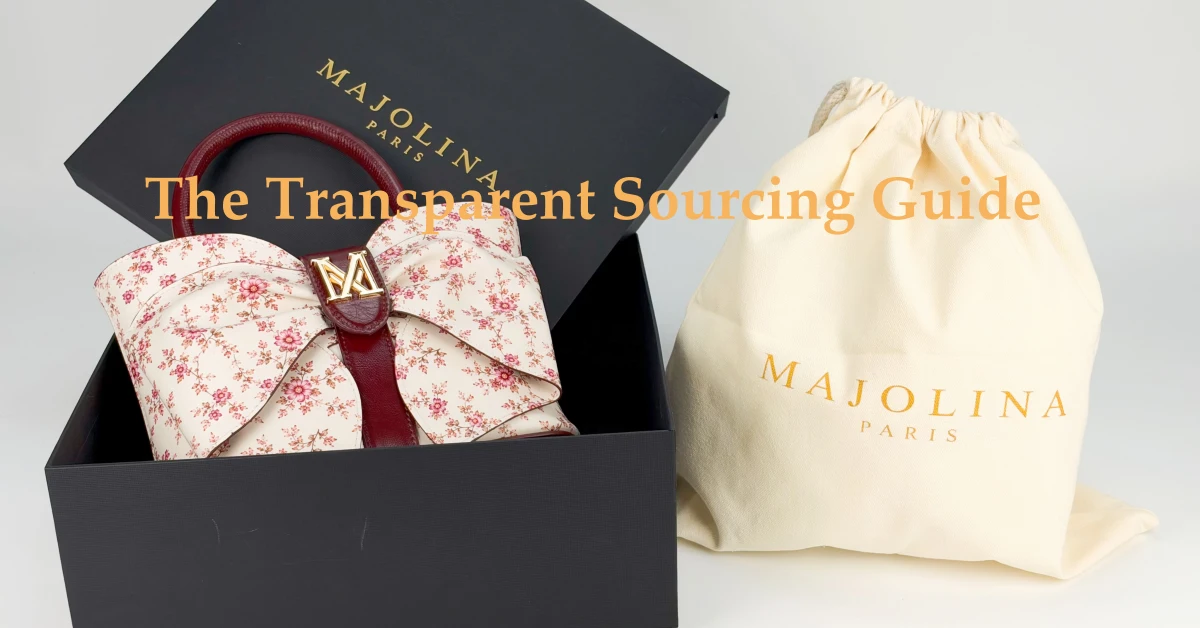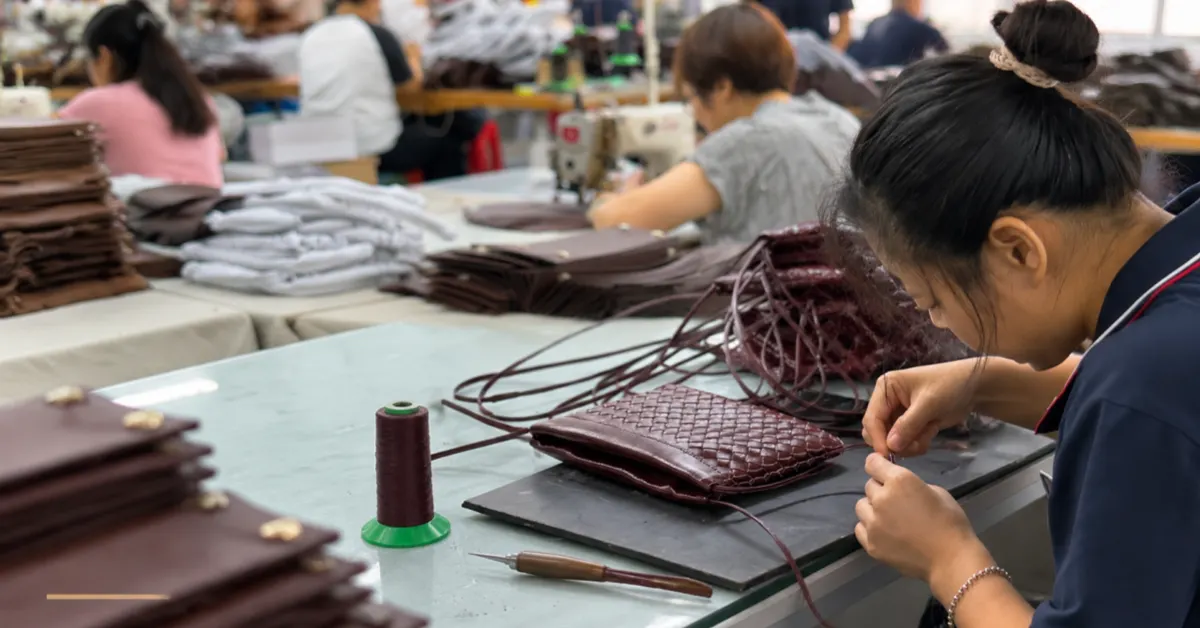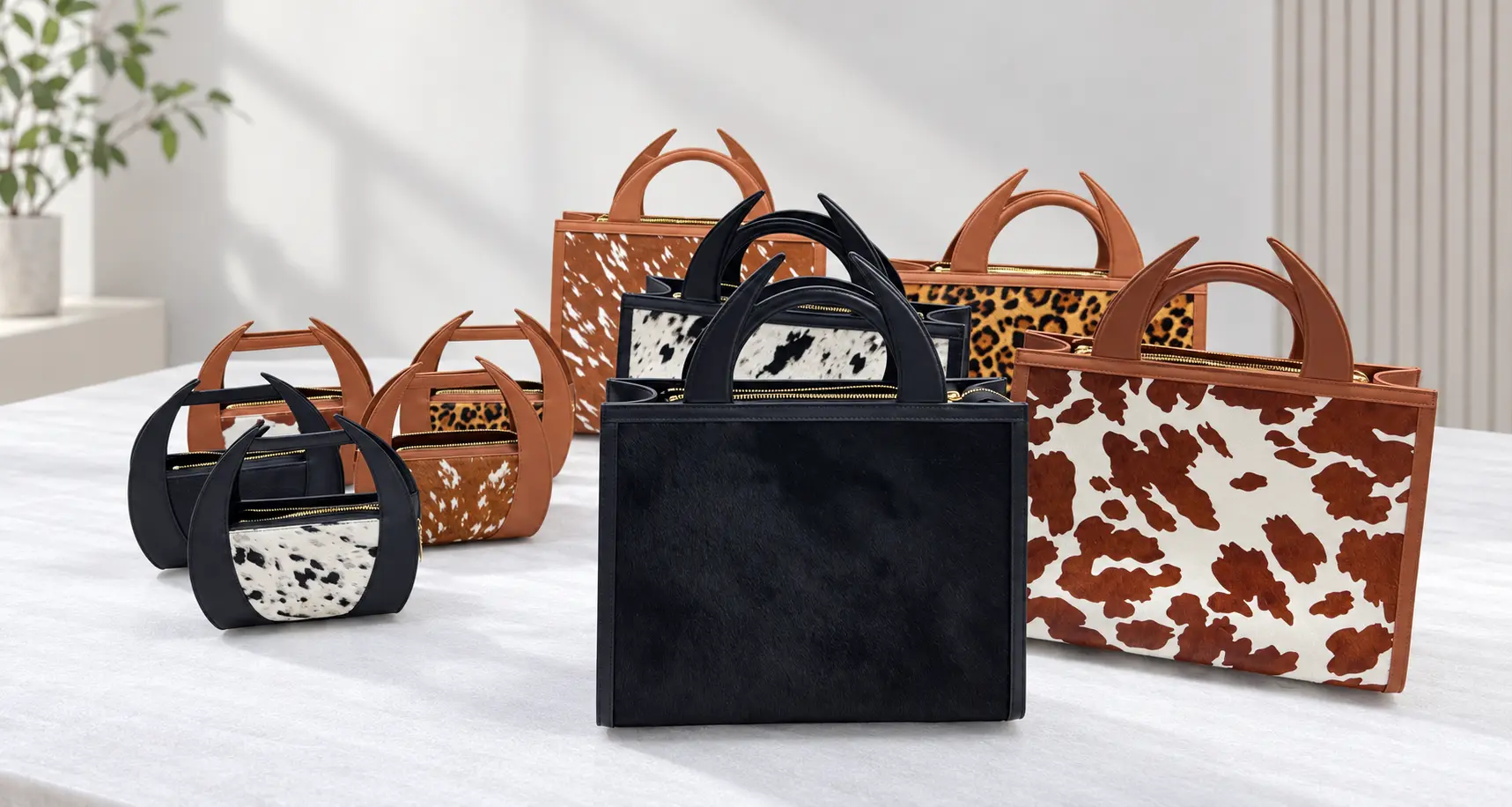
For fashion founders and independent handbag designers, the excitement of completing a beautiful design can quickly be overshadowed by the financial realities of production. It is a common industry tragedy: a brand develops an exquisite prototype, only to find that when bulk manufacturing costs, duties, shipping, and packaging are factored in, their retail margins are virtually non-existent. To build a sustainable, high-growth fashion brand, designers must master the art of first-order profit planning. This financial discipline ensures that your initial manufacturing run is not a sunk cost, but a highly structured, profitable stepping stone for your brand's growth.
BAGSRAIN is the specialized leather bag manufacturer division of XINZIRAIN Group, a global OEM/ODM manufacturing leader with over 25 years of luxury footwear and leather engineering and export experience. Leveraging our group’s deep history, we don't just help you manufacture beautiful products—we act as your supply chain and financial partners. We believe that a great product is only as good as its business model. In this guide, we will break down how to transition from the initial technical prototyping phase to bulk production while establishing an optimized landed cost structure that protects your bottom line and guarantees initial profitability.
Sourcing Traumas: The Financial "Red Flags" of Poor Cost Planning
Rushing into production without a comprehensive profit plan is incredibly risky. Many factories quote a low "FOB price" (Free On Board) to win your business, only for you to realize later that hidden fees make your finished bags commercially unviable. At BAGSRAIN, we help brands navigate and avoid these common sourcing traumas:
- Leather Batch Inconsistency leading to high waste: If your manufacturer does not enforce strict selection standards, bulk shipments of leather may vary in quality, thickness, and color. This inconsistency forces you to discard a high percentage of raw materials, driving up your material costs and destroying your margin.
- Edge Paint Peeling and quality-related returns: If a factory uses cheap adhesive and polymer coatings, the edge paint on your bags will peel and crack under consumer use. Each returned defective bag is a direct hit to your profitability, wiping out the margins of several successful sales.
- Structural Sagging requiring unscheduled redesigns: Handbags that sag or lose their geometric shape because of sub-par internal reinforcements must be discounted or recalled. Remaking structural components mid-production is a costly mistake that can be avoided with early structural validation.
- Hardware Tarnishing and tarnished reputation: Cheaply plated zinc-alloy hardware oxidizes quickly. Premium brands cannot afford to sell bags with hardware that tarnishes, as this leads to customer dissatisfaction, chargebacks, and bad reviews that stifle brand growth.
By integrating rigorous first-order profit planning with our manufacturing expertise, we eliminate these hidden quality costs, allowing you to price your products with absolute confidence.
Demystifying the Optimized Landed Cost Structure
To achieve retail success, you must look beyond the basic unit cost of assembly. You must build a highly transparent, all-inclusive optimized landed cost structure. Landed cost is the total price of a product once it has arrived at your customer's doorstep or your distribution warehouse. It comprises several moving parts:
Material Yield and Leather Nesting
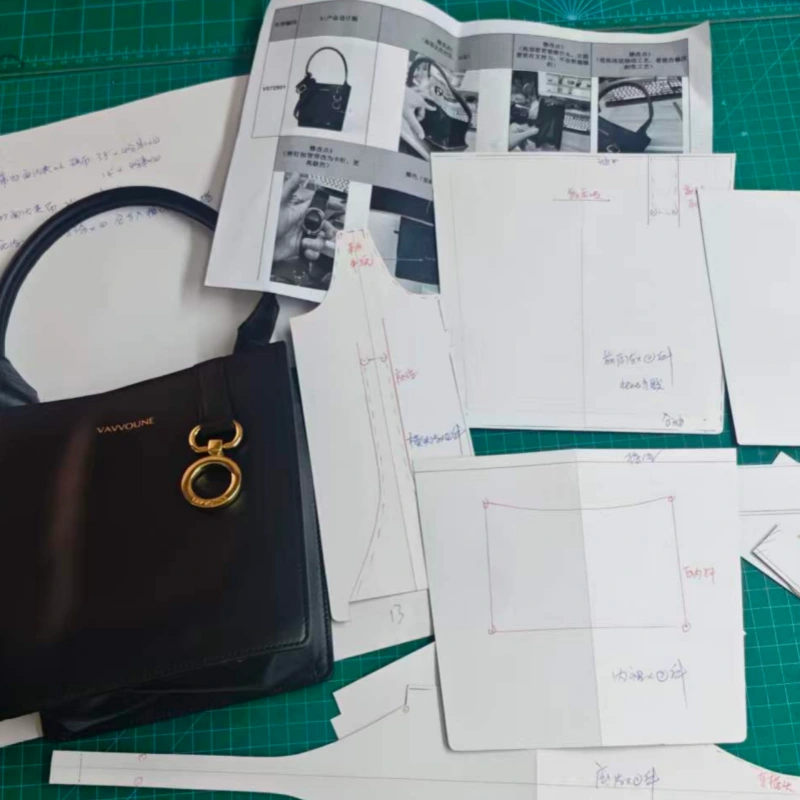
Leather is a natural, irregularly shaped material. Unlike synthetic rolls of fabric, raw hides have natural imperfections (scars, stretch marks) that cannot be used. Our master pattern makers use advanced CAD software to perform "nesting simulations." By strategically laying out your handbag paper patterns, we maximize the usable yield of premium full-grain leathers, drastically reducing material waste. This technical optimization directly lowers your raw material cost.
Amortizing Hardware and Tooling Costs
Custom brand hardware—such as custom-engraved buckles, metal logo emblems, and signature clasps—requires initial mold development and tooling. Many factories demand massive upfront payments for tooling. At BAGSRAIN, we analyze your product pipeline to amortize these mold costs across your initial and subsequent production runs, keeping your upfront capital requirements manageable.
Shipping, Duties, and Regulatory Compliance
A true landed cost calculation must account for international freight (air or sea), customs clearance fees, import duties, and local warehouse handling. Furthermore, to import into premium markets like North America and the European Union, your materials must comply with strict chemical regulations. BAGSRAIN ensures that all materials are fully compliant with European REACH regulations and California Proposition 65 standards (Prop 65). This compliance eliminates the risk of customs seizures and legal fines, saving you from catastrophic, unpredicted logistics expenses.
How to Formulate Your First-Order Profit Planning Matrix
Successfully launching a handbag line requires finding the perfect balance between your initial capital investment, your production volume, and your retail margins. BAGSRAIN's proprietary, Google-optimized first-order profit planning model is specifically designed to guide independent designers through this delicate calculation.
Phase I: Prototyping & Yield Verification
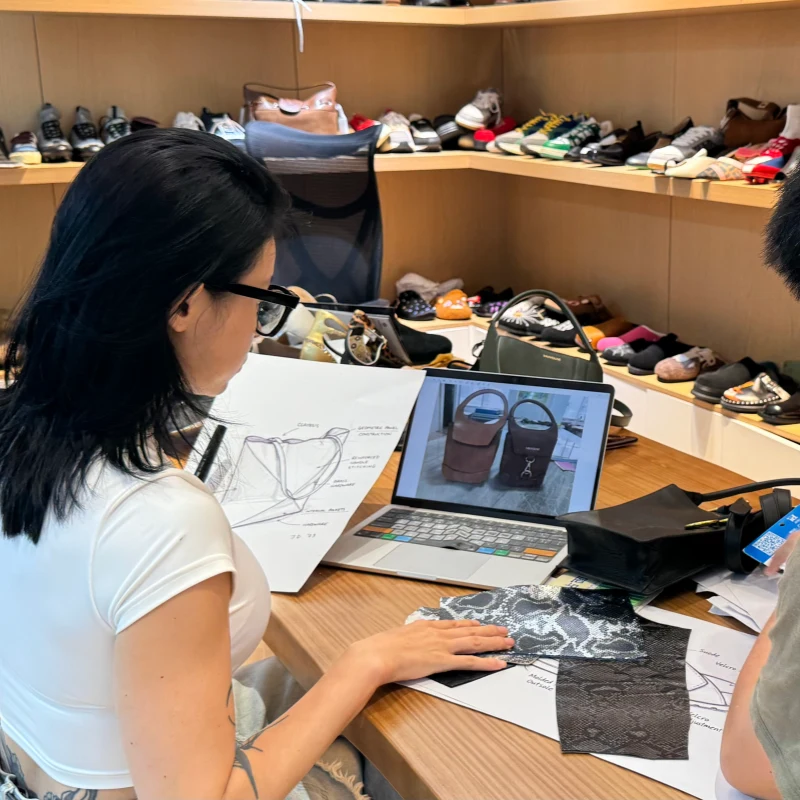
Before committing to bulk production, we embark on a Technical Prototyping & Structural Engineering phase. Over a highly structured timeline of 20–30 days for sample development, we create physical fitting and golden samples. This phase allows us to calculate the exact amount of leather, lining, reinforcement boards, thread, edge paint, and assembly hours required for your bag. We provide a fully itemized Bill of Materials (BOM), leaving no room for surprise charges during the bulk run.
Phase II: Leveraging Flexible MOQ and Demand-Led Manufacturing (DLM)
Standard low-end manufacturers force brands into massive, high-volume initial orders to get a viable unit price. This forces startup brands to lock up all their capital in slow-moving inventory. BAGSRAIN solves this with our Flexible MOQ and Demand-Led Manufacturing (DLM) strategy. By aligning your initial production run with actual pre-order data or modest launch expectations, we prevent overproduction. You can split your inventory across various colors or leather finishes while maintaining a highly competitive unit cost, keeping your capital liquid for marketing and customer acquisition.
Phase III: Margin Structuring for Scale
A healthy premium leather goods brand should target a gross margin of at least 65% to 75% on retail sales (a 3x to 4x markup over landed costs). When you partner with BAGSRAIN, we help you calculate your margins precisely using professional financial formulas, ensuring that your business remains profitable even when factoring in wholesale distributions, agency commissions, and marketing acquisition costs. Once the profit matrix is approved, we execute bulk production over a highly dependable timeline of 30–45 days for bulk production.
Visual Evidence: Cost Engineering and Structural Integrity in Our Facility
To achieve an optimized landed cost structure without sacrificing the luxury feel of your handbag, physical details must be engineered with absolute precision. We document this intersection of craftsmanship and cost-control through macro visual evidence in our production lines:
Driving Long-Term Growth with Financial Transparency
At BAGSRAIN, we do not view our clients as transactional buyers. We view ourselves as your long-term supply chain partner. By establishing a clear, transparent, and compliant manufacturing pipeline, we give your brand the Technical Sovereignty and intellectual property protection (IP Protection) required to attract venture capital, secure wholesale orders, and scale.
Our team, backed by XINZIRAIN Group's 25 years of cross-border export experience, handles all the complex compliance paperwork (such as REACH certificates and California Prop 65 filings). We optimize the logistics pathways to minimize custom tariffs, delivering a seamless, stress-free manufacturing experience. When you work with us, you are not just buying handbags; you are investing in a validated, profitable, and highly scaleable business asset.
Master Your Margin & Landed Costs
Map out a transparent pricing structure and secure your brand's profitability with our high-end engineering team.
Build My Profit PlanDirect Technical Expert Review
Email Ben directly to receive a professional production feasibility audit and structural review within 48 hours.
Frequently Asked Questions (FAQ)
Q: What is included in an "optimized landed cost structure"?
A: An optimized landed cost structure includes the raw materials (leather, lining, reinforcement, threads), assembly labor, custom hardware mold amortization, international shipping, customs duties, and the cost of regulatory compliance (such as REACH and California Prop 65 testing).
Q: How does BAGSRAIN's Flexible MOQ help my startup save money?
A: Unlike traditional factories that demand huge upfront volumes, BAGSRAIN’s Flexible MOQ and Demand-Led Manufacturing (DLM) enable you to produce smaller, market-validated quantities. This keeps your capital liquid, reduces the risk of dead inventory, and allows you to test different colorways without high financial risk.
Q: What are the standard production timelines for first orders?
A: Our timelines are highly predictable and structured: 20–30 days for sample development (including pattern making and Bill of Materials costing) and 30–45 days for bulk production, calculated from the date of master sample sign-off.
Q: Are BAGSRAIN’s materials certified for import into Europe and the USA?
A: Yes. We ensure that all raw leathers, linings, synthetic stabilizers, edge paints, adhesives, and electroplated metals comply fully with European Union REACH regulations and California Proposition 65 standards.