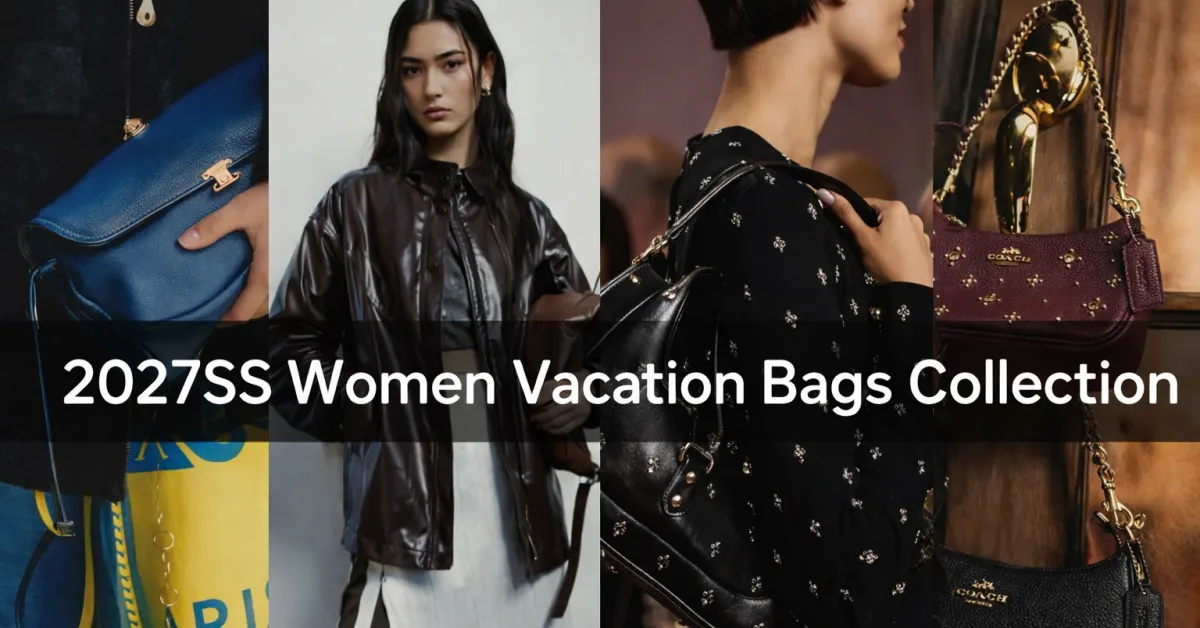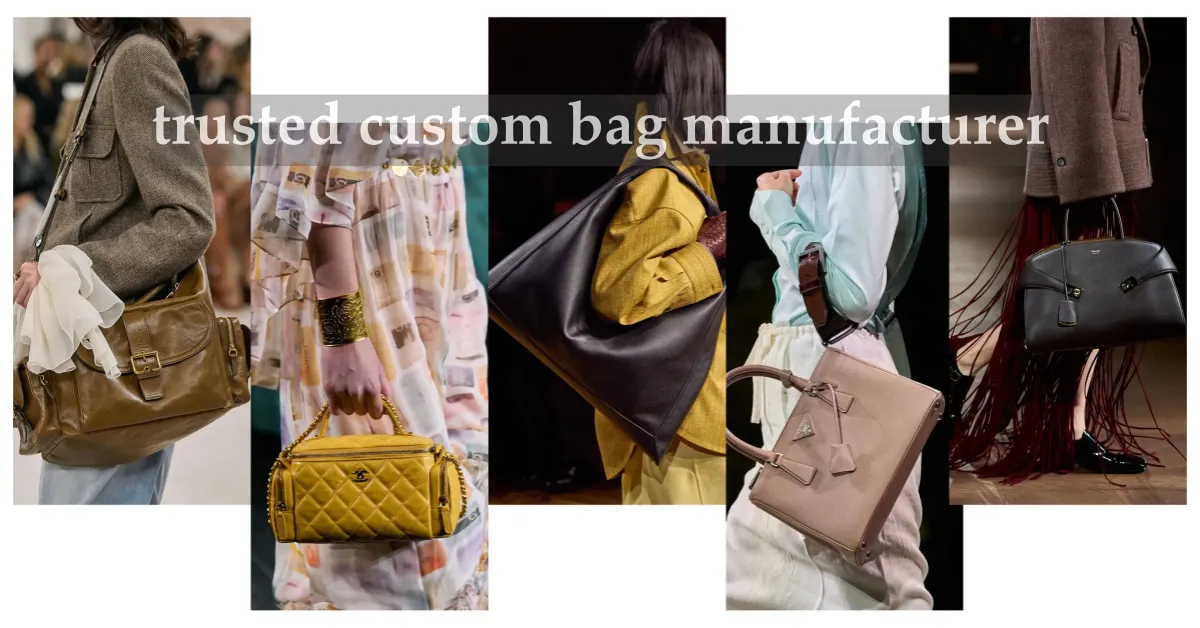

In the 26/27 Fall-Winter season, women’s bag trends in Europe and North America are moving in a clear direction: luxury is no longer defined by simplicity alone. Instead, the market is embracing a more expressive visual language—one shaped by heritage motifs, refined craftsmanship, and culturally rooted design details.
For brands, this shift creates a major opportunity. Today’s consumers are not only looking for beautiful handbags. They are also looking for meaning, emotion, and distinction. Patterns are becoming one of the most powerful tools for creating that connection. From classical European ornamental motifs to equestrian-inspired hardware and botanical storytelling, the new season is proving that pattern design is no longer decoration—it is strategy.
For fashion brands, retailers, and startup founders building handbag collections, understanding these women’s bag trends for 2026 and 2027 is essential. The right pattern direction can increase perceived value, improve brand identity, and help products stand out in a crowded market.
Why Pattern Matters More in 26/27 Fall-Winter Bag Design
The bag market has become more competitive, more segmented, and more visually driven than ever before. Consumers now scroll through hundreds of product images every day. That means products must communicate instantly—and pattern is often the first thing that creates recognition.
In the coming season, pattern trends are not about random surface decoration. They are about combining:
- cultural storytelling
- elevated materials
- premium finishing
- audience-specific design language
This is especially important in the European and American handbag market, where shoppers increasingly expect products to feel both fashionable and intentional. A strong pattern can turn a simple tote, shoulder bag, or structured handbag into a product with identity.
Based on the trend direction reflected in the Chinese source material, six pattern themes stand out for 26/27 Fall-Winter women’s bags: Roman acanthus motifs, modern horseshoe hardware patterns, paisley influences, European herbal botanical graphics, floral checker structures, and Morris-inspired ornamental prints.
Each of these directions carries a distinct emotional value and can be translated into different product categories.
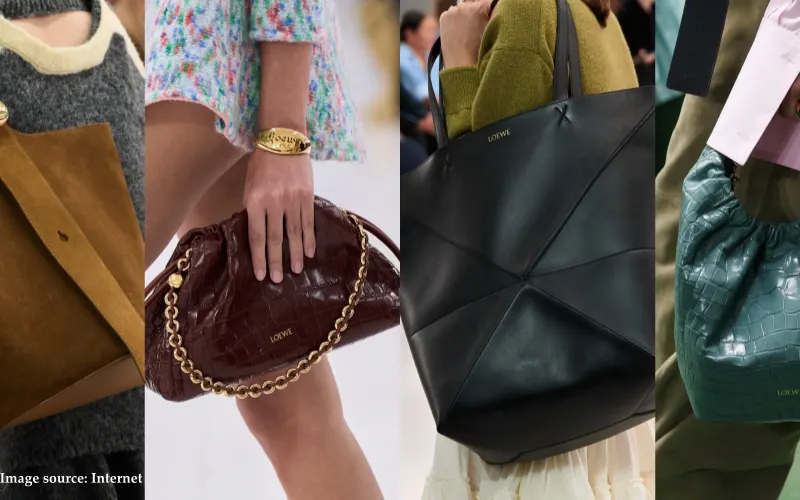
Roman Acanthus Motifs: Classical Luxury Returns
One of the strongest signals for 26/27 is the return of European classical ornamentation, especially patterns inspired by the Roman acanthus leaf.
This motif has deep roots in Greco-Roman architecture and decorative art. It represents order, elegance, abundance, and artistic intelligence. Historically, acanthus forms appeared in Corinthian capitals, carved furniture, and luxury interiors. In modern bag design, however, the motif is being updated.
Instead of overly dense, traditional detailing, brands are simplifying the lines and adapting the pattern through:
- embossed leather surfaces
- engraved metal hardware
- tonal jacquard fabrics
- subtle flap or strap detailing
This makes the motif feel refined rather than heavy. It works especially well for:
- structured handbags
- work totes
- top-handle bags
- heritage-inspired leather collections
For mature consumers in Europe and North America, Roman-inspired motifs communicate quiet authority and timeless taste. For brands, this pattern direction offers a way to build luxury handbag collections with deeper cultural resonance.
Modern Horseshoe Hardware: Equestrian Spirit in a Contemporary Form
The equestrian theme continues to influence fashion bag trends, but in 26/27 Fall-Winter, it is becoming cleaner and more modern.
The horseshoe motif comes from European riding culture and traditionally symbolizes freedom, loyalty, courage, and refined status. In handbags, this idea is evolving beyond literal references. Rather than oversized traditional hardware, designers are using lighter, more architectural interpretations of the horseshoe form.
Common applications include:
- horseshoe-shaped buckles
- curved metallic connectors
- hardware-inspired printed patterns
- mixed media shoulder strap details
These elements bring a polished, contemporary energy to bags without losing their heritage inspiration. They are particularly effective in:
- shoulder bags
- saddle bags
- crossbody bags
- compact day-to-night handbags
For younger consumers, this direction feels stylish and distinctive. For brands, it offers a clean way to incorporate a recognizable design signal into a private label handbag collection without overcomplicating the silhouette.
Paisley Reimagined: Exotic Heritage with Modern Wearability
Paisley returns, but for 26/27, it is more versatile and market-friendly than before.
Originally linked to Persian and Middle Eastern design history, paisley carries an emotional richness that makes it especially attractive in accessories. It feels decorative, expressive, and slightly mysterious. But in its traditional form, paisley can sometimes feel too heavy or too ethnic for wider commercial use.
That is why modern brands are reworking it through:
- muted seasonal tones
- smaller repeat scales
- mixed layouts with stripes or checks
- cleaner outlines and softer contrasts
This helps Paisley fit more naturally into the European and American women’s bag market.
Paisley works well on:
- printed tote bags
- coated canvas shoppers
- velvet evening bags
- soft slouchy shoulder bags
- mini statement bags
For brands targeting consumers who want individuality without losing sophistication, paisley is a valuable option. It brings visual richness while still supporting a premium positioning.
European Herbal Botanicals: Natural Calm Meets Contemporary Lifestyle
Another important shift in handbag pattern trends is the move toward softer botanical storytelling. But rather than tropical florals or generic leaves, the season leans toward European herbs—think chamomile, sage, mint, and other therapeutic plants.
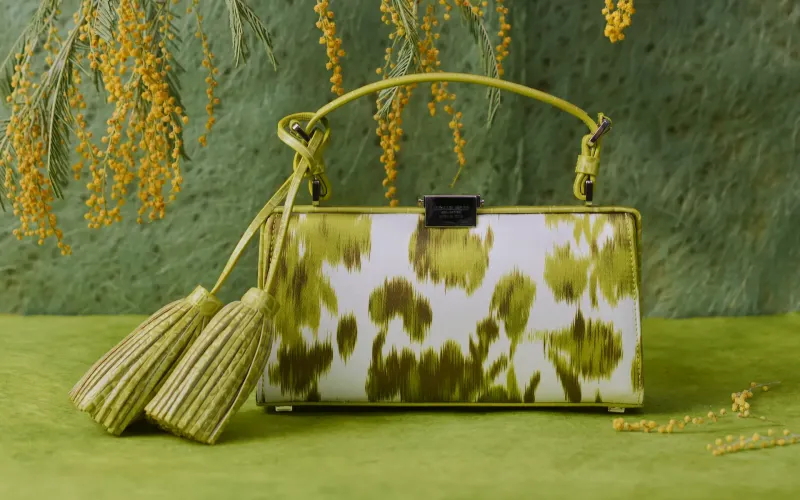
This direction aligns with broader consumer values:
- wellness
- sustainability
- emotional comfort
- nature-based aesthetics
Unlike decorative floral prints, these motifs are usually more restrained. They are often redrawn into flatter, cleaner graphic forms and paired with earthy tones such as olive, sand, clay, moss, oat, and muted green.
This trend is especially suitable for:
- casual totes
- work bags
- eco-conscious bag collections
- canvas and soft vegan leather bags
For Gen Z and younger millennial shoppers, herbal botanical motifs feel gentle, modern, and emotionally appealing. For brands, they provide an effective bridge between sustainable bag design and trend-driven aesthetics.
Floral Checker Patterns: Structure and Softness in One Design Language
Geometric patterns continue to matter in handbags, but the 26/27 update is more nuanced. Instead of hard, minimal grids, designers are blending structured checker layouts with softened floral references.
This floral checker direction combines:
- order and symmetry
- femininity and decoration
- architectural lines and softer curves
Visually, it feels balanced. It is neither too romantic nor too severe. That makes it ideal for brands trying to reach consumers who want elegance with personality.
Popular applications include:
- embossed front panels
- woven body textures
- stitched leather sections
- mixed-material flap treatments
This pattern direction suits:
- box bags
- structured shoulder bags
- handheld evening bags
- polished commuting styles
Because it sits between classic and modern, floral checker layouts have strong commercial flexibility. They can be adapted for both premium and mid-luxury markets.
Morris-Inspired Ornament: Romantic Heritage with Luxury Appeal
William Morris-inspired ornamentation is another major driver in the season’s women’s bag trends. These motifs, rooted in the Arts and Crafts movement, are famous for their dense botanical flow, romantic rhythm, and decorative richness.
For 26/27, designers are not copying historical Morris prints exactly. Instead, they are extracting the most recognizable qualities:
- layered leaves and vines
- rhythmic floral movement
- richly composed repeat patterns
- a sense of handcrafted elegance
When combined with modern bag construction and contemporary color palettes, these motifs feel luxurious rather than old-fashioned.
They are especially effective in:
- evening bags
- vintage-inspired handbags
- small leather goods
- statement top-handle bags
- premium lining or inner panel design
This is a strong direction for brands seeking to create a handbag with ceremony, depth, and decorative value.
The Bigger Industry Shift: Cultural Storytelling Is Now a Competitive Advantage
Across all six pattern directions, one thing is clear: cultural meaning matters.
Consumers are no longer buying accessories based on color and function alone. They are responding to products that carry a visual narrative. This is one of the biggest developments in the handbag market.
For brands, that means successful product development now depends on more than trend-following. It requires the ability to translate references into something wearable, relevant, and commercially viable.
The most successful collections in the 26/27 season are likely to share three characteristics:
Heritage with modern editing
Consumers want history, but not costume. Brands need to simplify references so they feel luxurious and usable.
Pattern combined with material value
A beautiful motif is not enough. The finish, texture, and construction must reinforce the story. Embossing, embroidery, digital print, velvet, coated canvas, genuine leather, and premium vegan materials all play a role.
Audience-specific execution
Different customers respond to different pattern stories. Mature luxury buyers may prefer Roman or Morris references. Younger fashion-driven consumers may lean toward horseshoe or paisley. Work-focused buyers may prefer herbal or floral checker motifs.
How Brands Can Use These Trends in Real Product Development
For entrepreneurs and fashion labels, the biggest question is not “Which trend is beautiful?” It is “Which trend can actually sell for my brand?”
A good product strategy should consider:
- Who the target customer is
- Which silhouette fits the pattern
- What material best supports the design
- Which price point must the collection hit
- Whether the product is for retail, boutique, or wholesale positioning
For example:
- A structured leather tote with Roman embossing can work well for mature luxury customers.
- A horsebit-inspired shoulder bag with modern metallic detailing may attract younger urban buyers.
- A paisley or Morris-inspired mini bag can work as a seasonal statement piece.
- A botanical printed work tote may suit lifestyle-focused or eco-conscious brands.
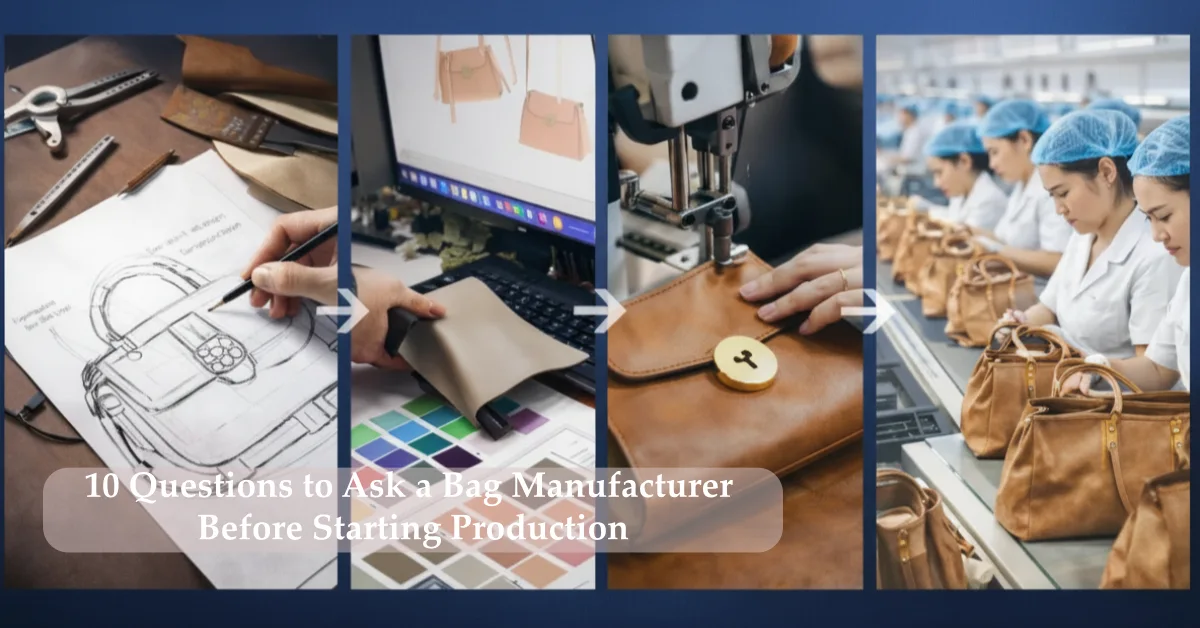
This is where working with an experienced custom bag manufacturer becomes important. Trend ideas only become strong products when design, sourcing, construction, and market positioning are aligned.
Why Material and Craftsmanship Will Decide Commercial Success
One of the biggest mistakes brands make is choosing a strong pattern but executing it with the wrong material or manufacturing method.
For the 26/27 Fall-Winter bag collections, craftsmanship is not secondary. It is part of the trend itself.
Consider the difference:
- Roman acanthus looks stronger in embossed or molded leather than in low-quality print.
- Morris-inspired ornament gains value through jacquard, velvet, embroidery, or detailed lining work.
- Horseshoe details need precise metal finishing to feel premium.
- Herbal graphics benefit from soft matte materials and subtle tonal balance.
That means brands need manufacturing partners who understand not only bag construction, but also how decorative language translates into surface development.
A reliable private label bag manufacturer should be able to support:
- pattern development
- material sourcing
- hardware customization
- sampling refinement
- production consistency
- MOQ planning for growing brands
Final Thoughts: The Future of Women’s Bag Trends Is Richer, Smarter, and More Layered
The 26/27 Fall-Winter season shows that women’s bags are entering a new stage of visual sophistication. Patterns are no longer just decorative trends. They are becoming strategic tools for storytelling, emotional positioning, and brand differentiation.
Roman acanthus motifs bring classical elegance. Horseshoe references modernize equestrian luxury. Paisley adds expressive heritage. Herbal botanicals connect with wellness and sustainability. Floral checker layouts balance order and femininity. Morris-inspired ornamentation restores romance and decorative depth.
For brands, the opportunity is clear: develop products that feel culturally rich, visually memorable, and commercially grounded.
And for founders who want to build their own handbag brand, design trends alone are not enough. The real advantage comes from working with a manufacturing partner who understands both fashion bag trends and real-world production.
Build Your Own Bag Brand with XINZIRAIN
If you are planning to create your own handbag line, launch a private label collection, or develop trend-driven bags for the European or American market, choosing the right manufacturer matters.
XINZIRAIN is a trusted custom bag manufacturer with experience supporting brands through:
- product design development
- material and hardware sourcing
- pattern and surface execution
- prototype sampling
- private label bag manufacturing
- low MOQ and scalable production support
We help entrepreneurs and fashion brands turn trend insights into market-ready products—balancing design, quality, and production efficiency.
If you are looking for a reliable bag manufacturer for your own brand, XINZIRAIN can help you move from concept to collection with confidence.