
How Precision Cutting Reduces Cost and Improves Production Consistency
For brands sourcing bag manufacturers, one overlooked detail can quietly destroy margins:
fabric cutting accuracy.
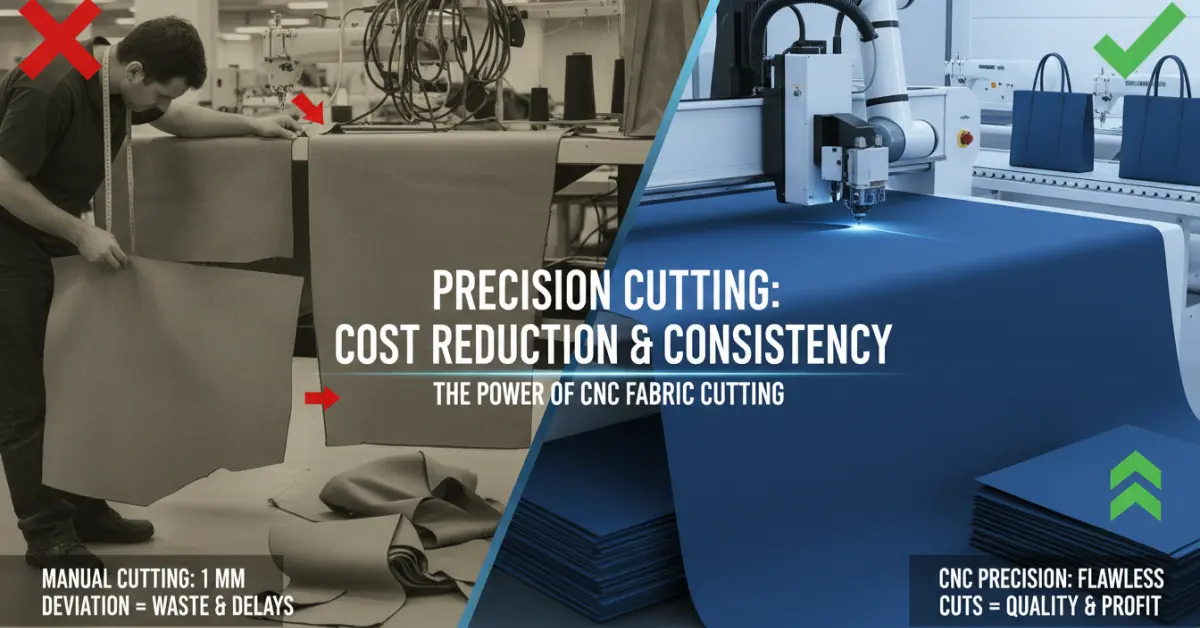
A deviation as small as 1 mm in panel cutting can lead to:
- Sewing misalignment
- Product inconsistency
- Increased material waste
- Production delays
Conclusion:
CNC fabric cutting is not just a technical upgrade — it directly impacts your product quality, cost control, and scalability.
At BAGSRAIN, a specialized bag manufacturing division under XINZIRAIN, we use precision-driven cutting systems to ensure every design moves from concept to bulk production without distortion.
What Is CNC Fabric Cutting?
Research from National Institute of Standards and Technology (NIST) shows that automated cutting systems sig nificantly reduce human-induced variation, improving consistency across industrial production processes.
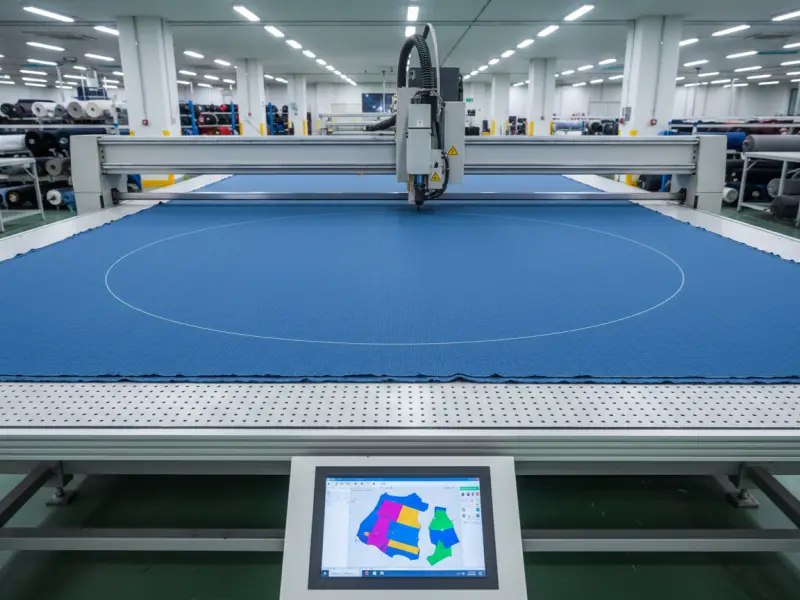
CNC fabric cutting is a digitally controlled process where machines follow CAD pattern files to cut textile materials with high precision.
Instead of manual cutting, the system uses:
- Automated pattern files (CAD/DXF)
- Nesting software for layout optimization
- Controlled blade movement
- Vacuum tables to stabilize materials
Conclusion:
CNC cutting improves consistency by eliminating human error and ensuring every panel is identical across production batches.
Why Traditional Cutting Methods Fail at Scale
Manual cutting or die-cutting can work for simple products, but they struggle in scalable production.
Common issues include:
- Inconsistent panel sizes
- High material waste (often over 20%)
- Slow setup for new designs
- Limited flexibility for multiple SKUs
Conclusion:
Traditional cutting methods cannot support modern brands that require fast iteration, consistent quality, and scalable production.
From Sample to Bulk Production: Where Most Errors Happen
According to International Organization for Standardization standard ISO 18890, digital pattern accuracy and CAD-based workflow control are essential for maintaining consistency between sample development and bulk production.
The biggest risk in bag manufacturing is not production — it's the transition from sample to bulk.
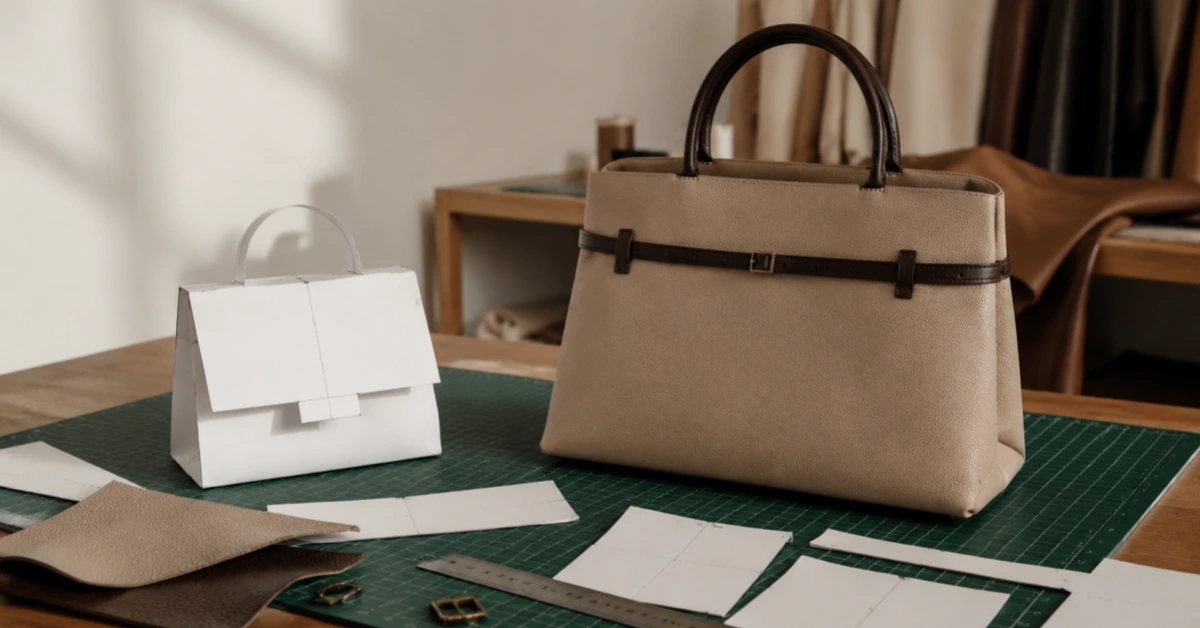
A physical sample must be converted into precise digital data:
- Pattern structure
- Seam allowances
- Hardware positioning
- Panel symmetry
At BAGSRAIN, we follow a controlled process:
Digital Pattern Engineering
We convert your design into accurate CAD files.
Technical Validation
We verify:
- Stitch margins
- Structure balance
- Assembly feasibility
Version Control
Final production files are locked and managed securely.
Conclusion:
Accurate digital pattern control ensures what you approve in sampling is exactly what gets mass-produced.
Machine Calibration: The Real Difference Between Factories
Many suppliers claim they use CNC cutting.
Very few actually control the system properly.
Different materials require different settings:
- PU-coated fabrics increase blade resistance
- Soft linings require lower vacuum pressure
- Thick nylon needs deeper cutting depth
Without calibration:
- Fabric shifts during cutting
- Edges become uneven
- Panels lose symmetry
Conclusion:
The quality of CNC cutting depends more on calibration expertise than the machine itself.
How CNC Cutting Reduces Material Waste
Material cost is one of the biggest expenses in bag production.
CNC cutting improves efficiency through optimized nesting:
- Intelligent pattern layout
- Reduced empty space
- Better fabric utilization
Typical comparison:
- Manual cutting: ~75–85% utilization
- CNC optimized cutting: up to ~90–95%
Conclusion:
CNC cutting can reduce material waste significantly, lowering overall production cost per unit.
Real Production ROI: What Brands Actually Gain
Based on large-scale production comparisons :
Lower Material Waste
Reduced scrap directly improves margins.
Stable Sewing Workflow
Consistent panels eliminate downstream production issues.
Faster Production Speed
Automated systems increase output per shift.
Conclusion:
CNC cutting improves both cost efficiency and production reliability, making it essential for scalable manufacturing.
Limitations of CNC Fabric Cutting (What Most Factories Don’t Tell You)
No system is perfect. CNC cutting also has limitations:
Coated Materials Can Affect Cutting Quality
High-friction coatings may cause blade drag.
Requires Ongoing Maintenance
Blades, sensors, and calibration must be maintained.
Digital File Security Risks
CAD files are easier to copy than physical molds.
Conclusion:
A reliable manufacturer must understand these limitations and manage them proactively.
How to Evaluate a Bag Manufacturer’s Cutting Capability
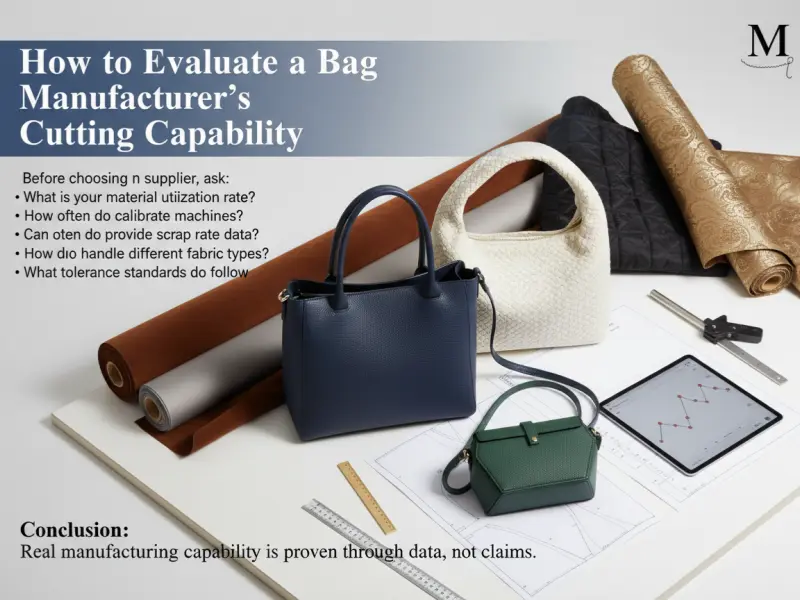
Before choosing a supplier, ask:
- What is your material utilization rate?
- How often do you calibrate machines?
- Can you provide scrap rate data?
- How do you handle different fabric types?
- What tolerance standards do you follow?
Conclusion:
Real manufacturing capability is proven through data, not claims.
Why Brands Choose BAGSRAIN(XINZIRAIN Group)
BAGSRAINis not just a factory — we are a full-service manufacturing partner.
What we offer:
One-Stop Solution
- Design → Development → Production → QC → Shipping
Full Supply Chain Control
- Materials, cutting, assembly, packaging
Flexible MOQ
- Suitable for both startups and scaling brands
Engineering-Driven Production
- Focus on precision, repeatability, and efficiency
Conclusion:
We help brands turn ideas into scalable, market-ready products — not just samples.
Final Thoughts
CNC fabric cutting is not about automation alone.
It is about:
- Precision
- Consistency
- Cost control
Final Conclusion:
Brands that invest in precision manufacturing build more reliable products, reduce waste, and scale faster in competitive markets.
Frequently Asked Questions
Does CNC cutting reduce production costs?
Yes. By improving material utilization and reducing waste, CNC cutting lowers the overall cost per unit.
Is CNC cutting suitable for small batch orders?
Yes. CNC systems allow fast setup, making them ideal for sampling and small production runs.
Can CNC machines cut leather materials?
Yes, but it requires specific blade settings and slower cutting speeds to maintain edge quality.
What is the typical cutting tolerance?
Most professional manufacturers maintain a tolerance within 1 mm.
Does CNC cutting improve product quality?
Yes. It ensures consistent panel sizes, which improves assembly accuracy and final product quality.
What materials work best with CNC cutting?
Nylon, polyester, canvas, and many coated fabrics perform well when properly calibrated.
How does CNC cutting impact lead time?
It shortens production time by increasing cutting speed and reducing rework.
Is CNC cutting necessary for bag manufacturing?
For scalable production and consistent quality, it is highly recommended.
Ready to develop your next bag collection with precision manufacturing?
BAGSRAIN (XINZIRAIN Group) helps global brands:
- Turn ideas into production-ready designs
- Reduce manufacturing risks
- Scale efficiently

Start your project today
WhatsApp: +8615530191496